
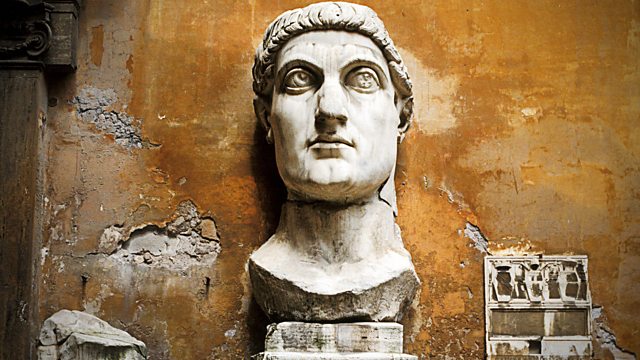
Is Christianity as we know it today an invention of Emperor Constantine and a perversion of the true faith handed down from Jesus to His disciples?
In recent decades, many allegations have been leveled at the infamous emperor, including:
- He handpicked which books would be included in the Bible
- He invented the doctrine of Jesus’ divinity
- He forced the Church to abandon their calendar
- He enacted antisemitic laws that forced Jews away from Christianity
Which of these accusations, if any, are true, and how did it shape the Christianity we practice today?
Who Was Constantine?
Constantine was a Roman emperor in the early fourth century. On October 27, 312 AD, he supposedly received a vision from the Christian God, who promised him victory in the Battle of the Milvian Bridge. Sure enough, his forces won the battle the following day.
Constantine eventually converted to Christianity and legalized Christianity (and all other religions). And in 325 AD, he assembled the Council of Nicaea, which (among other things) declared Arianism a Christological heresy and announced that Christians would calculate the dates of Passover independently from the Jewish community.
Did Constantine Create the Bible?
No, Constantine did not have any impact on what books were included in the Bible.
The twenty-seven books of the Old Testament were written prior to 400 BC and their canonicity was agreed upon hundreds of years before Constantine was born. Furthermore, the twenty-seven books of the New Testament were written and in circulation before the destruction of the temple in 70 AD—over two centuries before Constantine’s reign and the Council of Nicaea.
A document called the Muratorian Fragment dates to around 175 AD (150 years before Constantine and Nicaea) and, while portions of the document are missing and difficult to translate, provides a list of New Testament books that were generally accepted and read in churches. This list largely coincides with the New Testament books we have today, and importantly doesn’t make any mention of the false gospels that are sometimes claimed to have been banned by Constantine.
So, what did Constantine and the Council of Nicaea have to say about the canon of scripture? Nothing. This was not one of the topics of discussion at the Council, and there is no historical evidence that Constantine was involved in deciding which books should be included.
Why, then, were some books (such as the Gospels of Thomas and Bartholomew) rejected? Because they were written long after the life of Jesus and the other New Testament writings, because they were falsely attributed to apostles who had long since died, and because they made fantastical claims at odds with the other New Testament writings[1] and contained obvious political messaging[2] that ran contrary to the rest of scripture.
Did Constantine Invent Jesus’ Divinity?
One reason Constantine called for the Council of Nicaea was to clarify Christian doctrine related to the divinity of Jesus. While this seems like an obviously biblical belief nowadays, in the fourth century a man named Arius was promoting the idea that Jesus was just a human, not God in the flesh.
Did Constantine suppress Arius’ heart-felt belief and promote Jesus to the Godhead? No. In fact, Constantine actually leaned towards Arianism. The idea that a mere human could achieve god-like status (rather than the biblical doctrine that Jesus was and is eternally God) was much more attractive to Constantine’s Roman upbringing, so Constantine entered the Council of Nicaea supportive of Arius’ heresy.
Over the course of the three-month council, hundreds of bishops (led by a man named Athanasius) bravely opposed Arius—and Constantine—to espouse the Bible’s teaching that Jesus was and had always been God. And rather than oppose the bishops and demand that they agree with him, Constantine submitted to their leadership and expertise, and the Council of Nicaea affirmed the doctrine of Jesus’ divinity.
Later in life, Constantine continued to flirt with Arianism, even being baptized by an Arian bishop at the end of his life. After he passed, Constantine’s successors persecuted Athanasius over the issue of Jesus’ divinity, exiling him an astounding five times. However, the bishops remained firm, submitting to the Scriptures rather than the emperors, and today the doctrine of the Trinity and Jesus’ divinity is firmly established—without any influence from Constantine.
Did Constantine Force Christians to Abandon the Biblical Calendar?
After the destruction of the temple in 70 AD, the Jewish community changed how they determined the dates of Passover. For over 800 years, there were many competing methods for structuring the calendar, none of which were the system in place during the time of Jesus.
During this time, the Christian community struggled to find consistent dates to celebrate the resurrection of Jesus (which they called Pascha, the Greek translation of the Hebrew Pesach, meaning Passover). Many churches relied on their Jewish neighbors for these dates, but this wasn’t ideal. For one, many Christians distrusted the synagogues, which had persecuted the Church for almost a hundred years, had forced the Christians out of their communities by declaring them heretics, and had taught that Jesus was a false sorcerer who had been sent to hell for His sins. Additionally, Passover in one synagogue might be as much as a month off from the synagogue in the next town, leading to churches from town to town celebrating at different times.
For hundreds of years prior to Constantine’s reign, Christians debated the proper time to observe Passover. So when the Council of Nicaea was finally called to address the Arian heresy, the subject of the timing of Passover was also discussed.
While a dating method was not determined, the bishops agreed that all Christians should celebrate on the same day and that this day should be calculated independent from the Jewish community.
Later that century (and long after Constantine’s death), the Church finally agreed on a way to determine the date of Passover. Passover would always be celebrated after the first full moon that fell after the spring equinox—the same method that was in place during Jesus’ life, according to Jewish-Roman historian Josephus, Jewish scholar Philo, the translators of the Septuagint, and several other ancient Jewish teachers.[3]
Constantine did not force the Church to change the calendar, nor did he dictate when Passover would be celebrated, though the Christians of the day agreed that the calendar needed to be corrected and eventually made that correction.[4]
Did Constantine Enact Anti-Jewish Laws?
Constantine did indeed enact what could be considered an anti-Jewish law. On October 18, 315, Constantine made it illegal for Jews to “attack with stones or any other kind of violence” fellow ethnic Jews who had converted to Christianity. According to the law, there had been recent instances of Jews committing violence against converts to Christianity, so Constantine outlawed this practice and made it punishable by “immediately being given over to the flames and burned” (Codex Theodosianus 16.8.1[5]).
Constantine did enact several other laws related to the Jews as well. In addition to making Judaism a legal practice with the Edict of Milan in 313 AD, he also exempted Jewish leaders from compulsory military service (16.8.2) and public service (16.8.4); preserved the rights of Jews to serve on municipal councils (16.8.3); and prohibited recent Christian converts from “disturbing Jews or inflicting any injury on them” (16.8.5).
Based on the historical record, Constantine did not actually enact any laws that could be interpreted as oppressive towards the Jewish people, other than preventing them from oppressing Christian converts—and even then, he also outlawed Christian converts from oppressing Jews as well. Additionally, he passed several laws that protected the Jewish clergy and preserved the roles of the Jewish people in civil society. If anything, it could be said that Constantine enacted laws that actually protected the Jewish people in the increasingly Christianized empire.
Was Constantine a Good Person?
The purpose of this article was not to comment on Constantine’s morality or to conclude whether he was a genuine Christian. The goal was simply to clarify the role that Constantine played in the development of Christianity.
And from the historical record, Constantine did not directly influence Christianity as we know it today, nor did he subvert what Christianity was prior to his conversion. He simply got out of the way. He prevented the enemies of the Faith from persecuting God’s people and allowed Christians the freedom to practice their religion in peace.
When Constantine held doctrinal views contrary to the Church, he submitted to their theology rather than demand they cave to his. And despite tensions that had flared between Christians and Jews for hundreds of years, he prohibited violence from either side, allowing both to serve in the empire so long as they did so in peace.
The Faith that Christians practice today—what is sometimes called Nicene Christianity—is the same faith Jesus passed on to His disciples. It is Biblical Christianity, and no historian can reasonably claim that Constantine had a hand in creating it.
[1] As an example, the so-called Gospel of Bartholomew (tells a story where Jesus pulled up the earth like a carpet and led the devil out on a leash in the presence of the disciples, who immediately died out of fright and had to be resurrected one at a time.
[2] The Gospel of Thomas, for instance, makes disparaging claims about women, suggesting that they aren’t fully human.
[3] As you can see, the correction of the calendar was based almost exclusively on Jewish writings. Whether ancient Jewish scholars (translators of the Septuagint), Jewish scholars of Jesus’ day (Philo), or a Jew-turned-Roman historian (Josephus), all testify that of the proper calendar dating method. Additionally, the Talmud (a compilation of oral Jewish tradition formalized shortly after the Council of Nicaea) affirms there were many varying methods for determining Passover, none of which matched the system in place during Jesus’ ministry or in place today.
[4] While on the subject of Passover, Constantine also didn’t invent Christmas or Valentine’s Day. He did, however, make Sunday a civil day of rest in 321 AD, allowing Christians to continue the practice of Sunday worship (established in the Book of Acts) without interfering with their work.
[5] Source: https://droitromain.univ-grenoble-alpes.fr/Constitutiones/CTh16.html.
 Garrett Milovich