The Cosmos in Chaos: Revelation 6, Blood Moons, and Eclipses

The sixth chapter of Revelation is when things get exciting. It’s got everything: earthquakes, the moon turning red, stars falling out of heaven. And as a result, many Christians assume that a particularly large earthquake or a lunar eclipse (sometimes called a “blood moon”) means the antichrist is on the rise and all hell is about to break loose.

But is this how we’re supposed to read the apocalyptic signs and wonders?

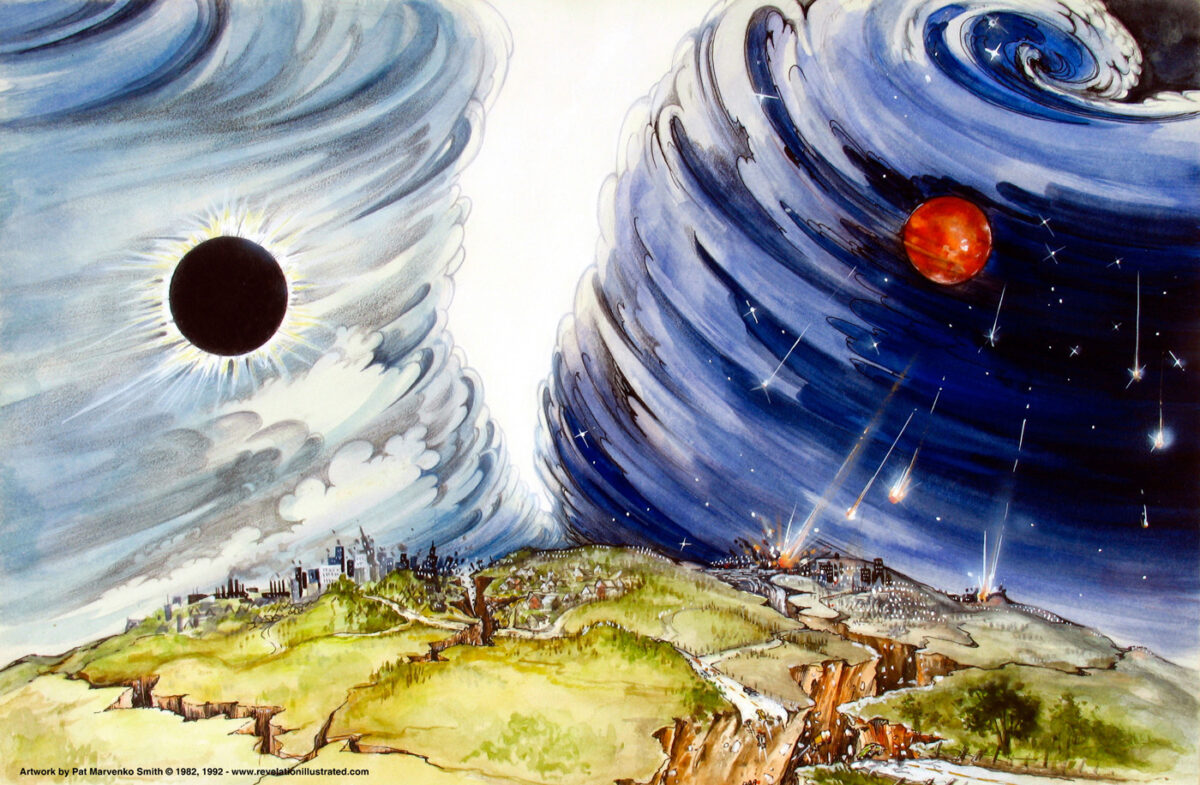
I looked when He opened the sixth seal, and behold, there was a great earthquake; and the sun became black as sackcloth of hair, and the moon became like blood. And the stars of heaven fell to the earth, as a fig tree drops its late figs when it is shaken by a mighty wind. Then the sky receded as a scroll when it is rolled up, and every mountain and island was moved out of its place.” (Revelation 6:12-14)

It sounds like a scene right out of a Hollywood disaster movie about global warming. But every part of this vision had been witnessed multiple times before—in the Old Testament.

All these signs appear throughout the Prophets to signify judgment on a city or nation—typically idolatrous Israel and sometimes enemy nations that persecute God’s faithful:

Behold, the day of the LORD comes, cruel, with both wrath and fierce anger, to lay the land desolate; and He will destroy [Babylon’s] sinners from it. For the stars of heaven and their constellations will not give their light; and sun will be darkened in its going forth, and the moon will not cause its light to shine. (Isaiah 13:9, 10)

Woe to Ariel [that is, Jerusalem], to Ariel, the city where David dwelt!… I will encamp against you all around, I will lay siege against you with a mound, and I will raise siegeworks against you… you will be punished by the LORD of hosts with thunder and earthquake and great noise, with storm and tempest and devouring fire. (Isaiah 29:1, 3, 6)

Thus says the LORD: “Behold, I will throw out at this time the inhabitants of the land… Behold, the noise of the report has come, and a great commotion (Hebrew ra’as and Greek seismos, meaning earthquake) out of the north country, to make the cities of Judah desolate, a den of jackals.” (Jeremiah 10:18, 22)

For in My jealousy and in the fire of My wrath I have spoken: “Surely in that day there shall be a great earthquake in the land of Israel… and all men who are on the face of the earth shall shake ay My presence. And mountains shall be thrown down…” (Ezekiel 38:19, 20, 21)

A nation has come up against My land, strong, and without number… Alas for the day! For the day of the LORD is at hand; it shall come as destruction from the AlmightyThe earth quakes before them, the heavens tremble; the sun and moon grow dark, and the stars diminish their brightness… And I will show wonders in the heavens and in the earth—blood and fire and pillars of smoke. The sun shall be turned into darkness, and the moon into blood, before the coming of the great and awesome day of the LORD. (Joel 1:6, 15, 2:10, 30, 31)

The end has come upon My people Israel; I will not pass by them anymore… Shall the land tremble for this?… And it shall come to pass in that day,” says the Lord GOD, “That I will make the sun go down at noon, and I will darken the earth in broad daylight… I will bring sackcloth on every waist…” (Amos 8:2, 8, 9, 10)

What’s notable about all these prophetic utterances is that they occurred thousands of years ago—and were fulfilled thousands of years ago.

Isaiah prophesied around 700 BC concerning the destruction of Judah—which occurred in 586 BC—and the destruction of Babylon—which occurred in 539 BC. Jeremiah’s ministry coincided with the destruction of Jerusalem and the exile of the Jews, which took place during and shortly after 586 BC. And Joel and Amos preached during the eighth century BC, shortly before the destruction of Israel in 722 BC.

These prophets weren’t warning of a singular “day of the LORD” that would occur in our future—they were warning of various “days of the LORD” that happened thousands of years ago.[1] And with this in mind, it’s clear that these signs aren’t meant to be taken literally. There are no reported earthquakes during these catastrophic events, and the sun and moon are still shining. This is God’s poetic way of saying, “The destruction of your nation will be so cataclysmic, it’ll be as if the sun stops shining and the sky crashes into earth.”  

It’s no surprise that Jesus adopted this same prophetic and poetic language during His ministry:

Immediately after the tribulation of those days the sun will be darkened, and the moon will not give its light; the stars will fall from heaven, and the powers of the heavens will be shaken.” (Matthew 24:29)

The immediate context of this prophecy concerned the destruction of the second temple in Jerusalem (Matthew 24:2, 3). And just as Israel and Judah had collapsed a generation or so after the prophets had declared, just as Babylon and Assyria weren’t turned upside down as the world shifted beneath them, so too did Israel come under God’s judgment in 70 AD.

John’s Revelation was given a few years before the destruction of the second temple. God was giving the inhabitants of Jerusalem one last chance to repent before the city was sacked and the nation destroyed. And the effects of that destruction upon the world were greater than if mountains had literally been thrown into the sea.

So where does this leave us? Are these astronomical signs and wonders simply events of our distant past and otherwise meaningless to us today? Of course not! Regardless of whether your eschatological views believe in a coming tribulation, there will always be empires that rise up against God’s people—and thus days of the Lord will always be necessary. And when they inevitably come, we can take comfort in Joel’s words:

And it shall come to pass that whoever calls on the name of the LORD shall be saved.” (Joel 2:32)


[1] Some of us think that “the day of the LORD” is a coming day related to antichrists, raptures, and the end of the world. Biblically, a “day of the LORD” is a day of judgment on sinners and deliverance for saints. Rightly understood, the destruction of Israel’s first and second temples and the conquering of corrupt nations like Egypt, Babylon, Assyria, Greece, and Israel were all “days of the LORD.”

Should Christians Eat Kosher?

Do Christians have to eat kosher?

No.

Kosher laws far exceed the biblical dietary restrictions. For example, the law not to boil a goat in its mother’s milk (Exodus 23:19, 34:26, Deuteronomy 14:21) was expanded to restrict people from eating any dairy product with any meat product—even though both Abraham and David ate dairy products with meat (Genesis 18:8, 2 Samuel 17:27-29). Current kosher laws like the restriction on meat and cheese originated centuries after Jesus’ resurrection and wouldn’t have been observed by Jesus or any Old Testament Jews.

Concerning the dietary laws found in the Hebrew Scriptures, the early church—including Jewish Christians—believed that these laws had been fulfilled and had stopped observing them by the end of the first century. The Epistle of Barnabas was written was written by the eponymous Jewish companion of Paul, sometime after the destruction of the second temple. In this letter, the apostle explains that the Old Testament dietary laws were given primarily to instruct His people in how they should interact with gentile peoples (10:1-3), and that their purpose had been fulfilled in Christ (2:6-10).

This is in line with Peter’s vision in Acts 10. While Peter is praying on a rooftop, he falls into a trance and God commands him to eat unclean animals. Peter responds as we’d expect him to: “Not so, Lord! I have never eaten anything common or unclean” (Acts 10:14). The Lord responds,

What God has cleansed you must not call common.” (Acts 10:15)

Soon after, a group of messengers arrive and invite Peter to come visit a gentile named Cornelius. Peter acquiesces, and tell the gentiles,

God has shown me that I should not call any man common or unclean.” (Acts 10:28)

This culminates with Jesus being preached not just to a Jewish audience but to the gentile world as well, opening the gospel to all nations.

You might read this and respond, “Well, that wasn’t about food; it was about people.” And yes, you are correct. This was about people. And it always was. These dietary restrictions were never about food—they were always about people, and now that the lesson has been learned in Christ, these dietary restrictions became obsolete.

Jesus, Peter, and Barnabas aren’t alone in this understanding, either. Philo of Alexandria was a Jewish teacher who was born about two decades before Jesus and who died about two decades after Jesus. He lived in Egypt, and it is unlikely he ever heard about Jesus. He too taught that these dietary laws were never about the food itself, but were instead instituted as symbolic lessons.

The consistent teaching of the Bible is that the dietary laws of Moses were given for a specific purpose, and that purpose has been fulfilled in Jesus, understood by the Church, and are no longer necessary. Whether it’s Mark’s claim that Jesus declared all foods clean (Mark 7:19), Paul’s encouragement that “every creature of God is good and nothing is to be refused if it is received with thanksgiving, for it is sanctified by the word of God and prayer” (1 Timothy 4:4, 5) and to claim otherwise is “giving heed to deceiving spirits” (v. 1), or the Jerusalem Council’s pronouncement that the dietary laws would not be put on new believers because there was “no distinction between us (Jews) and them (gentiles)” (Acts 15:9-11), the biblical teaching is clear—these requirements are no longer in effect today.

So what then? Should Christians do the opposite? Should you gorge yourself on shrimp and hotdogs in the name of Jesus?

Not exactly.

In Romans 14, Paul gives instruction to believers dealing with weaker brothers in the faith. Paul states that, although he “knows and [is] convinced by the Lord Jesus that there is nothing unclean” (v. 14), he is aware that some Christians haven’t comprehended this truth yet. Paul recognizes that his freedom to eat all foods might offend some without full knowledge and drive them away from the faith. Thus, he warns against “destroying with your food [the faith of] one for whom Christ died” (v. 15).

Alternatively, Paul spends much of his epistle to the Galatians warning against false teachers who will try to deceive unknowledgeable Christians into unnecessarily subjecting themselves to misunderstood Jewish rituals such as circumcision and dietary restrictions. Paul discloses that even Peter got off-track with this. Though Peter had been “living in the manner of Gentiles and not as the Jews,” he was pressured by Judaizers to “compel the Gentiles to live as Jews” (Galatians 2:14). Paul would have none of it, and confronted Peter for his misleading acquiescence and cowardice, and warned that anyone who taught as the Judaizers had taught was teaching a false gospel (Galatians 1:6), had perverted the message of Christ (v. 7), and would be accursed (v. 8).

Paul’s position is clear. Though the dietary laws are no longer useful or needed, there may be those weaker in the faith who do not understand such things. To them, you are to gently guide them to the truth without damaging their faith. But on the other hand, there are those who will attempt to pervert the gospel by insisting that believers submit themselves to these restrictions, as if that will work alongside grace to benefit the Christian. To them, you are to firmly admonish lest they damage the faith of others.

So once again, should Christians eat kosher? No, there is no need or command to restrict one’s diet in this way, except to spare the faith of a weaker brother as you guide him to the full truth of the gospel. The lesson of these guidelines were fully realized in Christ, and as far as He is concerned, all are purified by faith (Acts 15:9), not by whatever enters a man from outside (Mark 7:18).

“The law was our tutor to bring us to Christ, that we might be justified by faith. But after faith has come, we are no longer under a tutor. For you are all sons of God through faith in Christ Jesus.” (Galatians 3:24-26)

How to Worship Allah and Still Go to Heaven: The Importance of Knowing WHO God Is

You can worship Allah and go to heaven. You can also worship Yahweh and go to hell.

Hold on hold on. Hear me out.

Let’s imagine you’re on a mission trip in Tunisia. At a marketplace one day, you strike up a conversation with a local and hand him a Bible in his native language—Arabic. He heads home and flips the book open to the first page:

فِي الْبَدْءِ خَلَقَ اللهُ السَّمَاوَاتِ وَالارْضَ

“In the beginning, Allah created the heavens and the earth.”

Wait wait wait. Who created the universe?!

So maybe instead you advise the potential convert to start in the New Testament. He gets home and begins reading John’s gospel:

فِي الْبَدْءِ كَانَ الْكَلِمَةُ وَالْكَلِمَةُ كَانَ عِنْدَ اللَّهِ وَكَانَ الْكَلِمَةُ اللَّهَ

“In the beginning was the Word, and the Word was with Allah and the Word was Allah.”

There is something seriously messed up going on here. Why does the Arabic translation of the Christian Bible teach that Jesus had anything to do with the Muslim god?

 Simple answer: it doesn’t.

Most of us associate the word Allah with the false religion of Islam. So we assume that Allah is the name of their false god. But that’s not what Allah means. Allah is simply a title meaning “god.” It’s no different than telling a Spanish speaker that the universe was created by Dios. Heck, even the Hebrew word El—used repeatedly throughout scripture to refer to the one true God—sometimes refers to false gods. That’s because El isn’t His name—it’s a generic title that means “god.” Depending on the context, El can refer to the one true God of scripture or false idols of wood and stone.

We face this same problem in English today. The overwhelming majority of Americans believe in god. The question is, which one? If you worship the Christian God, you’re in good hands. If you think Taylor Swift is god, you’re in trouble. You need more than the correct title—you need to believe that God is who He is.

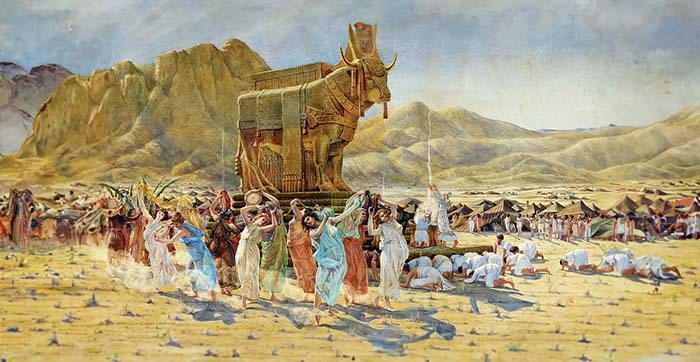
The Israelites got into trouble with this around 3,500 years ago. They stood at the foot of Mount Sinai weeks after Yahweh (the name ascribed to the biblical God in Exodus 3) had delivered them from bondage in Egypt. Then they proceeded to throw a bunch of gold into a furnace and mold a false dios out of it. As the golden idol came out of the fire, the people declared, “This is your Elohim, O Israel, that brought you out of the land of Egypt” (Exodus 32:4). Aaron then proclaimed the idol was Yahweh, and the people began offering sacrifices to it.

Think about that. They had the correct people (Israelites) in the correct place (Mount Sinai) worshipping a correctly-named deity (Yahweh) to whom they attributed the correct works (deliverance from Egypt) in the correct way (burnt offerings and peace offerings)—and yet they obviously were participating in pagan worship. On the surface, so much of their worship seemed correct. But the object of their worship was undeniably the wrong god.

This still happens today. For instance, did you know that Muslims believe that Jesus is the promised Messiah? However, they don’t believe He was crucified and subsequently raised from the dead. So they aren’t worshipping the one true God.

Modern Jews claim to worship a deity named Yahweh, who delivered the Israelites out of Egypt. But they also believe Jesus was a false sorcerer who currently resides in hell—not God Incarnate. So they aren’t worshipping the one true God.

Mormons believe that Jesus died and rose from the dead for the sins of mankind. But they don’t believe that Jesus is God—at least, not the one true God. Rather, God the Father and God the Son of separate gods among many gods, according to Mormon theology. Once again, they have the wrong god.

In all of these cases (and every other religion not mentioned above), these false worshippers have remade God according to their desired image. In effect, they threw a bunch of golden jewelry into an oven, slapped a handful of seemingly accurate labels upon the calf that came out, and called it God, Allah, Dios, El.

So then, who is the one true God?

In short, the God revealed in the Old and New Testaments—the God of Abraham, Isaac, and Jacob—the Truine God: Father, Son, Holy Spirit. And the essential, biblical description of the one true God, used throughout all of Christian history and accepted by every Christian worldwide, is summarized in the Nicene Creed.

If you’ve never read the Nicene Creed before, I encourage you to check it out. Despite appearing somewhat traditional and (dare I say) religious, you’ll find that every line is deeply rooted in scripture. A Christian would struggle to find anything with which they would disagree.[1]

So, will an Arabic Christian who worships Allah go to heaven? If they believe in the one true Allah—the Triune Allah revealed in the Christian Scriptures and confessed by the universal and timeless Church.


[1] Oh, and don’t be scared off by the word catholic. As we’ve discussed extensively, words can often mean something other than you’ve been programmed to think it means. Catholic simply means “universal.” In this context, it means the one Church is representative of all Christians throughout space and time—not that you need to like the pope.

Revelation 4 and the True Priesthood of God

Revelation 4 kicks off with John seeing and hearing a bunch of crazy stuff:

  • Four creatures full of eyes, six wings, and the faces of a lion, calf, man, and eagle (Rev. 4:7, 8)
  • A throne surrounded by a rainbow with the appearance of an emerald (v. 3)
  • Lightnings, thunderings, and voices everywhere (v. 5)
  • God sitting on the emerald throne, appearing like a jasper and sardius stone (v. 3)
  • Twenty-four elders on twenty-four thrones, clothed in white robes with golden crowns on their heads (v. 4)

And all day and night they worship God together, crying out “Holy holy holy!” (v. 8)

This was quite a sight for John to see. And not surprisingly, every part of this vision had been witnessed before—in the Old Testament.

It’s lifted almost verbatim from Ezekiel 1. The Book of Ezekiel is about a man (Ezekiel) born to be a priest and serve in the temple. However, due to the sins of his unfaithful countrymen, Ezekiel is exiled from the land and all his dreams of ministering before the Lord was dashed… until God appears to him in Babylon and reestablishes his calling. While the physical temple will be destroyed and the unfaithful scattered, Ezekiel will nonetheless serve God and His people as a priest.

The rainbow throne, the crystal, the many-eyed, multi-winged creatures… all of them appear in the opening chapter of Ezekiel—the book of the exiled priest without a physical temple.

But that’s not the only priestly imagery in the book. The emerald, jasper, and sardius stones all appear in Exodus’s instructions concerning the priests’ attire—as well as the robes and the golden crowns (Exodus 28, 39).

Even the lightnings and thunderings come from Exodus 19—at the base of Mount Sinai, where God calls all of His people to be a kingdom of priests before the Lord.

And right in the middle of all this priestly language are the twenty-four elders—the twelve tribes of Israel and the twelve disciples—representing the entirety of God’s people before and after the resurrection, united as one to serve before the Lord as that kingdom of priests God called for at Mount Sinai.

Later in Revelation, the temple will again be destroyed. Those who should be God’s people will instead rebel against the Lord and be scattered once again. Hopes for God’s faithful will seem dashed.

But don’t lose hope. God doesn’t dwell in a temple made with hands (Acts 7:48). And even in exile, God still dwells among His people. Even without a physical temple, God’s people stills minister as kingly priests in the true temple—the Church.

Revelation’s Description of Jesus is More Important than You Think

The epic descriptions of Jesus in the opening chapters of Revelation are more important than you think.

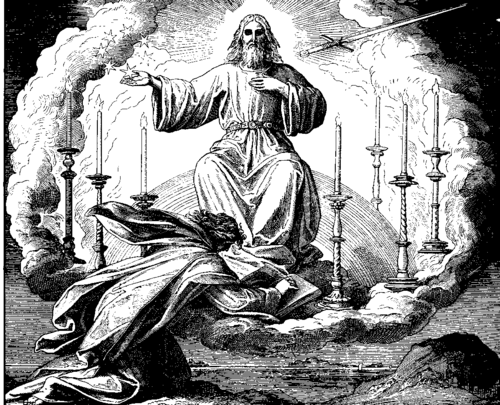
As John opens this book, he describes Jesus in several vivid ways:

  • He is One like the Son of Man (v. 13)
  • He is coming with clouds (7)
  • He is clothed with a garment down to His feet and wrapped about with a golden belt (13)
  • The hair on His head is white like wool (14)
  • His eyes are like a flame of fire (14)
  • His feet are like fine brass (15)
  • His voice is like the sound of many waters (15)
  • A sharp sword is coming out of His mouth (16)
  • His face is like the sun shining in its strength (16)

Yes, Jesus is certainly epic in all His glory. But there’s more to this than just seeing the King of Kings in an awesome way. Every single one of these descriptors is lifted directly from the Hebrew Scriptures.

In Daniel 7, God appears with “the hair of His head like pure wool (v. 9), “coming with the clouds of heaven” (v. 13) as “One like the Son of Man” (v. 13). Later in the chapter, a wicked king arises and “persecutes the saints of the Most High” (v. 25), but God soon overthrows this false ruler and gives an everlasting kingdom to His people (v. 27).

In Ezekiel 9, the people of Jerusalem have forsaken God and turned to rampant idolatry. In response, the glory of God comes upon a man “clothed with a garment down to his feet” with a belt at his side (v. 3). This man then goes “through the midst of Jerusalem, putting a mark on the foreheads of the men” who mourn and repent over the downfall of God’s holy city (v. 4). Soon after, the city is overrun and the temple is destroyed (vv. 5, 7), but those with the faithful mark are protected (v. 6).

In Daniel 10, a heavenly man appears to the prophet with “eyes like torches of fire,” his feet “like burnished bronze,” and “the sound of his words like the voice of a multitude” (v. 6). He informs Daniel that the Kingdom of Heaven were triumphing over the kingdoms of the empires of earth (v. 13) and commanded Daniel to be strong in the days to come (v. 19).

In Isaiah 49, the Suffering Servant of the Lord—Jesus—has His mouth made like a sharp sword (v. 2). He issues forth from His mother’s womb (v. 1) to gather God’s chosen together (v. 5) and then extend God’s salvation to every nation on earth (v. 6), thus “restoring the earth” to its intended glory (v. 8).

In Judges 5, Israel is enslaved to the kings of the surrounding Canaanite nations. The men are too afraid to fight back until, through the inspiration of a life-giving mother in Israel (v. 7), courage is restored and the people are delivered. Peace and rest are returned to God’s people as they cry out, “Let all Your enemies perish, O LORD, let those who love Him be like the sun when it comes out in full strength” (v. 31).

This vision of Jesus Christ isn’t just a cool sight that John saw—it was encoded with powerful imagery for all those who have ears to hear! Before we hear any fantastical prophecies or are given any righteous commandments, the mere sight of God tells us what we can expect:

  • Persecution is coming, but the wicked will be overthrown and God’s people will reign
  • The temple in Jerusalem has forsaken God and will soon be destroyed, but God has marked the faithful for protection
  • A spiritual war is raging, but the battle is already won
  • The gospel is for more than just Israel—the entire earth is being restored to God’s chosen
  • Persevere, don’t lose hope, and trust that God will strengthen His people and give them rest

All these things happened—a generation after Jesus and a few years after this vision was given. The temple was destroyed in 70 AD, but those faithful to Jesus Christ were protected; and soon the most powerful empire on earth bent the knee to Jesus Christ.

But like most things, we see echoes of these events reverberate through history. So we can take hope in this glorious vision of Jesus, just as the early church did. When persecution comes, we patiently endure, knowing we reign alongside our King. When false messiahs arise, we stand on the truth, knowing we carry the mark of Jesus Christ upon our heads. When the gospel is hindered by savage nations, we know that God reigns over all the earth. So we trust in God to strengthen His people and restore us to peace once again.