Is Christianity as we know it today an invention of Emperor Constantine and a perversion of the true faith handed down from Jesus to His disciples?
In recent decades, many allegations have been leveled at the infamous emperor, including:
He handpicked which books would be included in the Bible
He invented the doctrine of Jesus’ divinity
He forced the Church to abandon their calendar
He enacted antisemitic laws that forced Jews away from Christianity
Which of these accusations, if any, are true, and how did it shape the Christianity we practice today?
Who Was Constantine?
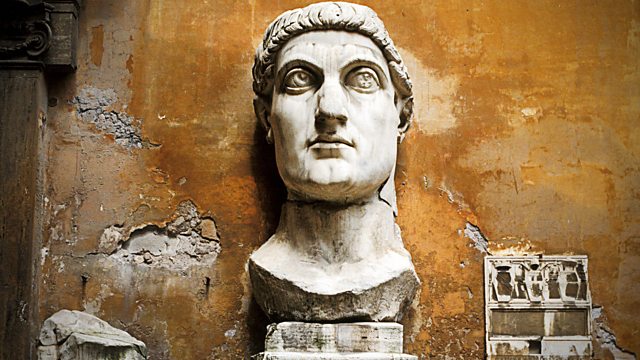
Constantine was a Roman emperor in the early fourth century. On October 27, 312 AD, he supposedly received a vision from the Christian God, who promised him victory in the Battle of the Milvian Bridge. Sure enough, his forces won the battle the following day.
Constantine eventually converted to Christianity and legalized Christianity (and all other religions). And in 325 AD, he assembled the Council of Nicaea, which (among other things) declared Arianism a Christological heresy and announced that Christians would calculate the dates of Passover independently from the Jewish community.
Did Constantine Create the Bible?
No, Constantine did not have any impact on what books were included in the Bible.
The twenty-seven books of the Old Testament were written prior to 400 BC and their canonicity was agreed upon hundreds of years before Constantine was born. Furthermore, the twenty-seven books of the New Testament were written and in circulation before the destruction of the temple in 70 AD—over two centuries before Constantine’s reign and the Council of Nicaea.
A document called the Muratorian Fragment dates to around 175 AD (150 years before Constantine and Nicaea) and, while portions of the document are missing and difficult to translate, provides a list of New Testament books that were generally accepted and read in churches. This list largely coincides with the New Testament books we have today, and importantly doesn’t make any mention of the false gospels that are sometimes claimed to have been banned by Constantine.
So, what did Constantine and the Council of Nicaea have to say about the canon of scripture? Nothing. This was not one of the topics of discussion at the Council, and there is no historical evidence that Constantine was involved in deciding which books should be included.
Why, then, were some books (such as the Gospels of Thomas and Bartholomew) rejected? Because they were written long after the life of Jesus and the other New Testament writings, because they were falsely attributed to apostles who had long since died, and because they made fantastical claims at odds with the other New Testament writings[1] and contained obvious political messaging[2] that ran contrary to the rest of scripture.
Did Constantine Invent Jesus’ Divinity?
One reason Constantine called for the Council of Nicaea was to clarify Christian doctrine related to the divinity of Jesus. While this seems like an obviously biblical belief nowadays, in the fourth century a man named Arius was promoting the idea that Jesus was just a human, not God in the flesh.
Did Constantine suppress Arius’ heart-felt belief and promote Jesus to the Godhead? No. In fact, Constantine actually leaned towards Arianism. The idea that a mere human could achieve god-like status (rather than the biblical doctrine that Jesus was and is eternally God) was much more attractive to Constantine’s Roman upbringing, so Constantine entered the Council of Nicaea supportive of Arius’ heresy.
Over the course of the three-month council, hundreds of bishops (led by a man named Athanasius) bravely opposed Arius—and Constantine—to espouse the Bible’s teaching that Jesus was and had always been God. And rather than oppose the bishops and demand that they agree with him, Constantine submitted to their leadership and expertise, and the Council of Nicaea affirmed the doctrine of Jesus’ divinity.
Later in life, Constantine continued to flirt with Arianism, even being baptized by an Arian bishop at the end of his life. After he passed, Constantine’s successors persecuted Athanasius over the issue of Jesus’ divinity, exiling him an astounding five times. However, the bishops remained firm, submitting to the Scriptures rather than the emperors, and today the doctrine of the Trinity and Jesus’ divinity is firmly established—without any influence from Constantine.
Did Constantine Force Christians to Abandon the Biblical Calendar?
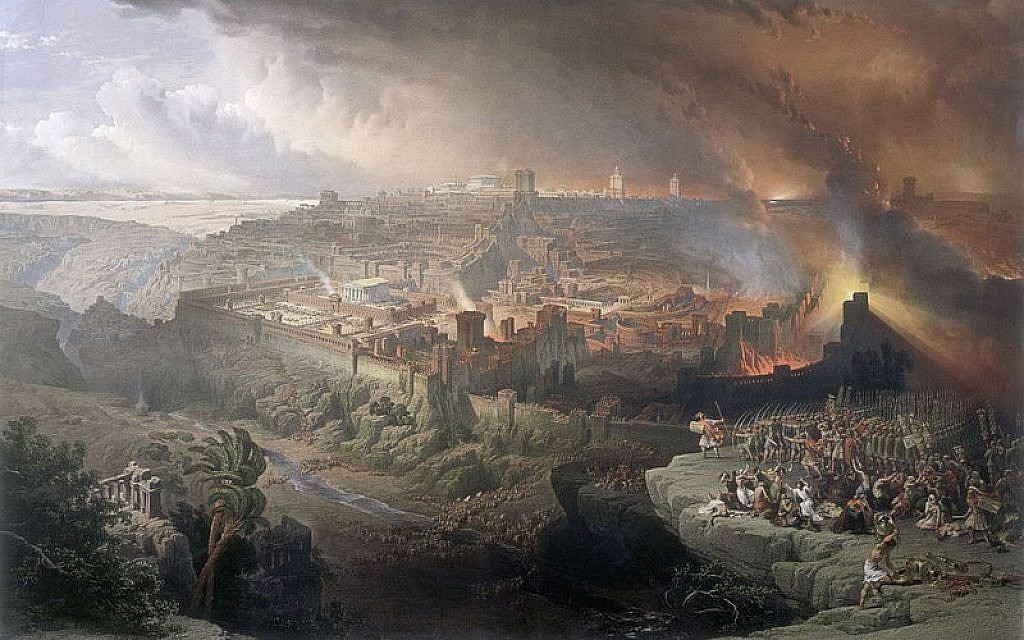
After the destruction of the temple in 70 AD, the Jewish community changed how they determined the dates of Passover. For over 800 years, there were many competing methods for structuring the calendar, none of which were the system in place during the time of Jesus.
During this time, the Christian community struggled to find consistent dates to celebrate the resurrection of Jesus (which they called Pascha, the Greek translation of the Hebrew Pesach, meaning Passover). Many churches relied on their Jewish neighbors for these dates, but this wasn’t ideal. For one, many Christians distrusted the synagogues, which had persecuted the Church for almost a hundred years, had forced the Christians out of their communities by declaring them heretics, and had taught that Jesus was a false sorcerer who had been sent to hell for His sins. Additionally, Passover in one synagogue might be as much as a month off from the synagogue in the next town, leading to churches from town to town celebrating at different times.
For hundreds of years prior to Constantine’s reign, Christians debated the proper time to observe Passover. So when the Council of Nicaea was finally called to address the Arian heresy, the subject of the timing of Passover was also discussed.
While a dating method was not determined, the bishops agreed that all Christians should celebrate on the same day and that this day should be calculated independent from the Jewish community.
Later that century (and long after Constantine’s death), the Church finally agreed on a way to determine the date of Passover. Passover would always be celebrated after the first full moon that fell after the spring equinox—the same method that was in place during Jesus’ life, according to Jewish-Roman historian Josephus, Jewish scholar Philo, the translators of the Septuagint, and several other ancient Jewish teachers.[3]
Constantine did not force the Church to change the calendar, nor did he dictate when Passover would be celebrated, though the Christians of the day agreed that the calendar needed to be corrected and eventually made that correction.[4]
Did Constantine Enact Anti-Jewish Laws?
Constantine did indeed enact what could be considered an anti-Jewish law. On October 18, 315, Constantine made it illegal for Jews to “attack with stones or any other kind of violence” fellow ethnic Jews who had converted to Christianity. According to the law, there had been recent instances of Jews committing violence against converts to Christianity, so Constantine outlawed this practice and made it punishable by “immediately being given over to the flames and burned” (Codex Theodosianus 16.8.1[5]).
Constantine did enact several other laws related to the Jews as well. In addition to making Judaism a legal practice with the Edict of Milan in 313 AD, he also exempted Jewish leaders from compulsory military service (16.8.2) and public service (16.8.4); preserved the rights of Jews to serve on municipal councils (16.8.3); and prohibited recent Christian converts from “disturbing Jews or inflicting any injury on them” (16.8.5).
Based on the historical record, Constantine did not actually enact any laws that could be interpreted as oppressive towards the Jewish people, other than preventing them from oppressing Christian converts—and even then, he also outlawed Christian converts from oppressing Jews as well. Additionally, he passed several laws that protected the Jewish clergy and preserved the roles of the Jewish people in civil society. If anything, it could be said that Constantine enacted laws that actually protected the Jewish people in the increasingly Christianized empire.
Was Constantine a Good Person?
The purpose of this article was not to comment on Constantine’s morality or to conclude whether he was a genuine Christian. The goal was simply to clarify the role that Constantine played in the development of Christianity.
And from the historical record, Constantine did not directly influence Christianity as we know it today, nor did he subvert what Christianity was prior to his conversion. He simply got out of the way. He prevented the enemies of the Faith from persecuting God’s people and allowed Christians the freedom to practice their religion in peace.
When Constantine held doctrinal views contrary to the Church, he submitted to their theology rather than demand they cave to his. And despite tensions that had flared between Christians and Jews for hundreds of years, he prohibited violence from either side, allowing both to serve in the empire so long as they did so in peace.
The Faith that Christians practice today—what is sometimes called Nicene Christianity—is the same faith Jesus passed on to His disciples. It is Biblical Christianity, and no historian can reasonably claim that Constantine had a hand in creating it.
[1] As an example, the so-called Gospel of Bartholomew (tells a story where Jesus pulled up the earth like a carpet and led the devil out on a leash in the presence of the disciples, who immediately died out of fright and had to be resurrected one at a time.
[2] The Gospel of Thomas, for instance, makes disparaging claims about women, suggesting that they aren’t fully human.
[3] As you can see, the correction of the calendar was based almost exclusively on Jewish writings. Whether ancient Jewish scholars (translators of the Septuagint), Jewish scholars of Jesus’ day (Philo), or a Jew-turned-Roman historian (Josephus), all testify that of the proper calendar dating method. Additionally, the Talmud (a compilation of oral Jewish tradition formalized shortly after the Council of Nicaea) affirms there were many varying methods for determining Passover, none of which matched the system in place during Jesus’ ministry or in place today.
[4] While on the subject of Passover, Constantine also didn’t invent Christmas or Valentine’s Day. He did, however, make Sunday a civil day of rest in 321 AD, allowing Christians to continue the practice of Sunday worship (established in the Book of Acts) without interfering with their work.
Jesus was crucified during the feast of Passover around 30 AD and was raised to life three days later. Since then, faithful Christians have commemorated this historic event every year. But what is the proper date to celebrate this holiday?
This was one of the many questions that early believers debated during the first three centuries of Christianity, with various factions of the religion celebrating on different days. Amidst disagreement as to which day was the correct day, in 325 AD the Roman Emperor Constantine gathered hundreds of bishops from around the world to settle this question (and several others) once and for all. By the end of the council, an official date for Pascha[1] (the Greek transliteration of the Hebrew Pesach, meaning “Passover”) was not set, but two determinations were made:
All Christians should celebrate on the same day
“It was determined by common consent that everyone, everywhere should celebrate it on one and the same day. For what can be more appropriate, or what more solemn, than that this feast from which we have received the hope of immortality, should be kept by all without variation, using the same order and a clear arrangement?”[2]
The date of Pascha should be determined independent of the Jewish community
“It seemed very unworthy for us to keep this most sacred feast following the custom of the Jews… Since we have cast aside their way of calculating the date of the festival, we can ensure that future generations can celebrate this observance at the more accurate time which we have kept from the first day of the passion until the present time… Therefore have nothing in common with that most hostile people, the Jews. We have received another way from the Savior. In our holy religion we have set before us a course which is both valid and accurate.”[3]
Nowadays the Jewish Passover and the Christian Easter generally coincide, except for three years[4] out of every nineteen-year cycle. As faithful Christians who want to honor Jesus on the correct day, should we celebrate during Jewish Passover or on Easter Sunday? Should we observe Jesus’ resurrection at the same time that the Jews observe the deliverance from Egypt, or were the Nicene bishops correct to separate themselves from the Jewish calculations?
What the Bible Says
Even before the crucifixion of Jesus, Passover was about more than the escape from Egyptian slavery. It seems that God placed many deliverances during this week-long festival. To name just a few,
Lot was delivered from Sodom and Gomorrah during Passover
Joshua entered the Promised Land during Passover
Daniel received the vision of the return from Babylonian captivity during Passover
Esther’s fast for the deliverance of the Jews from Haman occurred during Passover
The original Passover had become the template for God’s great and ever-present salvation. In fact, Passover had become so synonymous with God’s deliverance that Jeremiah prophesied the Messiah’s eventual deliverance of mankind would mirror and yet outshine the original Passover (Jeremiah 16:14-16, 23:5-8).
Given the history, symbolism, and importance of Passover, it’s no surprise that Jesus died on the cross during this feast. Just as Jesus had rescued the Israelites from slavery to Egypt during Passover (Jude 1:5), so too did He rescue humanity from slavery to sin and death during this feast.
Throughout the Hebrew Scriptures, God repeatedly gave the date of the Passover as the fourteenth day of Abib—the first month:
“In the first month, on the fourteenth day of the month at the evening, you shall eat unleavened bread…” (Exodus 12:18)
“The Feast of Unleavened Bread[5] you shall keep. Seven days you shall eat unleavened bread, as I commanded you, in the appointed time of the month of Abib; for in the month of Abib you came out from Egypt.” (Exodus 34:18)
“On the fourteenth day of the first month at twilight is the Lord’s Passover. And on the fifteenth day[6] of the same month is the Feast of Unleavened Bread to the Lord…” (Leviticus 23:5, 6)
“Observe the month of Abib, and keep the Passover to the Lord your God, for in the month of Abib the Lord your God brought you out of Egypt by night.” (Deuteronomy 16:1)
Turning to the New Testament accounts, all four gospels record that Jesus’ crucifixion occurred during Passover:
“Now it was the Preparation Day of the Passover, and about the sixth hour. And [Pilate] said to the Jews, ‘Behold your King!’ …Then he delivered Him to [the chief priests] to be crucified. So they took Jesus and led Him away.” (John 19:14, 16[7])
If the people of God are looking for the date on which they should celebrate the death, burial, and resurrection of Jesus, the days during the weeklong celebration of Passover/Unleavened Bread would be the answer.
More specifically, Jesus’ death and burial would have taken place on the first Friday of the Passover week:
“Now when evening had come, because it was the Preparation Day, that is, the day before the Sabbath [the day before Saturday, i.e., Friday]… he laid Him in a tomb…” (Mark 15:42, 46)
…while His glorious resurrection would have taken place during the first Sunday of Passover:
“Now on the first day of the week [Sunday] Mary Magdalene went to the tomb early, while it was still dark, and saw that the stone had been taken away from the tomb.” (John 20:1)
Jesus was crucified before sunset on the 14th day of the first month (a Friday); He was in the tomb on the 15th day of the first month (a Saturday); and He rose from the dead shortly before sunrise on the 16th day of the first month (a Sunday).[8]
What the Jews Do
In determining the proper dates to recognize these historical events, one must examine when the Jewish community and Christian community celebrate these holidays—and how they arrived at those dates. Today, observant Jews enjoy a Passover meal at sundown, just after the fourteenth day ends and the fifteenth day begins, during what they consider the first month of the year—the month of Nisan. This appears accurate to the biblical commission, but when does their first month begin—and why do they call it Nisan rather than Abib?
There is no exact history on when the first month of the biblical calendar was supposed to begin, but what is known is that the methodology for calculating the start of this month has changed several times throughout the history of the Jewish people. From the time that the Passover was given to Moses and the Israelites (1446 BC) until the time of the Babylonian captivity (586 BC), the first month was called Abib—Hebrew for “barley ripening.” It is unknown how the new year was determined during this period, but it is agreed that the first day of each month was announced upon the first observation of the crescent moon immediately following a new moon and that the first month began near the spring equinox.[9] Each year typically had twelve months, and every few years a thirteenth “leap month” was added to keep Passover from drifting too close to winter.[10]
After the southern kingdom of Judah was conquered in 586 BC, Jews en masse were exiled to Babylon. Here they were introduced to the more sophisticated calendar of Babylonia, which was based not on agriculture but strictly on the movements of the sun and the moon. The exiled Jews quickly adopted the precise Babylonian methodology (and a new Babylonian name for the first month of the year—Nisan, meaning “beginning”) while living in a foreign land, and—upon their return to the Promised Land in 539 BC—continued determining their feasts based on astronomy.
Using the Babylonian method to sort their calendar, the first day of the year (1 Nisan) would fall on the day after the new moon closest to the spring equinox, while Passover (14 Nisan) would always fall on the first full moon on or after the spring equinox.
This rationale continued from the Babylonian captivity until well into the first century AD. In The Antiquities of the Jews, which was written in 93 AD, Josephus writes:
“But in the month of Xanthicus, which is by us called Nisan, and is the beginning of our year, on the fourteenth day of the Lunar month, when the sun is in Aries;[11] for on this month it was that we were delivered from bondage under the Egyptians: the law ordained that we should every year slay that sacrifice which I before told you we slew when we came out of Egypt; and which is called the Passover.” (The Antiquities of the Jews, 3.10.5)
This system was not without its problems. Given that the first month could begin fourteen days before the spring equinox, adherence to this system required both an accurate observation of new moons as well as a foreknowledge of when the spring equinox would begin.[12] When the Sanhedrin was confident that the stars had aligned properly, they would announce the new year and the people could begin preparing for the upcoming Passover.[13]
After the destruction of the second temple in 70 AD, the determination for the Hebrew new year—and thus the proper dating for the Passover—became fractured within the Jewish community, with various groups using different standards and thus celebrating on different days. For instance, Rabbi Jose ben Halafta suggested the following criteria for establishing a new year:
“A year may be intercalated on three grounds: for the ripening of the grain, for the fruit of the trees, and for the equinox. Any two of these can justify intercalation, but not one alone.” (Babylonian Talmud, Sanhedrin 11b)
Rabbi Shimeon ben Gamaliel offered a different view, suggesting that the month of Nisan should be pushed back thirty days if “the pigeons are still tender and the spring lambs thin” (Sanhedrin 11a). Rabbi Judah ha-Nasi said the new year should be delayed a month if the spring equinox is over twenty days away, while others suggested it should be delayed if the equinox is only sixteen days (Mishnah Sanhedrin 12b). There was also disagreement concerning whether a leap month could be added to adjust the timing of Sukkot,[14] as well as whether leap months could be used during successive years or during sabbath years.
Without an objective, universal standard, the Sanhedrin would end up deciding when the new year had begun based on some combination of the above rationales, and these often varied from year to year. Those abroad had no way to know when the new year would begin, which led to scattered communities either waiting for messengers to arrive with the message that Nisan had officially been declared or celebrating Passover on the day they figured it would most likely fall on. This disparate methodology continued for almost a thousand years, with historical records revealing many distinct dates and competing calculations for Passover throughout the first millennium AD, even in the same year.
According to a tenth century tradition, Hillel the Nasi[15] proposed a fixed nineteen-year calendar in the year 359 AD.[16] However, this idea didn’t gain widespread attention until the ninth century. Sometime after 836 AD, the Jewish community began using a repeating nineteen-year cycle to determine the beginning of the month of Nisan. Adjustments were made over the next ninety years, and around 924 AD this new calendar system reached its modern form by applying the nineteen-year cycle to the Julian Calendar. This system is still in use by the Jewish community today.
Since the modern Hebrew calendar is based on a fixed timeline and not the actual movements of the sun, it is slightly out-of-sync with the solar year. As a result, the Hebrew calendar drifts by approximately two hours every nineteen years, which has led to a roughly five-day shift since its inception in the tenth century. Eventually this discrepancy will push Passover into summer, Sukkot into winter, and Hanukkah into spring. Jewish scholars have suggested that this shift will need to be rectified eventually, but currently there are no plans to adjust the calendar.
What the Christians Do
After the death, burial, and resurrection of Jesus occurred during the Passover festival, followers of Jesus continued celebrating the Passover in the context of this momentous event. Evidence in the Book of Acts demonstrates that the apostle Paul and his ministry team observed Passover while living in gentile Philippi (Acts 20:6), and Paul explicitly connects Jesus’ passion to the Passover and the Feast of Unleavened Bread (1 Corinthians 5:7).
While there was general agreement among Christians that the crucifixion and resurrection should be celebrated during the month of Nisan, disagreement arose concerning on which day of the month it should be observed. Bishops in the East, led by Polycrates of Ephesus, “held that the fourteenth day of the moon, on which day the Jews were commanded to sacrifice the lamb, should be observed as the feast of the Savior’s Passover.”[17] In a 195 AD letter, Polycrates cited half a dozen Christians throughout history, including the apostle John and Polycarp of Smyrna, who also observed the crucifixion on the fourteenth day of Nisan.
On the other hand, bishops in the west, led by the Roman African Bishop Victor I, contended that the resurrection should always be celebrated on a Sunday—albeit the Sunday during the weeklong Feast of Unleavened Bread. This necessitated that the crucifixion be observed on a Friday during Passover, which wouldn’t always fall on the fourteenth.
Though much ink and several synods were convened, no decision was reached. All parties involved agreed to live peaceably despite the difference and their various congregations continued observing these holidays between 14 Nisan and 22 Nisan.
This tacit arrangement continued for the next century and a half, but dissatisfaction arose concerning the method of deciding when Nisan had officially begun. During this time the Jewish people lacked a consistent technique for determining the new year. As such, Christian churches depended on an announcement from their local Jewish community. And depending on where you lived, the date you received from the Jews in your region might differ by as much as thirty days from the date celebrated a few towns away.
There was also a general acknowledgement that the dates provided by the Jews, inconsistent or not, were based on a relative system foreign to the calculations of old. Anatolius of Laodicea wrote in 260 AD that the Jews, whose newer system could place the Passover before the spring equinox, had “committed no slight or common blunder” in abandoning the calendar system used from the sixth century BC until the destruction of the second temple. He continued,
“And this is not an opinion of our own, but it was known to the Jews of old, even before Christ, and was carefully observed by them.”
Looking back into Jewish history, he cited Philo, Josephus, Musaeus, “and not only them, but also those yet more ancient, the two Agathobuli, surnamed ‘masters,’ and the famous Aristobulus, who was chosen among the seventy interpreters of the sacred and divine Hebrew Scriptures” as those who used the older system:
“These writers, explaining questions in regard to the Exodus, say that all alike should sacrifice the Passover offerings after the spring equinox, in the middle of the first month.”[18]
The growing sentiment was that—since the Jewish community had abandoned the calendar which was in place during the latter years of the Hebrew Scriptures, during the life and ministry of Jesus, and during the early church—it didn’t make sense to rely on their inconsistent and constantly evolving guidance in determining the official dates of Passover.
Disagreement continued for another sixty years, until, amid growing confusion, Constantine convened the Council of Nicaea to address this topic (along with the Arian heresy). At the council, bishops from around the world argued for a variety of possible solutions. Some wanted to rely on the Jewish calendar, while others wanted to break away and return to the ancient and thus “correct” system for dating Nisan. Some felt the observance should always occur on Sunday, while others felt it should always occur on the 14th day of the lunar month.
At the conclusion of the Nicene Council, the bishops had formally resolved the issue. While no formal calculation was established, it was agreed that Pascha would be determined independently from the Jews. Within a century, the Church widely adopted a calendar system based on the methodology that had been in place during the life of Jesus[19]: the fourteenth of Nisan would fall on the first full moon on or after the spring equinox, and Pascha in turn would be celebrated on the following Sunday.[20] The consensus was that this calculation wasn’t new but instead was that “which we have kept from the first day of the passion,” and by returning to this tradition they had “set before us a course which is both valid and accurate.”[21]
Differences Between the Calendars
Today both the Christians and the Jews use a nineteen-year calendar first developed by Anatolius. While the calendars mostly align, the Jewish calendar places Jewish Passover a month after Christian Easter three times every nineteen-year cycle. This is because the Christian calculation is based on the spring equinox while the Jewish calculation is fixed to the now defunct Julian calendar. As a result, the dates for Jewish Passover are slowing shifting toward summer. Unless Jewish calendar is updated, more and more dates on the nineteen-year cycle will shift further from the spring equinox over the coming centuries.[22]
Which System Should Christians Use Today?
The proper date to observe Pascha is during the week of Passover/Unleavened Bread, from 14 Nisan to 22 Nisan. Both the Jews and the Christians agree on this but disagree on when the month of Nisan begins. And throughout history, the standard for calculating the month of Nisan has changed many times, with (according to many scholars) a seemingly foreign system adopted from Babylon even being used during the ministry of Jesus (not to mention replacing the Hebrew name of the month with the Babylonian name).
As the Jews and Christians each believe they are celebrating during the correct month of Nisan and the Bible doesn’t define when Nisan should begin, it could be argued that both are striving for the spirit of the law and thus neither are provably in error.
However, while neither system can be condemned, it is my opinion that the current Christian system is more faithful than the others, for the following three reasons:
First, it was the system in place during the death, burial, and resurrection of Jesus. According to a plethora of Jewish sources, Jesus would have celebrated Passover during the first full moon on or after the spring equinox. He would have eaten His last supper and died upon the cross during the Nisan based on this system. And He would have been raised from the dead on the Sunday following the fourteenth of this Nisan. Additionally, Peter, Paul, and the rest of the early church would have observed the feast using this system.
Secondly, third century Christians had the authority to break from the Jews and adopt this system. As has been mentioned, the Jews changed their calendar on multiple occasions. In fact, several of these changes occurred after they had rejected the Messiah, rendering their religious service unfaithful to the Torah. If the Jesus-denying Jewish community had the authority to break from the past and update their calendar, how much more would a Church submitted to Christ have the authority to break from the present and return to the ways of old?
Finally, the Christian system is based on the motions of the sun while the Jewish system is based on a defunct Roman calendar. While the Christian system was established within the context of the Roman Empire, it doesn’t actually place the celebration of Pascha within the confines of a Roman calendar; it instead uses the spring equinox and the phases of the moon. The Jewish calendar, on the other hand, uses a Roman calendar established by Julius Caesar rather than the equinox. And given the slight inaccuracy of the Julian calendar, the Jewish system will have to eventually be changed yet again.
For these reasons, it is my belief that the Christian Pascha is the more accurate date to celebrate Christ our Passover. However, Jesus isn’t only the Lamb of God on the fourteenth of Nisan, nor is He only alive on Sundays.
“I am He who lives, and was dead, and behold, I am alive forevermore.” (Revelation 1:18)
As believers in the Messiah, we should remember His broken body and His shed blood whenever we gather together, and we should rejoice in the power of His resurrection at all times. The most proper day to observe the Passover Lamb is every day, and he who recognizes the Lordship of Christ shall not be condemned, whether he recognizes it using my preferred Paschal system or not.
[1]Pascha is the common and historical name for Easter. To this day, most languages refer to the celebration of Jesus’ resurrection as some form of Pascha (Spanish: Pascua, French: Pâques, Dutch: Pasen, Filipino: Pasko, Hawaiian: Pakoa, Turkish: Paskalya, Swahili: Pasaka, and so on); while a handful of languages (like English, German, and Japanese) use some variant of the word Easter. The first recorded use of the word Easter was in 725, when the Venerable Bede wrote that “Eosturmonath [the month of Easter] has a name now translated ‘Paschal month,’ and which was once called after a goddess of theirs named Eostre” (The Reckoning of Time, Chapter 15: The English Months). Ironically, he was commenting how Pascha took place during the English month of Eostre (an old English deity unknown to history except for Bede’s passing reference), but his pointing this out caused the English people to adopt the name Easter for the holiday season.
[2] Source: Vita Constantini, Book III.17-20 (Eusebius).
[4] While the dates currently vary three times every nineteen years, this discrepancy will grow as time goes on (albeit slowly). By the year 3000, for instance, there will be six discrepancies every nineteen years.
[5] “Passover” originally referred to the sacrificial lamb that was slain on the afternoon of the fourteenth day of the first month. This was followed by the Feast of Unleavened Bread, which began that evening and lasted seven days. Over time, the term “Passover” began to describe the meal eaten on the first night of Unleavened Bread (i.e., the Passover Seder), and nowadays it’s not uncommon for the entire weeklong festival to be called Passover.
[6] Because Genesis 1 recounts each day with the words “so the evening and the morning were the [first/second/etc.] day,” the traditional Biblical calendar day begins at sunset rather than at midnight. Thus, “the fifteenth day” began at sundown a few hours after the Passover sacrifice of the fourteenth day, not twenty-four hours later.
[7] Similar accounts are recorded in Matthew 26, Mark 14, Luke 22, and 1 Corinthians 5.
[8] It should be noted that, while scripture seems to indicate these were the calendar dates and weekdays of these events, there is scholarly debate as to which exact weekday and which calendar date during the weeklong festival all of these things happened. Regardless, there is universal agreement that these events took place during the Paschal season.
[9] Most scholars believe that, before the Babylonian exile, Israelites used agricultural observation rather than astronomical observance to determine when the spring equinox would occur. However, as there are no records indicating their methodology during this time, this is educated speculation.
[10] A lunar month is about 29.5 days long, meaning a twelve-month lunar year is about 354. This is a little over eleven days short of a solar year (~365.2425 days), so leap months are occasionally added to make up for this eleven-day drift into winter.
[12] It is recorded that when a Jew saw the first slivers of a crescent moon, he was to report it immediately to the Sanhedrin. This witness would then select the shape and rotation of the crescent moon from a lineup of several possible choices to confirm that the shape they claimed to have seen matched the shape predicted during that time of year. Only when two witnesses had been confirmed to have seen the correct moon phase would the Sanhedrin officially declare that the new month had begun.
[13] A comical historical detail reveals that when the Sanhedrin observed a new moon, they would light signal fires to inform the nation of the change in month. The Samaritans, always a thorn in the side of the Jews, interrupted this practice by lighting fake signal fires to throw off the celebration of Biblical feasts. To ward against this, the Jews began sending messengers rather than relying on signal fires. However, this method took much longer, resulting in far-off communities missing feasts by a day or so. To be safe, Jewish communities outside of Israel would estimate the true day of the feast and begin the celebration both a day early and the next day—to ensure the feast was celebrated on the correct day. This is why modern Jewish families living in the diaspora observe feasts for two days, while those in Israel only observe for one day.
[14] Sukkot, or the Feast of Tabernacles, is an eight-day fall festival celebrated during the seventh month of the Biblical calendar.
[15]Nasi means “prince” in Hebrew, revealing Hillel II was a leader of the Sanhedrin during the fourth century.
[16] The fixed nineteen-year lunar calendar was first proposed by Christian bishop Anatolius of Laodicea almost a hundred years earlier.
[17] Source: Church History, Book V.23.1 (Eusebius).
[18] Source: Church History, Book VII.32.15-17 (Eusebius).
[19] Anatolius proposed this system in 260 AD, and in addition to being formally adopted by the Church a century later, six hundred years later it also became the basis for the Jewish calendar in use today.
[20] Not all Christian churches use this system today. The Orthodox Church, for instance, adds an additional rule to the above criteria: it must occur after Jewish Passover.
[21] Source: Vita Constantini, Book III.17-20 (Eusebius).
[22] Ironically, the impetus for the Christians breaking from the Jewish calendar was because the system of the third century placed too many Passovers before the spring equinox. The Jews’ current system—put in place during the tenth century—now places too many Passovers over a month after the spring equinox.
After David defeated Goliath and drove the philistines away from the Valley of Elah, he and King Saul returned home. They were met by an array of celebratory women, who joyfully sang,
“Saul has slain his thousands, And David his ten thousands.” (1 Samuel 18:7)
Saul was ticked. “They have credited David with tens of thousands, but me only with thousands,” he lamented. And from that day forward, Saul’s jealousy burned against David, eventually culminating in the king going mad and committing suicide.
But was Saul even right? Were these singing women really praising David more than Saul?
Outside of the David/Saul debacle, there are only four verses in the scriptures that compare “thousands” (Hebrew “eleph”) to “ten thousands” (Hebrew “rebaba”)—and all are poetry:
In Deuteronomy 32, Moses sings about how “one could chase a thousand, and two put ten thousand to flight” only through the help of the Lord.
In Deuteronomy 33, Moses blesses Joseph, prophetically declaring that his two sons will drive their enemies “to the ends of the earth”—the older Manasseh defeating “thousands” and the younger Ephraim overcoming “tens of thousands.”
The author of Psalm 91 sings that even if “a thousand fall at your side, and ten thousand at your right hand,” pestilence and destruction “shall not come near you.”
Micah 6 warns that God will not be pleased with sacrifices of “thousands of rams” and “ten thousand rivers of oil” if His people refuse justice, mercy, and humility.
In all of these verses, it becomes evident that the escalation from “thousands” to “tens of thousands” is poetic way of elevating the point God is making. Furthermore, that escalation often results from additional people joining the cause, even someone younger.
When Manasseh—the older brother—fights against God’s enemies, he overcomes thousands; but when Ephraim—his younger brother—takes up arms at the right side of his eldest brother, their efforts increase tenfold. And how good it is when these brothers dwell together in unity (Psalm 133)!
When the women sang that Saul had slain thousands and David ten thousands, they weren’t saying, “David is ten times better than Saul”; on the contrary, they were declaring that, because David had joined the king’s cause and because Saul had welcomed this younger man into the family, their joint efforts had increased tenfold. Saul (who himself was a descendant of Benjamin, the younger brother of Joseph), they rejoiced, had defeated their enemies by inviting the next generation to join the work of God!
But Saul couldn’t see this. His pride and his fear blinded him to what was so plain. And for the rest of Saul’s short reign, the tens of thousands of philistines that had been driven to the ends of the earth were allowed to once again invade the land while Saul aimed his spite at David—his spiritual Ephraim.
God promised Abraham a family, and told him that his new family would be a blessing to every family in the world. Yet Abraham allows his wife to be taken into another man’s harem, has an affair, then lets his wife treat his mistress poorly. Abraham’s son, Isaac, also allows his wife to be taken into another man’s harem.
Isaac’s son, Jacob, begins a generational legacy of deception. Jacob deceives his brother to steal his birthright, then deceives his father to steal his blessing. Jacob is deceived by his uncle, then deceives his uncle before fleeing from his home. Rachel deceives her father and steals his idols. Jacob’s sons deceive the inhabitants of Shechem and then kill them all. Reuben deceives his father’s third wife into his bed. Joseph’s brothers sell Joseph into slavery, then deceive their father about his fate. Judah deceives Tamar concerning the marriage of his son, then Tamar deceives Judah into her bed.
After 22 years in Egypt, Joseph comes face to face with his brothers, and continues the deception of this broken family. He lies about his identity, then alternatingly steals from them and plants stolen goods on them. Their youngest brother is found with a stolen cup in his pack (using the same language from the Rachel-Laban story), and as far as his brothers know, Benjamin had deceived everyone to steal this prized goblet.
Over the course of several hundred years, we’ve witnessed a family that is supposed to bless the world, but they can’t even get over their own crap and bless one another.
But then Judah stands up. He confesses to Joseph what he had done. He offers to take the place of his supposedly guilty brother Benjamin (just as Judah’s descendant Jesus would do for us). He ends the legacy of deception. Joseph responds by confessing his deceptions, and the family is finally reunited.
Abraham’s descendants were supposed to bless the world. But before they could, they had to get their household in order and learn to bless each other. You, too, are supposed to bless the world. Start today with the people living under your roof.
While ministering in the region of Judea beyond the Jordan, a group of Pharisees came to Jesus and tested Him by asking a series of questions about marriage and divorce:
“Is it lawful for a man to divorce his wife for any reason?” (Matthew 19:3)
“Why did Moses command to give a certificate of divorce and to put her away?” (v. 7)
To these questions, Jesus responds that “what God has joined together, let not man separate” (v. 6) and “Whoever divorces his wife—except for sexual immorality—and marries another commits adultery” (v. 9).
Jesus’ answer seems pretty straightforward: The only justification for divorce is sexual immorality (literally porneia, or fornication) and every other divorce constitutes adultery. But there appears to be an inconsistency. Why did Jesus tell Moses that divorce “for any reason” was permissible 1,400 years earlier?
Sure, we could chalk it up to the hardness of the Israelites’ hearts (v. 8), but doesn’t that leave an opening for Christian divorce today, so long as one claims that hearts have been hardened? While the divorce rate among Christians is lower than among non-Christians, it still rests around 20-25 percent, meaning around 1 in 4 Christian couples appear to be using this “hardened heart” loophole to excuse their divorces.
What’s more, Paul’s letter to the Corinthians has been used to justify divorce as well. Paul writes that “if the unbelieving spouse departs, let him depart; a brother or sister is not under bondage in such cases” (1 Corinthians 7:15).
Jesus says that divorce is only permissible in cases of sexual immorality, Paul says divorce is permissible when your spouse wants a divorce, and Moses says divorce is permissible for any reason. How can we explain these contradictions to establish a consistent view of marriage and divorce?
The answer is simple: neither Moses nor Paul disagree with Jesus.
Moses and Divorce
Let’s examine Moses’ view of divorce:
“When a man takes a wife and marries her, and it happens that she finds no favor in his eyes because he has found some uncleanness in her, he writes her a certificate of divorce, puts it in her hand, and sends her out of his house.” (Deuteronomy 24:1)
Notice that Moses didn’t say a man could divorce his wife “for any reason”; Moses required that two conditions be met to qualify for a divorce:
Some uncleanness was found in her
The uncleanness caused the husband to find no favor in his wife anymore
So why would the Pharisees ask Jesus if it was permissible to divorce a wife “for any reason” when Moses made no such claim?
It’s because there was disagreement in first century Judaism was Moses meant by “some uncleanness.” In Hebrew, the phrase is “ervat dabar,” which literally means “a naked thing.” The Jews weren’t sure what “a naked thing” meant, so three different schools of thought were formed to translate Moses’ command.
Rabbi Shammai taught that an ervat dabar was a sexually sinful act—a sin that required the participants to be naked. Rabbi Hillel, on the other hand, believed that ervat didn’t mean “naked” so much as “shameful,” and thus taught that a man could divorce his wife for anything he considered shameful. In fact, Hillel went as far as to state that “burning your husband’s toast” was shameful enough to warrant a divorce. Finally, Rabbi Akiva taught that the ervat dabar wasn’t even relevant to the divorce, and that all that was required was that the wife no longer find favor in her husband’s eyes. Even if the wife had never done anything wrong, Akiva went as far as to say that “if [a husband] finds another woman more beautiful than [his wife],” he could divorce her.
To summarize, the three prevailing schools of thought during Jesus’ ministry were that divorce is lawful when (a) a spouse commits sexual sin; (b) a wife does anything her husband doesn’t like; and (c) a husband wants a divorce.
This would explain why the Pharisees question to Jesus was considered a “test” (v. 3). They wanted Jesus on record for which school of thought He subscribed to. Thus, when Jesus answers that divorce is only permissible in the case of sexual immorality, He isn’t disagreeing with Moses; rather He is agreeing with Moses and clarifying Moses’ position to those who had misused Moses’ words to justify divorce for any reason.
Paul and Divorce
But what about Paul? Before examining Paul’s words, we need to make something very clear in how we interpret these epistles. The first is that Paul is not going to disagree with Jesus. Contrary to the heretical views of some teachers, Paul is not the foundation of New Testament teaching; Jesus is (Jesus is the foundation of Old Testament teaching as well). Paul didn’t come to correct Jesus’ “old covenant” teaching; Paul was sent by Jesus to strengthen the Church with the teachings of Christ.
And Jesus plainly taught that to divorce (for any reason other than sexual immorality) and remarry was to commit adultery. Therefore, we must accept that, whatever Paul appears to be teaching, it cannot disagree with the clear teachings of our Messiah.
With that out of the way, let’s examine Paul’s view of divorce:
“Now to the married I command, yet not I but the Lord: A wife is not to depart from her husband. But even if she does depart, let her remain unmarried or be reconciled to her husband. And a husband is not to divorce his wife.” (1 Corinthians 7:10, 11)
This doesn’t seem as contradictory as we have been led to believe. Paul writes that, according to God, married people are commanded to not depart from their spouses. But even if they do depart, they are to remain unmarried until they are reconciled with their spouse. And under no circumstances are they to get a divorce.
Paul’s teaching, which he claims is commanded by the Lord Himself, seems very consistent with Jesus and Moses. So where does the confusion come from?
It comes from the next four verses. But notice how Paul prefaces the following section:
“But to the rest I, not the Lord, say…” (1 Corinthians 7:12)
Notice that two things change in this next passage. First, Paul’s audience changes. Before he was writing to married couples, while now he is writing to “everyone else.” Next, the author changes. Before God was commanding; now Paul is sharing his opinion. That’s not to say that Paul’s opinion is wrong. It is included in the divinely inspired scriptures, and we should treat it as such. At the same time, we shouldn’t allow Paul’s (God-inspired) thoughts in verses 12-15 to outweigh God’s clear commands in verses 10-11. Instead, we should view these verses as God-breathed commentary on the previous verses that will clarify (not contradict) God’s teachings on marriage.
And after telling married couples how they should behave, what does Paul tell “everyone else”? Not to judge a Christian who is married to a non-Christian and not to judge a Christian who has been abandoned by a non-Christian.
“A woman who has a husband who does not believe, if he is willing to live with her, let her not divorce him. For the unbelieving husband is sanctified by the wife.” (vv. 13, 14)
“If the unbeliever departs, let him depart; a brother or a sister is not under bondage in such cases.” (v. 15)
At the beginning of this passage (vv. 10, 11), God had commanded that married couples were under no circumstances to divorce. Here Paul tells people on the outside of these marriages that they aren’t to judge a Christian who remains married to an unbeliever—for the unbeliever and their children will become holy because of the faithfulness of the Christian spouse—nor are they to bring condemnation on a fellow Christian who has been left by an unbelieving spouse. Nowhere in this passage does God (or Paul) say divorce is a lawful option for Christians. Rather, Paul follows up God’s command to reject divorce by teaching fellow parishioners to be supportive of those in troubled marriages rather than judgmental.
In other words, Paul agrees with Moses and Jesus: divorce isn’t an option for Christians, even those who are married to unbelievers.
What About Hardened Hearts?
After clarifying Moses’ and Paul’s teachings on marriage and divorce, let’s return to Jesus teaching.
“Have you not read that He who made them at the beginning ‘made them male and female,’ and said, ‘For this reason a man shall leave his father and mother and be joined to his wife, and the two shall become one flesh?’ So then, there are no longer two but one flesh. Therefore what God has joined together, let not man separate.” (Matthew 19:4-6)
To make His case concerning marriage and divorce, Jesus doesn’t appeal to Moses or the Law (as great as those two are); He appeals to creation itself. From the very beginning, marriage was an irreversible act. When a man marries a woman, God turns the two of them into one new thing. It cannot be undone, even if a court issues a piece of paper.
So why then did Moses sometimes allow for divorce? “Because of the hardness of your hearts.”
Hardened hearts—which in scripture signify a lack of faith that results of a lack of obedience (Mark 16:14, Deuteronomy 10:16, Jeremiah 4:4)—is why we have divorce today. People refuse to trust God with their marriages and their families, and it results in humans trying to do the impossible—to separate what God has joined together—which causes disaster for all involved.
Why might a spouse commit ervat dabar, or sexual sin? Because of a hardened heart toward God and their spouse. And why might a scorned spouse seek a divorce from a partner who sinned against them? Because of a hardened heart toward God and their spouse.
Jesus’ point is that, even in the face of adultery, divorce was permitted because of hardened hearts. It might be difficult to accept, but God’s will in the case of ervat dabar is for forgiveness and reconciliation to take place. Even sin shouldn’t separate what God has joined together.
After all, while God has historically separated Himself from His idolatrous and adulterous people, He has always striven to be reconciled. God has only ever had one bride: the True Israel, the Ecclesia, the Church of God.
In summary: Creation, the Law, the Gospels, and the Epistles all agree. Divorce and remarriage aren’t really an option. While technically divorce would be permissible in the case of fornication (ervat dabar), this is only because we have hardened our hearts to God and to each other. If our hearts are right, we should seek reconciliation and avoid trying to separate what God has joined together.
When King David’s throne was usurped, David fled from Jerusalem, crossed over the Kidron Brook (“Kidron” being Hebrew for “darkness”), and headed up to the Mount of Olives.
King Solomon commanded the traitor Shimei not to leave Jerusalem nor cross over the Kidron Brook, lest he be executed for treason.
Kings Asa, Josiah, and Hezekiah disposed of the pagan idols allowed in the temple by their fathers by having them taken to the Kidron Brook and destroyed.
Jeremiah the prophet, seeing the destruction and death as Jerusalem was conquered by Babylon, prophesied that one day God would redeem His people and give them a new covenant, and that all the bodies within Jerusalem as far as the Kidron Brook would be holy to the LORD.
So if you had grown up learning these stories about the Kidron Brook, what would come to mind when you thought of Kidron?
– The king of the Jews once appeared to lose his kingdom by going from Jerusalem to Kidron to Olivet, but soon after his kingdom was restored.
– The Kidron Brook is where idols are destroyed to restore holiness to the temple.
– One day God will restore His covenant inside the bounds of the Kidron Valley.
“When Jesus had spoken these words, He went out with His disciples over the Brook Kidron, where there was a garden, which He and His disciples entered.” (John 18:1)
That night, the night Jesus was betrayed, He seemed to have lost. He was about to be destroyed. Darkness seemed to prevail.
But in reality, the temple was being cleansed. God’s covenant was being renewed. His people were being made holy. And the King would soon return.
Psalms 111 and 112 have a ton of parallels, even though they are only ten verses each. I counted almost twenty parallels—including the phrase “His righteousness endures forever” (which only appears in these two psalms) and the mention of the divine attributes “gracious and full of compassion.”
So what’s the difference between the two psalms? The first describes the character and nature of God, admonishing us to fear the LORD and keep His commandments in response; and the second describes the character and nature of *us* when we fear the LORD and keep His commandments.
God is full of grace and compassion. And when *you* follow Him, YOU will be full of grace and compassion as well.
God is righteous, just, and upright. And when *you* follow Him, YOU will be righteous, just, and upright as well.
God abounds in riches and graciously gives to the needy. And when *you* follow Him, YOU will abound in riches and graciously give to the needy as well.
And just as we become more like our heavenly Father when we follow after Him, so too will your children become more like your heavenly Father when they follow after you.
“Blessed is the man who fears the LORD, who delights greatly in His commandments. His descendants will be mighty on earth, The generation of the upright will be blessed.”
Tomorrow night is the start of Pentecost/Shavuot. As you may recall, the celebration of Shavuot takes place in the opening chapters of Acts, where the Holy Spirit is poured out on all believers. With that in mind, take a look at a few details that Luke chooses to include in Acts 1:
– Jesus was taken up from a mountain after He had given commandments
– He was with the disciples for an additional forty days
– Jesus was taken up in a cloud to sit with God
And wouldn’t you know, all of these details also appear in the story of the Ten Commandments (Exodus 19, 20, 24), which is the basis for Shavuot:
– Moses comes down from a mountain to give Israel the commandments
– Moses spent forty days on the mountain with God
– When Moses ascends the mountain, he is covered by a cloud
Jesus’ actions (such as waiting forty days) and Luke’s authorship (such as mentioning Jesus’ giving of the commandments) are meant to scream to us, “SHAVOUT! SHAVUOT! SHAVUOT!” We’re being primed to think of Jesus as a new and better Moses, and any reader familiar with the Hebrew Scriptures would be thinking of Exodus, Moses, and Pentecost as they read through Acts 1.
Well, what happened during that first Shavuot at Mount Sinai? As God’s people gathered together at the foot of the mountain, there was crashing thunder and loud trumpets. Thick storm clouds rushed through the people. God descended from heaven in a raging fire.
And what happens in Acts 2, as the disciples celebrated Shavuot? As God’s people gathered together in Jerusalem, there were loud sounds from heaven. A rushing, mighty wind blew through their midst. Flames of fire appeared over each of the disciples’ heads as God descended upon them.
Jesus is thus the new Moses. He has delivered us from the bondage of sin, written the Word of God upon the tablets of our hearts, and commanded us to reclaim the earth for His Kingdom.
* * * * *
“I will raise up for them a Prophet like Moses from among their brethren, and will put My words in His mouth, and He shall speak to them all that I command Him.” (Deuteronomy 18:18)
We read 2 Kings 17 as a family this morning. This tragic chapter recounts the destruction of the ten northern tribes of Israel in 722 BC. What struck me as we read was *why* they were destroyed. It wasn’t because Assyria was way too strong for them. It wasn’t because all the surrounding nations worshiped idols. It wasn’t really because of their enemies at all.
Israel was destroyed because “the children of Israel secretly did against the LORD their God things that were not right” (v. 9). It wasn’t those on the outside that doomed Israel. THEY DID IT TO THEMSELVES! For hundreds of years, God had warned them what was coming, and they refused to believe it could happen to them until the moment they were taken away in chains and the nation was forever destroyed.
Many of you probably think our country is going to hell. And I’m sure we all have someone to blame. It’s the Russians! It’s Big Tech! It’s the gays and the democrats and the teacher’s unions.
And all the while we ignore a 33% divorce rate among American Christians. We turn a blind eye to the fact that an American child is more likely to have a pet in their home than a mom and a dad. We’re silent about 68% of church-going men regularly watching porn—an industry that fuels sex trafficking and increases the likelihood of adultery by 300%. We donate thousands of dollars so televangelists can buy more jets while we judge the homeless man on the street corner asking for a Big Mac. We complain that there isn’t prayer or Bible study in schools, and then fail to pray and study the Bible at home.
Your enemies aren’t strong enough to take you down. The only person who can destroy you is you. I pray we learn the hard lesson of 2 Kings 17.
“They rejected God’s decrees and the covenant He had made with them, and they despised all His warnings. They worshiped worthless idols, so they became worthless themselves” (2 Kings 17:15).
The Feast of Tabernacles is a time to celebrate God’s choice to dwell among His people and our complete dependence on Him. We are commanded to rejoice and feast with others: family and friends, the fortunate and the less-fortunate, believers and non-believers.
With that in mind, there is a small detail in the story of Jonah that many of us have probably missed. After Jonah preaches to the Ninevites, after the Ninevites repent, and after God forgives their sin and turns away their deserved destruction, Jonah leaves the city, sits on a hillside, and builds himself a small tabernacle to shelter himself from the sun.
But although he is dwelling in a tabernacle, he is embodying the opposite attitude of the Feast of Tabernacles. Rather than welcoming non-Jews into God’s family, he is angry that they have been forgiven. Rather than rejoicing, he is “displeased exceedingly,” “angry,” and “distressed” (literally, evil). Rather than depending on God, he is yet again trying to escape from God. Essentially, Jonah has a little pity-party on that hillside, a voluntary Anti-Tabernacles, during a time when he should have been rejoicing.
This week is a time for rejoicing. It is a time for celebrating God’s faithfulness and God’s blessings. It is a time for compassionately welcoming those who don’t yet know the truth. It is a time for trusting in God rather than the world around us.
Don’t be Jonah. Don’t choose to be angry and bitter. Don’t look for reasons to be upset. Don’t decide to hate those with different (even wrong) views. Choose to rejoice, to welcome, to celebrate, to feast.
“Rejoice in the Lord always. I will say it again: Rejoice!” (Philippians 4:4)





 Garrett Milovich