
Should Christians Eat Kosher?

Do Christians have to eat kosher?

No.

Kosher laws far exceed the biblical dietary restrictions. For example, the law not to boil a goat in its mother’s milk (Exodus 23:19, 34:26, Deuteronomy 14:21) was expanded to restrict people from eating any dairy product with any meat product—even though both Abraham and David ate dairy products with meat (Genesis 18:8, 2 Samuel 17:27-29). Current kosher laws like the restriction on meat and cheese originated centuries after Jesus’ resurrection and wouldn’t have been observed by Jesus or any Old Testament Jews.

Concerning the dietary laws found in the Hebrew Scriptures, the early church—including Jewish Christians—believed that these laws had been fulfilled and had stopped observing them by the end of the first century. The Epistle of Barnabas was written was written by the eponymous Jewish companion of Paul, sometime after the destruction of the second temple. In this letter, the apostle explains that the Old Testament dietary laws were given primarily to instruct His people in how they should interact with gentile peoples (10:1-3), and that their purpose had been fulfilled in Christ (2:6-10).

This is in line with Peter’s vision in Acts 10. While Peter is praying on a rooftop, he falls into a trance and God commands him to eat unclean animals. Peter responds as we’d expect him to: “Not so, Lord! I have never eaten anything common or unclean” (Acts 10:14). The Lord responds,

What God has cleansed you must not call common.” (Acts 10:15)

Soon after, a group of messengers arrive and invite Peter to come visit a gentile named Cornelius. Peter acquiesces, and tell the gentiles,

God has shown me that I should not call any man common or unclean.” (Acts 10:28)

This culminates with Jesus being preached not just to a Jewish audience but to the gentile world as well, opening the gospel to all nations.

You might read this and respond, “Well, that wasn’t about food; it was about people.” And yes, you are correct. This was about people. And it always was. These dietary restrictions were never about food—they were always about people, and now that the lesson has been learned in Christ, these dietary restrictions became obsolete.

Jesus, Peter, and Barnabas aren’t alone in this understanding, either. Philo of Alexandria was a Jewish teacher who was born about two decades before Jesus and who died about two decades after Jesus. He lived in Egypt, and it is unlikely he ever heard about Jesus. He too taught that these dietary laws were never about the food itself, but were instead instituted as symbolic lessons.

The consistent teaching of the Bible is that the dietary laws of Moses were given for a specific purpose, and that purpose has been fulfilled in Jesus, understood by the Church, and are no longer necessary. Whether it’s Mark’s claim that Jesus declared all foods clean (Mark 7:19), Paul’s encouragement that “every creature of God is good and nothing is to be refused if it is received with thanksgiving, for it is sanctified by the word of God and prayer” (1 Timothy 4:4, 5) and to claim otherwise is “giving heed to deceiving spirits” (v. 1), or the Jerusalem Council’s pronouncement that the dietary laws would not be put on new believers because there was “no distinction between us (Jews) and them (gentiles)” (Acts 15:9-11), the biblical teaching is clear—these requirements are no longer in effect today.

So what then? Should Christians do the opposite? Should you gorge yourself on shrimp and hotdogs in the name of Jesus?

Not exactly.

In Romans 14, Paul gives instruction to believers dealing with weaker brothers in the faith. Paul states that, although he “knows and [is] convinced by the Lord Jesus that there is nothing unclean” (v. 14), he is aware that some Christians haven’t comprehended this truth yet. Paul recognizes that his freedom to eat all foods might offend some without full knowledge and drive them away from the faith. Thus, he warns against “destroying with your food [the faith of] one for whom Christ died” (v. 15).

Alternatively, Paul spends much of his epistle to the Galatians warning against false teachers who will try to deceive unknowledgeable Christians into unnecessarily subjecting themselves to misunderstood Jewish rituals such as circumcision and dietary restrictions. Paul discloses that even Peter got off-track with this. Though Peter had been “living in the manner of Gentiles and not as the Jews,” he was pressured by Judaizers to “compel the Gentiles to live as Jews” (Galatians 2:14). Paul would have none of it, and confronted Peter for his misleading acquiescence and cowardice, and warned that anyone who taught as the Judaizers had taught was teaching a false gospel (Galatians 1:6), had perverted the message of Christ (v. 7), and would be accursed (v. 8).

Paul’s position is clear. Though the dietary laws are no longer useful or needed, there may be those weaker in the faith who do not understand such things. To them, you are to gently guide them to the truth without damaging their faith. But on the other hand, there are those who will attempt to pervert the gospel by insisting that believers submit themselves to these restrictions, as if that will work alongside grace to benefit the Christian. To them, you are to firmly admonish lest they damage the faith of others.

So once again, should Christians eat kosher? No, there is no need or command to restrict one’s diet in this way, except to spare the faith of a weaker brother as you guide him to the full truth of the gospel. The lesson of these guidelines were fully realized in Christ, and as far as He is concerned, all are purified by faith (Acts 15:9), not by whatever enters a man from outside (Mark 7:18).

“The law was our tutor to bring us to Christ, that we might be justified by faith. But after faith has come, we are no longer under a tutor. For you are all sons of God through faith in Christ Jesus.” (Galatians 3:24-26)

Revelation’s Description of Jesus is More Important than You Think

The epic descriptions of Jesus in the opening chapters of Revelation are more important than you think.

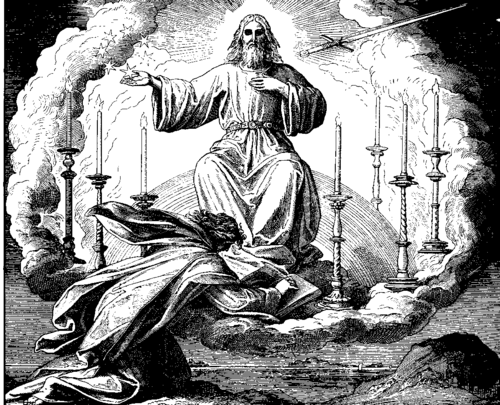
As John opens this book, he describes Jesus in several vivid ways:

  • He is One like the Son of Man (v. 13)
  • He is coming with clouds (7)
  • He is clothed with a garment down to His feet and wrapped about with a golden belt (13)
  • The hair on His head is white like wool (14)
  • His eyes are like a flame of fire (14)
  • His feet are like fine brass (15)
  • His voice is like the sound of many waters (15)
  • A sharp sword is coming out of His mouth (16)
  • His face is like the sun shining in its strength (16)

Yes, Jesus is certainly epic in all His glory. But there’s more to this than just seeing the King of Kings in an awesome way. Every single one of these descriptors is lifted directly from the Hebrew Scriptures.

In Daniel 7, God appears with “the hair of His head like pure wool (v. 9), “coming with the clouds of heaven” (v. 13) as “One like the Son of Man” (v. 13). Later in the chapter, a wicked king arises and “persecutes the saints of the Most High” (v. 25), but God soon overthrows this false ruler and gives an everlasting kingdom to His people (v. 27).

In Ezekiel 9, the people of Jerusalem have forsaken God and turned to rampant idolatry. In response, the glory of God comes upon a man “clothed with a garment down to his feet” with a belt at his side (v. 3). This man then goes “through the midst of Jerusalem, putting a mark on the foreheads of the men” who mourn and repent over the downfall of God’s holy city (v. 4). Soon after, the city is overrun and the temple is destroyed (vv. 5, 7), but those with the faithful mark are protected (v. 6).

In Daniel 10, a heavenly man appears to the prophet with “eyes like torches of fire,” his feet “like burnished bronze,” and “the sound of his words like the voice of a multitude” (v. 6). He informs Daniel that the Kingdom of Heaven were triumphing over the kingdoms of the empires of earth (v. 13) and commanded Daniel to be strong in the days to come (v. 19).

In Isaiah 49, the Suffering Servant of the Lord—Jesus—has His mouth made like a sharp sword (v. 2). He issues forth from His mother’s womb (v. 1) to gather God’s chosen together (v. 5) and then extend God’s salvation to every nation on earth (v. 6), thus “restoring the earth” to its intended glory (v. 8).

In Judges 5, Israel is enslaved to the kings of the surrounding Canaanite nations. The men are too afraid to fight back until, through the inspiration of a life-giving mother in Israel (v. 7), courage is restored and the people are delivered. Peace and rest are returned to God’s people as they cry out, “Let all Your enemies perish, O LORD, let those who love Him be like the sun when it comes out in full strength” (v. 31).

This vision of Jesus Christ isn’t just a cool sight that John saw—it was encoded with powerful imagery for all those who have ears to hear! Before we hear any fantastical prophecies or are given any righteous commandments, the mere sight of God tells us what we can expect:

  • Persecution is coming, but the wicked will be overthrown and God’s people will reign
  • The temple in Jerusalem has forsaken God and will soon be destroyed, but God has marked the faithful for protection
  • A spiritual war is raging, but the battle is already won
  • The gospel is for more than just Israel—the entire earth is being restored to God’s chosen
  • Persevere, don’t lose hope, and trust that God will strengthen His people and give them rest

All these things happened—a generation after Jesus and a few years after this vision was given. The temple was destroyed in 70 AD, but those faithful to Jesus Christ were protected; and soon the most powerful empire on earth bent the knee to Jesus Christ.

But like most things, we see echoes of these events reverberate through history. So we can take hope in this glorious vision of Jesus, just as the early church did. When persecution comes, we patiently endure, knowing we reign alongside our King. When false messiahs arise, we stand on the truth, knowing we carry the mark of Jesus Christ upon our heads. When the gospel is hindered by savage nations, we know that God reigns over all the earth. So we trust in God to strengthen His people and restore us to peace once again.

Korah Got What He Said

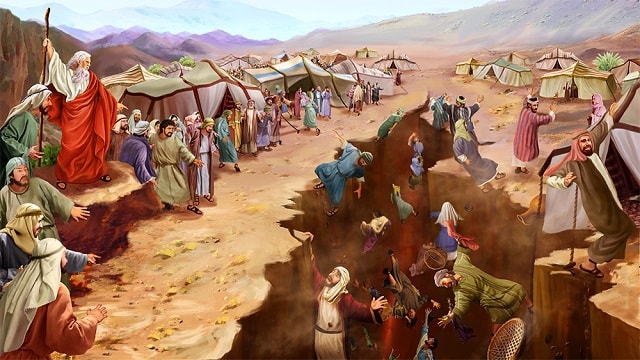
Korah’s rebellion is an interesting story buried away in a single chapter in the middle of Numbers. If you don’t recall, a man named Korah questions Moses’ leadership, declaring that since the entire “congregation is holy” and “the LORD is among [all of us],” Moses shouldn’t be exalted above the rest of Israel (Numbers 16:3). Instead, others—like, say, maybe Korah—should be lifted up as holy leaders of the people. God told Moses that He would reveal who was right, and the next day the earth opened up and swallowed Korah and his followers whole.

This may seem like an obscure story, but it has much to teach us about the nature of God and, more specifically, how God ultimately gives us what we ask for. To make sense of this story, we first need to understand who Korah was and what God had commanded him to do.

Korah was the cousin of Moses and Aaron. Thus, he was a Levite, but not a priest (kohen). To be specific, he was a Kohathite, and the Kohathites had very specific duties regarding the service of the tabernacle. As explained in Numbers 4, the Kohathites were tasked with carrying the holy things of the tabernacle from one location to another. There were a number of regulations regarding how this was to be done:

  • First, the priests/kohen would cover all the holy things (qodesh) of the tabernacle (mishkan). Six times the Hebrew word kasa is used to describe this act of covering (vv. 5, 8, 9, 11, 12, 15), but the word used once everything has been covered is bala, which is generally translated as “swallowed” (v. 20).
  • Once the priests had completed (kala) the covering process, the Kohathites would lift up (nasa) and carry the holy things to the next location (v. 15).
  • The Kohathites had to make sure not to directly touch (naga) any of the holy things, lest they die.

Now with this in mind, we can consider the events of Korah’s rebellion in context.

We know that Korah and his supporters rebelled because they were angry that the Israelites had to wander in the wilderness for forty years (Numbers 16:13, 14)—which ironically was the result of the rebellion they had waged a few weeks earlier (Numbers 13, 14)—but that’s not the reason that Korah gives to Moses.

Instead, Korah declares that everyone in the congregation is holy (qadesh) and should be treated as such. What’s more, he accuses Moses of lifting himself up (nasa), effectively usurping the work of the Kohathites. Since Moses thinks himself so holy and lifts himself up in the midst of our tabernacle, thinks Korah, we who are equally holy should be lifted up as well.

So what does God do? He gives Korah exactly what he asked for.

Korah declared that he was holy and wanted to be lifted up. And as we just read in Numbers 4, what happens to the holy things before they can be lifted up? They need to be covered. And that’s exactly what God does during the course of this chapter.

God declares that Korah and his fellow rebels had essentially formed a new tabernacle (mishkan, Numbers 16:24, 27). And just as God had warned the Kohathites not to touch anything before the priest’s work was completed, so too God warns the Israelites not to touch (naga, Numbers 16:26) anything belonging to these supposedly holy people of the new tabernacle until God completes (kala, Numbers 16:21) His work.

Then, as the tabernacle of Korah’s “holy” rebels gathers together, God opens up the ground beneath them and swallows them up (bala, Numbers 16:30, 32, 34). Finally, once the “holy” rebels had been swallowed up, God closed up the earth to cover up (kasa, Numbers 16:33) their new tabernacle.

Hebrew WordEnglish meaningDuties of KohathitesKorah’s Rebellion
MishkanTabernacleNumbers 4:16Numbers 16:24, 27
Qodesh/QadoshHolyNumbers 4:4, 12, 15, 19, 20Numbers 16:3, 5, 7
KasaCoverNumbers 4:5, 8, 9, 11, 12, 15Numbers 16:33
BalaSwallowNumbers 4:20Numbers 16:30, 32, 34
KalaComplete/consumeNumbers 4:15Numbers 16:21
NagaTouchNumbers 4:15 Numbers 16:26
NasaLift upNumbers 4:15Numbers 16:3

When you consider the events of Korah’s rebellion in light of who Korah was and what Korah had requested, everything that happened is exactly what we would expect. Korah declared that he was inherently holy and wanted to be lifted up. And he got exactly what he asked for, even if it wasn’t what he was expecting.

These events echo the story of the faithless spies, which occurred only a few weeks before. Ten of the spies (and the entire congregation of Israel) had declared that there was absolutely no way they could take the Promised Land, and that they’d be doomed to wander the desert until they died. Two spies (Caleb the Judahite and Joshua the Ephraimite) disagreed, stating that—with God on their side—they were well equipped to take what had been promised. In response to both declarations, God said,

Just as you have spoken in My hearing, so I will do to you.” (Numbers 14:28)

And every person in that story got exactly what they said. All of Israel but two died in the wilderness. And Caleb and Joshua—though well into their eighties—had God on their side, and received their inheritance.

That same promise—you will have whatsoever you speak—continues throughout the biblical narrative, from Korah to Ahaz to Hezekiah to the disciples of Jesus. And it continues for us today.

So what are you believing for? What are you declaring? Your words have power, and your faith will bring it to pass. God will honor the choices we make, even if they are the wrong choices. Will you rebel like Korah and his tabernacle, like the ten spies and the rest of the nation? Or will you submit to the promises of God, and receive the blessings He has for you?

Be careful what you say. Because one way or another, you’ll get what you want.

If Not (Church Basement)

You’re probably familiar with the story of Shadrach, Meshach, and Abed-Nego. These three Hebrew men are brought before the king of Babylon and commanded to worship a giant, golden idol. “Bow down and worship,” they are told, “or you will be thrown into the fiery furnace.” The men courageously respond, “Even if God does not deliver us, we still won’t bow down to the idol.”

It’s a great example of someone not knowing whether God would deliver them, and still fearlessly accepting the possibility of death. Except… that’s not actually what happened. Let’s take another look at the text.

The scripture in question is from Daniel 3. The king orders the three men to worship the golden image or be thrown in the fire. And in verse 16, we read that, “Shadrach, Meshach, and Abed-Nego answered and said to the king, ‘O Nebuchadnezzar, we have no need to answer you in this matter. If that is the case, our God whom we serve is able to deliver us from the burning fiery furnace, and He will deliver us from your hand, O king. But if not, let it be known to you, O king, that we do not serve your gods, nor will we worship the gold image which you have set up.’”

So the question is, what does “if not” refer to?

Well, grammatically, it would be the “if” statement the men made in the previous sentence. They’re saying, “If that is the case, God will deliver us; but if that is NOT the case, we will not bow down.” So, what is “the case”?

We have to go back another verse, to Nebuchadnezzar’s threat. It turns out, the king had made an if/if-not statement of his own. In verse 15, he told them, “If you fall down and worship the golden image, we’re good. But if not, you’ll be cast into the fire.” Then the three men respond by saying, “If that is the case—if you throw us in the fire—God is able and willing to deliver us. But if not—if you don’t throw us in—we still won’t worship.”

These men weren’t expressing uncertainty to God’s willingness to deliver them. No, they were expressing indifference to the king’s threat. If he threw them in, God would deliver. If he didn’t throw them in, they still wouldn’t worship the idol. The king didn’t have any power over them—which is exactly what we read in verse 27: “The king’s counselors saw these men on whose bodies the fire had no power.” There was nothing that the king could do to turn these men, because they were under the protection of God. Shadrach, Meshach, and Abed-Nego knew beyond a shadow of a doubt that God would deliver them from danger.

And if you think about it, it doesn’t even make sense to read this as uncertainty about God’s willingness to save. For one, the three Hebrew men had just declared that God was both willing and able to save them in the previous verse: “Our God is able to deliver us… and He will deliver us from your hand.” They literally just said that God WOULD deliver them. It doesn’t make sense for them to immediately backtrack and say, “But actually, maybe He won’t.” No, they knew He would deliver, which is why they “had no need to answer you in this matter.” It was a done deal for them. God was both able and willing to save.

And that’s what we’re talking about, right? God’s ability to save vs. God’s willingness to save. I’d imagine that every Christian watching this video knows that God is able to save. The question is, Is He willing? That was Nebuchadnezzar’s question, too. He tells them, “If you do not worship, you shall be cast immediately into the midst of the burning fiery furnace. And who is the god who WILL deliver you from my hands?” The king is asking the same question: Is God willing?

So with that in mind, it doesn’t make any sense for Shadrach, Meshach, and Abed-Nego to then say, “Well… our God is able to save us, but who knows if He’s willing?” No, they confidently declare, “Who is the God who WILL deliver? The God we serve is the God who WILL deliver.”

This is the God who promised in Psalm 50, “Call upon Me in the day of trouble, and I WILL deliver you,” the God who declared in Psalm 91, “I will be with him in trouble, and I WILL deliver him and honor him,” the God who delivered David from Goliath, the God who delivered Hezekiah from Sennacherib, the God who would very soon deliver Daniel from King Darius.

Deliverance is what He does, victory is in His DNA, Salvation is His name. Literally. Jesus in Hebrew is the word Yeshua, which literally means “salvation.” Of course God is willing to save those who call upon His name. Of course He showed up in the fiery furnace with Shadrach, Meshach, and Abed-Nego. Of course the fire and the smoke and the heat and the threats had no power over them. They knew who their God was, and they put their faith entirely in Him.

And that’s exactly what we read in the only New Testament recounting of this story. Hebrews 11 is sometimes called “The Hall of Faith.” It’s all about people who received from God because they placed their faith in Him, because they had unwavering confidence in Him. We read that Noah was saved from the flood by faith, that Moses and the Israelites were saved from Egypt by faith, that Joshua took the Promised Land by faith. We’re told that Gideon and Samson and David were all delivered by faith. The list of men and women who were supernaturally delivered by faith goes on and on and on. Then the list ends with those who “stopped the mouths of lions and quenched the violence of fire.”

Who’s that talking about? Daniel, and his three friends—Shadrach, Meshach, and Abed-Nego. They were supernaturally delivered from lions and furnaces and kings and death. Why? Because of their faith. Because they were confident in the things not seen. Because they knew who their God was, and knew without a doubt that He was both able and willing to deliver them from whatever threat would come their way.

And we, too, serve that same God, so we should have the same confidence in His ability and willingness to save. Those same promises of deliverance belong to you. So don’t question His willingness to deliver. Don’t doubt it, even for a second. Stand firm in your faith, just as Shadrach, Meshach, and Abed-Nego did. The devil has no power over you.

Have a great week, and remember, you’re greater than you realize.

Tell Someone that God is the Healer

woman.jpg

Mark 5 recounts the tale of the “Woman with the Issue of Blood.” We are told that she had some unspecified medical condition, described “a flow of blood for twelve years” (Mark 5:25). She had spent all the money she had to visit the best doctors money could buy, but only grew worse.

Finally, when she heard about Jesus, she declared in faith, “If only I may touch His clothes, I shall be made well” (Mark 5:28). Sure enough, she gets exactly what she said: As she reaches out to touch the men of his garment, she was immediately healed, and Jesus commends her for her faith, saying “Your faith has made you well” (Mark 5:34).

Much could be said about this story: her faith, her words, her salvation (the same word used to describe our salvation is used by Jesus to describe her healing). But there is one verse in this story that is oft overlooked.

When she heard about Jesus…” (Mark 5:27)

This woman was ritualistically unclean. She had a rather unpleasant ailment, and would have been an outcast of society, rarely leaving the comfort of her home. And yet, she somehow inexplicably heard about Jesus.

How?

Someone left his comfort zone to tell this diseased and destitute woman about the long-awaited Messiah.

We know nothing of this mysterious someone. He (or she) isn’t even mentioned directly in this passage. But this someone is the hero of the tale. For if someone hadn’t delivered the message, this woman wouldn’t have been healed, this chapter wouldn’t have been written, and countless believers wouldn’t have been blessed by this story of faith and salvation.

We need more someone’s in the church today. We need men and women who are willing to visit people like this woman, people who aren’t welcome in society, people who aren’t visited, people who frankly smell bad or look unseemly or aren’t a joy to be around.

We need believers like the four friends of the paralytic, who, refusing to take “no” for an answer, stormed Jesus’ house with their crippled friend in tow, going so far as to bust a hole in the roof of a stranger to get their friend to Jesus (Mark 2:1-4).

Too many sick people are more like the 38-year paralyzed man in John 5:

“Sir, I have no man to put me into the pool when the water is stirred up.” (John 5:7)

It might be unpleasant. It will be inconvenient. But it’s necessary. And it’s our call as followers of Christ:

“How then shall they call on Him in whom they have not believed? And how shall they believe in Him of whom they have not heard? And how shall they hear without a preacher?” (Romans 10:14)

So next time you see someone with a runny nose, or a broken leg or an incurable blood disease, tell them about our Healer. Tell them about our Great Physician. Tell them about the God who does all things well. How else will they be saved?

Encouragement from Genesis

abe

I recently reread the book of Genesis with several teenagers from the church. While discussing it, the most common thing the students brought up was all the weird and terrible things the main characters kept doing:

  • Abraham lies about his wife being his sister, and she is almost swept into Pharaoh’s harem
  • Lot, while inebriated, impregnates both of his daughters
  • Judah sleeps with (who he assumes is) a prostitute, then tries to have her executed
  • Jacob deceives his father to steal from his brother, then spends twenty years running from God
  • Isaac, like his father, practically sells his wife into an enemy king’s harem to save his own skin

And that’s not the half of it! From cowardice and theft to sexual deviance and murder, they were guilty of it all.

But here’s the beautiful thing… God still blesses them!

Despite their sin, despite their selfishness, despite it all, they are still God’s people.

Why?

Because God made a promise. God promised some idol worshipper named Abram that if he forsook his previous life and followed after the one true God, that God would bless Abram and all his descendants after him (Genesis 12:1-3). And Abram, while certainly not perfect, followed God (Genesis 12:4). Abram, though he occasionally faltered, believed what God had said (Genesis 15:6). And God kept His promise.

And an entire family, an entire people, an entire nation was blessed because of it.

And the Lord said, “I will be with you and bless you. And I will make your descendants multiply as the stars of heaven. And in your seed all the nations of the earth shall be blessed, because Abraham obeyed My voice.” (Genesis 26:2-5)

There are two lessons to learn from this:

  1. You are blessed because God made a promise.

If you’re anything like me, you’re probably not perfect. You make mistakes. You slip up. But guess what? In spite of all that, God will still bless you. Why? Because of someone else’s faithfulness.

If you are Christ’s, then you are Abraham’s seed, and heirs according to the promise. (Galatians 3:29)

  1. The choices you make will bless your family for generations to come.

Over four thousand years ago, some guy in the desert listened to God, and God blessed him. His wife didn’t always listen to God, but God blessed her because anyway. His kids didn’t usually listen to God, but God blessed them anyway. His nephew didn’t listen to God, but God blessed them anyway. His grandkids and great-grandkids ran from God and disobeyed Him, but God blessed them anyway. And four thousand years later, a world that largely ignores God is still being blessed by Him. All because of a promise God made:

In you all the families of the earth shall be blessed. (Genesis 12:3)

Your obedience affects those around you. Your faithfulness will transcend your short time on earth. So don’t just live for yourself. Live for your family. Live for your community. Live for the generations that are yet to come. They are counting on you.

IRS Kerfuffles and the Leading of the Holy Spirit

irs

I’m in the process of trying to close escrow on a house. But it has not been easy.

While getting our loan, we found out So Cal Edison had mistakenly opened a claim against us for a bill we had actually paid. This happened almost a year ago, but we didn’t find out until this last month. I called So Cal Edison and they agreed that a mistake had been made, but that there was nothing they could do. They advised I call the collection agency to clear it up. I called the collection agency, and they informed me that, unfortunately, there was nothing they could do, and advised I call So Cal Edison to clear it up.

It took a week of kind, harsh, understanding, and irate calls and hours on hold to finally resolve the situation.

Then things progressed. Until…

Our lender called me to say they had not received 2017 transcripts from the IRS. They told me to call the IRS and have them fax the transcripts over. I called, and after several calls were dropped, I finally made it to an agent appropriately named “Mr. Smith.”

After several hours on hold, Mr. Smith finally informed me that, while the IRS had received, processed, and cashed the check we sent, they had accidentally misplaced our tax return. On behalf of the IRS, Mr. Smith was very sorry, but informed me there was nothing he could do to correct this mistake, as there was no protocol to handle these sorts of situations (which happen more often than you’d think, he told me). My best bet was to send them everything again (sans the check), and wait (and hope) for the trusted IRS to process everything correctly this time.

Through this (and many other unforeseen issues), it became apparent: the devil was trying to prevent us from closing escrow. God must really want us to buy this house.

But what if, instead…

* * *

I’m in the process of trying to close escrow on a house. But it has not been easy.

While getting our loan, we found out So Cal Edison had mistakenly opened a claim…

… My best bet was to send them everything again (sans the check), and wait (and hope) for the trusted IRS to process everything correctly this time.

Through this (and many other unforeseen issues), it became apparent: God was trying to prevent us from closing escrow. God must really want us to NOT buy this house.

* * *

In the bible, Gideon wasn’t sure if God would save Israel. So he decided to look for a sign: he would leave a cloth out on the ground, and if the cloth was wet in the morning, Gideon would know that God would save them.

Morning came, and the cloth was wet. But then Gideon realized, “This could just be a coincidence.” So he decided: he would leave a cloth out on the ground, and if the cloth was dry in the morning, Gideon would know that God would save them.

Morning came, and the cloth was dry. At this point, Gideon stopped asking for signs, and believed what God had actually said a few verses earlier: “Go in this might of yours, and you shall save Israel from the hand of the Midianites. Have I not sent you? Surely I will be with you, and you shall defeat the Midianites as one man” (Judges 6:14, 16).

* * *

It’s easy to look for signs… until you realize that signs aren’t usually very clear. The IRS lost my tax return. That could mean God doesn’t want me to buy this house… or it could mean that God does want me to buy this house… or it could mean that government agencies are not very efficient. Who knows? (Probably the third one.)

My point is this: God doesn’t lead through circumstance. If He doesn’t want you to do something, He’s not going to send the IRS after you; He’ll just say, “Hey, don’t do that” (Acts 13:2). Better yet, chances are He has already told you what you should and shouldn’t do in scripture.

So rather than make your decisions based on esoteric signs and circumstances that could be interpreted in any number of ways, make your decisions the way God intended: based on the revealed Word of God and the leading of the Holy Spirit.

Anything else is just chance.

Does God Work in Mysterious Ways?

Mystery Machine


When something bad happens in a believer’s life, people will often attribute it to God, saying, “God works in mysterious ways.” Though this phrase does not appear in scripture, the idea is prevalent in the church.

But is it true?

The Greek word μυστήριον (mysterion), translated “mystery,” appears 27 times in the New Testament.

Nine times, God is saying “Christians know the mysteries of God”:

  • He answered and said to them, “Because it has been given to you to know the mysteries of the kingdom of heaven, but to them it has not been given. (Matthew 13:11)
  • And He said to them, “To you it has been given to know the mystery of the kingdom of God; but to those who are outside, all things come in parables. (Mark 4:11)
  • And He said, “To you it has been given to know the mysteries of the kingdom of God, but to the rest it is given in parables, that ‘Seeing they may not see, And hearing they may not understand.’ (Luke 8:10)
  • But we speak the wisdom of God in a mystery, the hidden wisdom which God ordained before the ages for our glory… but God has revealed them to us through His Spirit. For the Spirit searches all things, yes, the deep things of God. (1 Corinthians 2:7-10)
  • Having made known to us the mystery of His will, according to His good pleasure which He purposed in Himself. (Ephesians 1:9)
  • How that by revelation He made known to me the mystery (as I have briefly written already). (Ephesians 3:3)
  • The mystery which has been hidden from ages and from generations, but now has been revealed to His saints. (Colossians 1:26)
  • To them God willed to make known what are the riches of the glory of this mystery among the Gentiles: which is Christ in you, the hope of glory. (Colossians 1:27)
  • That their hearts may be encouraged, being knit together in love, and attaining to all riches of the full assurance of understanding, to the knowledge of the mystery of God, both of the Father and of Christ. (Colossians 2:2)

Six times, the bible is explaining what the apparent mystery is:

  • Behold, I tell you a mystery: We shall not all sleep, but we shall all be changed. (1 Corinthians 15:51)
  • This is a great mystery, but I speak concerning Christ and the church. (Ephesians 5:32)
  • And without controversy great is the mystery of godliness: God was manifested in the flesh, Justified in the Spirit, Seen by angels, Preached among the Gentiles, Believed on in the world, Received up in glory. (1 Timothy 3:16)
  • “The mystery of the seven stars which you saw in My right hand, and the seven golden lampstands: The seven stars are the angels of the seven churches, and the seven lampstands which you saw are the seven churches. (Revelation 1:20)
  • And on her forehead a name was written: MYSTERY, BABYLON THE GREAT, THE MOTHER OF HARLOTS AND OF THE ABOMINATIONS OF THE EARTH. (Revelation 17:5)
  • But the angel said to me, “Why did you marvel? I will tell you the mystery of the woman and of the beast that carries her, which has the seven heads and the ten horns. (Revelation 17:7)

Five times, Paul is saying his ministry and letters explain the mysteries of God:

  • For I do not desire, brethren, that you should be ignorant of this mystery, lest you should be wise in your own opinion, that blindness in part has happened to Israel until the fullness of the Gentiles has come in. (Romans 11:25)
  • Let a man so consider us, as servants of Christ and stewards of the mysteries of God. (1 Corinthians 4:1)
  • And though I have the gift of prophecy, and understand all mysteries and all knowledge, and though I have all faith, so that I could remove mountains, but have not love, I am nothing. (1 Corinthians 13:2)
  • And for me, that utterance may be given to me, that I may open my mouth boldly to make known the mystery of the gospel. (Ephesians 6:19)
  • Meanwhile praying also for us, that God would open to us a door for the word, to speak the mystery of Christ, for which I am also in chains. (Colossians 4:3)

Twice, God is saying you can learn the mysteries of God by reading the bible:

  • Now to Him who is able to establish you according to my gospel and the preaching of Jesus Christ, according to the revelation of the mystery kept secret since the world began but now made manifest, and by the prophetic Scriptures made known to all nations, according to the commandment of the everlasting God, for obedience to the faith. (Romans 16:25-26)
  • By which, when you read, you may understand my knowledge in the mystery of Christ. (Ephesians 3:4)

And twice, God says it’s the job of the Church to reveal mysteries:

  • And to make all see what is the fellowship of the mystery, which from the beginning of the ages has been hidden in God who created all things through Jesus Christ, to the intent that now the manifold wisdom of God might be made known by the church to the principalities and powers in the heavenly places. (Ephesians 3:9-10)
  • Holding the mystery of the faith with a pure conscience. (1 Timothy 3:9)

Of the remaining three, one is saying that the devil (not God) works in mysterious ways (ways that have been trumped by God, circa John 10:10 and 1 John 3:8):

  • For the mystery of lawlessness is already at work; only He who now restrains will do so until He is taken out of the way. (2 Thessalonians 2:7)

One comments on the “mystery of God” being completed, a direct tie in to 1 Timothy 3:16:

  • But in the days of the sounding of the seventh angel, when he is about to sound, the mystery of God would be finished, as He declared to His servants the prophets. (Revelation 10:7)

And the final one is explaining what those who speak in tongues speak mysteries to God, which can be interpreted if need be according to 1 Corinthians 12:10:

  • For he who speaks in a tongue does not speak to men but to God, for no one understands him; however, in the spirit he speaks mysteries. (1 Corinthians 14:2)

The idea that God works in mysterious ways, which seemingly bring harm to us, is entirely unfounded in scripture. In fact, Amos 3:7 says, “Surely the Lord God does nothing, unless He reveals His secret to His servants the prophets.” The New Testament confirms this, stating that God delights to reveal his secrets and mysterious ways to us through His Spirit, through Scripture, and through the Church.

The mysterious ways of God can be summed up in a passage found in Colossians 1:

“To them God willed to make known what are the riches of the glory of this mystery among the Gentiles: which is Christ in you, the hope of glory.”

The mystery of God is why He is so good to us, why He cares so deeply for us, why He wants to know us and has united Himself with us and lives in us. It’s a mystery of exceedingly good news, of joy, and hope and comfort. And it is revealed in the pages of scripture.

Three Important Lessons from Philippians 1

philippians_titleFor to me, to live is Christ, and to die is gain. But if I live on in the flesh, this will mean fruit from my labor; yet what I shall choose I cannot tell. For I am hard-pressed between the two, having a desire to depart and be with Christ, which is far better. Nevertheless to remain in the flesh is more needful for you. (Philippians 1:21-24)

  1. Death isn’t scary

Paul tells the church of Philippi that to die is far better than to live. Why would this be so? Because to die means to be with Christ. For a Christian, to be absent from the body means you are present with God (2 Corinthians 5:8).

There are (supposed to be) two kinds of people in the world: those who are afraid of death, and those who aren’t. Those who are afraid are afraid because they don’t know where they are going. The others aren’t afraid because they know exactly where they are going.

If you belong to Christ, then death has absolutely no hold on you. Death has no sting, no victory, no power (1 Corinthians 15:55, Romans 8:2).

Now as we shall see, we shouldn’t morbidly welcome death at every moment. But we also shouldn’t fear the day when we will finally go home many, many years from now.

  1. You choose when you die

Paul makes a statement that would probably be declared blasphemy if uttered by a Christian nowadays: “What I shall choose I cannot tell.”

Choose?

Paul got to choose whether he’d die or not?

This stands in the face of today’s common belief that God might take your life at any moment (a view espoused in Francis Chan’s Crazy Love in Chapter 2, titled “You Might Not Finish This Chapter”). But the bible makes it clear that the man or woman of God gets a say about when they go.

Paul was told at the time of his conversion that he’d die a martyr (Acts 9:16). And yet through faith, he was repeatedly delivered from death. From his own lips he testified that he got to choose when he’d die. And when he finally did die, it was after he had told God he was ready to go (2 Timothy 4:6-8).

And Paul wasn’t the only one who had a say in the matter. Think back to Hezekiah. He was told by the prophet Isaiah to get his life in order, because he’d be dying soon. Hezekiah didn’t like that much, so he prayed a simple 27-word prayer, and God immediately healed him and extended his life.

Moses told the Israelites during his farewell address that God has “set before you death and life.” He then told them that the choice what theirs: “Therefore choose life” (Deuteronomy 30:19). Solomon confirmed this, teaching that “death and life are in the power of the tongue” (Proverbs 18:21).

Now obviously we can’t choose to live forever. Anyone who would want to live forever clearly doesn’t have a grasp on point one (“it’s far better to be with Christ”) and it motivated by fear. It would be unscriptural to desire to live away from heaven forever. But based on the entirety of scripture, we must conclude that long life is promised for God’s children. And any young person who has died prematurely has ultimately died because they didn’t choose life.

  1. You should choose to help others

Paul, talking about his impending choice, doesn’t say he is making his choice based on how much more money he can earn for himself. He doesn’t base it on his desire to see Avengers 2, or in hopes of being around when Firefly inevitably makes its return.

So how did Paul make the choice?

To remain in the flesh is more needful for you.”

He based his choice on the needs of the world around him. His life was poured out to bring the message of a saving Christ to a dark and dying world.

This should be a primary motivation for everything we’ve discussed.

Does God want you healthy? Yes. And as a healthy child of God, you are to go lay hands on the sick and see them recover (Mark 16:17). Does God meet all of your needs? Yes. And because you have freely received, freely give (Matthew 10:8). Did Jesus tell you to cast your cares on Him? Yes. Now bear one another’s burdens, and so fulfill the law of Christ (Galatians 6:2).

When talking about how abundantly God has blessed you, we often forget the third promise God made to Abraham:

  1. I will bless you.
  2. I will make your name great.
  3. You will be a blessing. (Genesis 12:2)

But a primary reason God has promised to bless us is so we can bless those around us.

And when talking about choosing to live a long life here on earth, the question you should be asking is:

“Do I have more to give to those around me?”

Once the answer is no, then it’s probably time to pack your bags and head on home to glory.


Related Posts:

Name It and Claim It

name it and claim itThere are Christians who believe that God answers prayers asked in faith, be it for salvation, healing, provision, or anything else.

I happen to be one of them.

This usually leads to my being labeled as a “name it and claim it” Christian (or “blab it and grab it”).

I’m not really sure how I should feel about this label. After all, it is meant pejoratively. And the bible never uses the phrase, “name it and claim it.”

But there are a number of phrases the bible does use, and I prefer to identify myself by those.

Here they are.

Some Guy: “Are you a ‘name it and claim it’ Christian?

My epic response: “No, I am a…

  1. You shall have whatsoever you say’ Christian (also known as a ‘Mark 11:23’ Christian)
  2. These signs shall follow them that believe’ Christian (also known as a ‘Mark 16:17’ Christian)
  3. Ask and you shall receive’ Christian (also known as a ‘Matthew 7:7’ Christian)
  4. Promises of God are Yes and Amen’ Christian (also known as a ‘2 Corinthians 1:20’ Christian)
  5. He is able to do exceedingly abundantly above all that I ask according to the power in me’ Christian (also known as an ‘Ephesians 3:20’ Christian)
  6. God shall do as I have spoken’ Christian (also known as a ‘Numbers 14:28’ Christian)
  7. I have been redeemed from the curse’ Christian (also known as a ‘Galatians 3:13’ Christian)
  8. The Lord is my healer’ Christian (also known as a ‘Exodus 15:26’ Christian)
  9. He sent His Word and healed my disease’ Christian (also known as a ‘Psalm 107:20’ Christian)
  10. He has freely given us all things’ Christian (also known as a ‘Romans 8:32’ Christian)
  11. The prayer of faith shall save the sick’ Christian (also known as a ‘James 5:15’ Christian)
  12. God gives life to the dead and calls things that are not as though they are’ Christian (also known as a ‘Romans 4:17’ Christian)
  13. He has given us exceedingly great and precious promises’ Christian (also known as a ‘2 Peter 1:4’ Christian)
  14. I am a partaker of the divine nature’ Christian (also known as a ‘2 Peter 1:4’ Christian)
  15. Life and death are in the power of the tongue’ Christian (also known as a ‘Proverbs 18:21’ Christian)
  16. God shall supply all my need’ Christian (also known as a ‘Philippians 4:19’ Christian)
  17. Heal the sick, cleanse the lepers, raise the dead, cast out demons’ Christian (also known as a ‘Matthew 10:8’ or ‘Luke 10:9’ Christian)
  18. No weapon formed against me shall prosper’ Christian (also known as an ‘Isaiah 54:17’ Christian)
  19. Go in peace, thy faith has healed you’ Christian (also known as a ‘Matthew 9:22’ or ‘Mark 5:34’ or ‘Mark 10:52’ Christian)
  20. Nothing shall be impossible for you’ Christian (also known as a ‘Matthew 17:20’ Christian)

So there you have it. If you are tired of the stigma attached with ‘name it and claim it’ or ‘blab it and grab it,’ here are twenty alternatives you might prefer, straight from over twenty verses from the Law, the Prophets, the Gospels, and the Epistles.

Then after you’ve established that your stance is based on scripture, you could ask them if they are one of the following (not that I condone name-calling, but these seem apt to describe them):

  • Disbelieve it and don’t receive it’ Christian (Mark 6:5-6)
  • I am the Lord, but guess what? I’ve changed’ Christian (Malachi 3:6)
  • Jesus is the same yesterday, today, but definitely not tomorrow’ Christian (Hebrews 13:8)
  • Oh ye of little faith’ Christian (Matthew 8:26)
  • Jesus has come to steal, kill, and destroy you’ Christian (John 10:10)
  • Jesus healed most but not all, and certainly not you’ Christian (Matthew 8:16 and Acts 10:38)

Okay, okay, those latter six names probably won’t be helpful to the conversation. But regardless, it’s plain to see that “name it and claim it” isn’t nearly as far-fetched as some would make it sound.


Related articles:


My newest book, UNFAIR ADVANTAGE, is now available on Amazon!