You can worship Allah and go to heaven. You can also worship Yahweh and go to hell.
Hold on hold on. Hear me out.
Let’s imagine you’re on a mission trip in Tunisia. At a marketplace one day, you strike up a conversation with a local and hand him a Bible in his native language—Arabic. He heads home and flips the book open to the first page:
“In the beginning was the Word, and the Word was with Allah and the Word was Allah.”
There is something seriously messed up going on here. Why does the Arabic translation of the Christian Bible teach that Jesus had anything to do with the Muslim god?
Simple answer: it doesn’t.
Most of us associate the word Allah with the false religion of Islam. So we assume that Allah is the name of their false god. But that’s not what Allah means. Allah is simply a title meaning “god.” It’s no different than telling a Spanish speaker that the universe was created by Dios. Heck, even the Hebrew word El—used repeatedly throughout scripture to refer to the one true God—sometimes refers to false gods. That’s because El isn’t His name—it’s a generic title that means “god.” Depending on the context, El can refer to the one true God of scripture or false idols of wood and stone.
We face this same problem in English today. The overwhelming majority of Americans believe in god. The question is, which one? If you worship the Christian God, you’re in good hands. If you think Taylor Swift is god, you’re in trouble. You need more than the correct title—you need to believe that God is who He is.
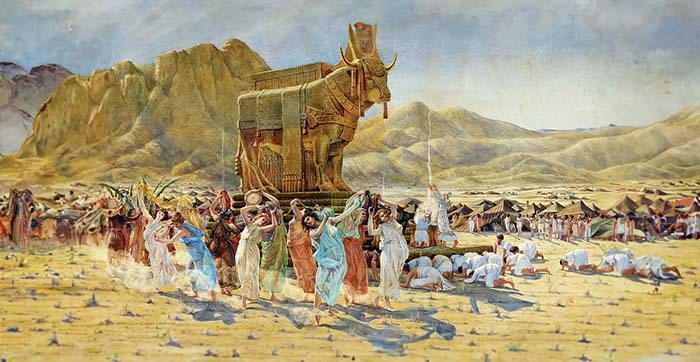
The Israelites got into trouble with this around 3,500 years ago. They stood at the foot of Mount Sinai weeks after Yahweh (the name ascribed to the biblical God in Exodus 3) had delivered them from bondage in Egypt. Then they proceeded to throw a bunch of gold into a furnace and mold a false dios out of it. As the golden idol came out of the fire, the people declared, “This is your Elohim, O Israel, that brought you out of the land of Egypt” (Exodus 32:4). Aaron then proclaimed the idol was Yahweh, and the people began offering sacrifices to it.
Think about that. They had the correct people (Israelites) in the correct place (Mount Sinai) worshipping a correctly-named deity (Yahweh) to whom they attributed the correct works (deliverance from Egypt) in the correct way (burnt offerings and peace offerings)—and yet they obviously were participating in pagan worship. On the surface, so much of their worship seemed correct. But the object of their worship was undeniably the wrong god.
This still happens today. For instance, did you know that Muslims believe that Jesus is the promised Messiah? However, they don’t believe He was crucified and subsequently raised from the dead. So they aren’t worshipping the one true God.
Modern Jews claim to worship a deity named Yahweh, who delivered the Israelites out of Egypt. But they also believe Jesus was a false sorcerer who currently resides in hell—not God Incarnate. So they aren’t worshipping the one true God.
Mormons believe that Jesus died and rose from the dead for the sins of mankind. But they don’t believe that Jesus is God—at least, not the one true God. Rather, God the Father and God the Son of separate gods among many gods, according to Mormon theology. Once again, they have the wrong god.
In all of these cases (and every other religion not mentioned above), these false worshippers have remade God according to their desired image. In effect, they threw a bunch of golden jewelry into an oven, slapped a handful of seemingly accurate labels upon the calf that came out, and called it God, Allah, Dios, El.
So then, who is the one true God?
In short, the God revealed in the Old and New Testaments—the God of Abraham, Isaac, and Jacob—the Truine God: Father, Son, Holy Spirit. And the essential, biblical description of the one true God, used throughout all of Christian history and accepted by every Christian worldwide, is summarized in the Nicene Creed.
If you’ve never read the Nicene Creed before, I encourage you to check it out. Despite appearing somewhat traditional and (dare I say) religious, you’ll find that every line is deeply rooted in scripture. A Christian would struggle to find anything with which they would disagree.[1]
So, will an Arabic Christian who worships Allah go to heaven? If they believe in the one true Allah—the Triune Allah revealed in the Christian Scriptures and confessed by the universal and timeless Church.
[1] Oh, and don’t be scared off by the word catholic. As we’ve discussed extensively, words can often mean something other than you’ve been programmed to think it means. Catholic simply means “universal.” In this context, it means the one Church is representative of all Christians throughout space and time—not that you need to like the pope.
The epic descriptions of Jesus in the opening chapters of Revelation are more important than you think.
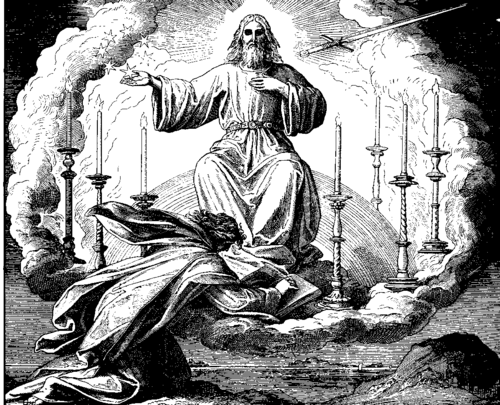
As John opens this book, he describes Jesus in several vivid ways:
He is One like the Son of Man (v. 13)
He is coming with clouds (7)
He is clothed with a garment down to His feet and wrapped about with a golden belt (13)
The hair on His head is white like wool (14)
His eyes are like a flame of fire (14)
His feet are like fine brass (15)
His voice is like the sound of many waters (15)
A sharp sword is coming out of His mouth (16)
His face is like the sun shining in its strength (16)
Yes, Jesus is certainly epic in all His glory. But there’s more to this than just seeing the King of Kings in an awesome way. Every single one of these descriptors is lifted directly from the Hebrew Scriptures.
In Daniel 7, God appears with “the hair of His head like pure wool (v. 9), “coming with the clouds of heaven” (v. 13) as “One like the Son of Man” (v. 13). Later in the chapter, a wicked king arises and “persecutes the saints of the Most High” (v. 25), but God soon overthrows this false ruler and gives an everlasting kingdom to His people (v. 27).
In Ezekiel 9, the people of Jerusalem have forsaken God and turned to rampant idolatry. In response, the glory of God comes upon a man “clothed with a garment down to his feet” with a belt at his side (v. 3). This man then goes “through the midst of Jerusalem, putting a mark on the foreheads of the men” who mourn and repent over the downfall of God’s holy city (v. 4). Soon after, the city is overrun and the temple is destroyed (vv. 5, 7), but those with the faithful mark are protected (v. 6).
In Daniel 10, a heavenly man appears to the prophet with “eyes like torches of fire,” his feet “like burnished bronze,” and “the sound of his words like the voice of a multitude” (v. 6). He informs Daniel that the Kingdom of Heaven were triumphing over the kingdoms of the empires of earth (v. 13) and commanded Daniel to be strong in the days to come (v. 19).
In Isaiah 49, the Suffering Servant of the Lord—Jesus—has His mouth made like a sharp sword (v. 2). He issues forth from His mother’s womb (v. 1) to gather God’s chosen together (v. 5) and then extend God’s salvation to every nation on earth (v. 6), thus “restoring the earth” to its intended glory (v. 8).
In Judges 5, Israel is enslaved to the kings of the surrounding Canaanite nations. The men are too afraid to fight back until, through the inspiration of a life-giving mother in Israel (v. 7), courage is restored and the people are delivered. Peace and rest are returned to God’s people as they cry out, “Let all Your enemies perish, O LORD, let those who love Him be like the sun when it comes out in full strength” (v. 31).
This vision of Jesus Christ isn’t just a cool sight that John saw—it was encoded with powerful imagery for all those who have ears to hear! Before we hear any fantastical prophecies or are given any righteous commandments, the mere sight of God tells us what we can expect:
Persecution is coming, but the wicked will be overthrown and God’s people will reign
The temple in Jerusalem has forsaken God and will soon be destroyed, but God has marked the faithful for protection
A spiritual war is raging, but the battle is already won
The gospel is for more than just Israel—the entire earth is being restored to God’s chosen
Persevere, don’t lose hope, and trust that God will strengthen His people and give them rest
All these things happened—a generation after Jesus and a few years after this vision was given. The temple was destroyed in 70 AD, but those faithful to Jesus Christ were protected; and soon the most powerful empire on earth bent the knee to Jesus Christ.
But like most things, we see echoes of these events reverberate through history. So we can take hope in this glorious vision of Jesus, just as the early church did. When persecution comes, we patiently endure, knowing we reign alongside our King. When false messiahs arise, we stand on the truth, knowing we carry the mark of Jesus Christ upon our heads. When the gospel is hindered by savage nations, we know that God reigns over all the earth. So we trust in God to strengthen His people and restore us to peace once again.
While ministering in the region of Judea beyond the Jordan, a group of Pharisees came to Jesus and tested Him by asking a series of questions about marriage and divorce:
“Is it lawful for a man to divorce his wife for any reason?” (Matthew 19:3)
“Why did Moses command to give a certificate of divorce and to put her away?” (v. 7)
To these questions, Jesus responds that “what God has joined together, let not man separate” (v. 6) and “Whoever divorces his wife—except for sexual immorality—and marries another commits adultery” (v. 9).
Jesus’ answer seems pretty straightforward: The only justification for divorce is sexual immorality (literally porneia, or fornication) and every other divorce constitutes adultery. But there appears to be an inconsistency. Why did Jesus tell Moses that divorce “for any reason” was permissible 1,400 years earlier?
Sure, we could chalk it up to the hardness of the Israelites’ hearts (v. 8), but doesn’t that leave an opening for Christian divorce today, so long as one claims that hearts have been hardened? While the divorce rate among Christians is lower than among non-Christians, it still rests around 20-25 percent, meaning around 1 in 4 Christian couples appear to be using this “hardened heart” loophole to excuse their divorces.
What’s more, Paul’s letter to the Corinthians has been used to justify divorce as well. Paul writes that “if the unbelieving spouse departs, let him depart; a brother or sister is not under bondage in such cases” (1 Corinthians 7:15).
Jesus says that divorce is only permissible in cases of sexual immorality, Paul says divorce is permissible when your spouse wants a divorce, and Moses says divorce is permissible for any reason. How can we explain these contradictions to establish a consistent view of marriage and divorce?
The answer is simple: neither Moses nor Paul disagree with Jesus.
Moses and Divorce
Let’s examine Moses’ view of divorce:
“When a man takes a wife and marries her, and it happens that she finds no favor in his eyes because he has found some uncleanness in her, he writes her a certificate of divorce, puts it in her hand, and sends her out of his house.” (Deuteronomy 24:1)
Notice that Moses didn’t say a man could divorce his wife “for any reason”; Moses required that two conditions be met to qualify for a divorce:
Some uncleanness was found in her
The uncleanness caused the husband to find no favor in his wife anymore
So why would the Pharisees ask Jesus if it was permissible to divorce a wife “for any reason” when Moses made no such claim?
It’s because there was disagreement in first century Judaism was Moses meant by “some uncleanness.” In Hebrew, the phrase is “ervat dabar,” which literally means “a naked thing.” The Jews weren’t sure what “a naked thing” meant, so three different schools of thought were formed to translate Moses’ command.
Rabbi Shammai taught that an ervat dabar was a sexually sinful act—a sin that required the participants to be naked. Rabbi Hillel, on the other hand, believed that ervat didn’t mean “naked” so much as “shameful,” and thus taught that a man could divorce his wife for anything he considered shameful. In fact, Hillel went as far as to state that “burning your husband’s toast” was shameful enough to warrant a divorce. Finally, Rabbi Akiva taught that the ervat dabar wasn’t even relevant to the divorce, and that all that was required was that the wife no longer find favor in her husband’s eyes. Even if the wife had never done anything wrong, Akiva went as far as to say that “if [a husband] finds another woman more beautiful than [his wife],” he could divorce her.
To summarize, the three prevailing schools of thought during Jesus’ ministry were that divorce is lawful when (a) a spouse commits sexual sin; (b) a wife does anything her husband doesn’t like; and (c) a husband wants a divorce.
This would explain why the Pharisees question to Jesus was considered a “test” (v. 3). They wanted Jesus on record for which school of thought He subscribed to. Thus, when Jesus answers that divorce is only permissible in the case of sexual immorality, He isn’t disagreeing with Moses; rather He is agreeing with Moses and clarifying Moses’ position to those who had misused Moses’ words to justify divorce for any reason.
Paul and Divorce
But what about Paul? Before examining Paul’s words, we need to make something very clear in how we interpret these epistles. The first is that Paul is not going to disagree with Jesus. Contrary to the heretical views of some teachers, Paul is not the foundation of New Testament teaching; Jesus is (Jesus is the foundation of Old Testament teaching as well). Paul didn’t come to correct Jesus’ “old covenant” teaching; Paul was sent by Jesus to strengthen the Church with the teachings of Christ.
And Jesus plainly taught that to divorce (for any reason other than sexual immorality) and remarry was to commit adultery. Therefore, we must accept that, whatever Paul appears to be teaching, it cannot disagree with the clear teachings of our Messiah.
With that out of the way, let’s examine Paul’s view of divorce:
“Now to the married I command, yet not I but the Lord: A wife is not to depart from her husband. But even if she does depart, let her remain unmarried or be reconciled to her husband. And a husband is not to divorce his wife.” (1 Corinthians 7:10, 11)
This doesn’t seem as contradictory as we have been led to believe. Paul writes that, according to God, married people are commanded to not depart from their spouses. But even if they do depart, they are to remain unmarried until they are reconciled with their spouse. And under no circumstances are they to get a divorce.
Paul’s teaching, which he claims is commanded by the Lord Himself, seems very consistent with Jesus and Moses. So where does the confusion come from?
It comes from the next four verses. But notice how Paul prefaces the following section:
“But to the rest I, not the Lord, say…” (1 Corinthians 7:12)
Notice that two things change in this next passage. First, Paul’s audience changes. Before he was writing to married couples, while now he is writing to “everyone else.” Next, the author changes. Before God was commanding; now Paul is sharing his opinion. That’s not to say that Paul’s opinion is wrong. It is included in the divinely inspired scriptures, and we should treat it as such. At the same time, we shouldn’t allow Paul’s (God-inspired) thoughts in verses 12-15 to outweigh God’s clear commands in verses 10-11. Instead, we should view these verses as God-breathed commentary on the previous verses that will clarify (not contradict) God’s teachings on marriage.
And after telling married couples how they should behave, what does Paul tell “everyone else”? Not to judge a Christian who is married to a non-Christian and not to judge a Christian who has been abandoned by a non-Christian.
“A woman who has a husband who does not believe, if he is willing to live with her, let her not divorce him. For the unbelieving husband is sanctified by the wife.” (vv. 13, 14)
“If the unbeliever departs, let him depart; a brother or a sister is not under bondage in such cases.” (v. 15)
At the beginning of this passage (vv. 10, 11), God had commanded that married couples were under no circumstances to divorce. Here Paul tells people on the outside of these marriages that they aren’t to judge a Christian who remains married to an unbeliever—for the unbeliever and their children will become holy because of the faithfulness of the Christian spouse—nor are they to bring condemnation on a fellow Christian who has been left by an unbelieving spouse. Nowhere in this passage does God (or Paul) say divorce is a lawful option for Christians. Rather, Paul follows up God’s command to reject divorce by teaching fellow parishioners to be supportive of those in troubled marriages rather than judgmental.
In other words, Paul agrees with Moses and Jesus: divorce isn’t an option for Christians, even those who are married to unbelievers.
What About Hardened Hearts?
After clarifying Moses’ and Paul’s teachings on marriage and divorce, let’s return to Jesus teaching.
“Have you not read that He who made them at the beginning ‘made them male and female,’ and said, ‘For this reason a man shall leave his father and mother and be joined to his wife, and the two shall become one flesh?’ So then, there are no longer two but one flesh. Therefore what God has joined together, let not man separate.” (Matthew 19:4-6)
To make His case concerning marriage and divorce, Jesus doesn’t appeal to Moses or the Law (as great as those two are); He appeals to creation itself. From the very beginning, marriage was an irreversible act. When a man marries a woman, God turns the two of them into one new thing. It cannot be undone, even if a court issues a piece of paper.
So why then did Moses sometimes allow for divorce? “Because of the hardness of your hearts.”
Hardened hearts—which in scripture signify a lack of faith that results of a lack of obedience (Mark 16:14, Deuteronomy 10:16, Jeremiah 4:4)—is why we have divorce today. People refuse to trust God with their marriages and their families, and it results in humans trying to do the impossible—to separate what God has joined together—which causes disaster for all involved.
Why might a spouse commit ervat dabar, or sexual sin? Because of a hardened heart toward God and their spouse. And why might a scorned spouse seek a divorce from a partner who sinned against them? Because of a hardened heart toward God and their spouse.
Jesus’ point is that, even in the face of adultery, divorce was permitted because of hardened hearts. It might be difficult to accept, but God’s will in the case of ervat dabar is for forgiveness and reconciliation to take place. Even sin shouldn’t separate what God has joined together.
After all, while God has historically separated Himself from His idolatrous and adulterous people, He has always striven to be reconciled. God has only ever had one bride: the True Israel, the Ecclesia, the Church of God.
In summary: Creation, the Law, the Gospels, and the Epistles all agree. Divorce and remarriage aren’t really an option. While technically divorce would be permissible in the case of fornication (ervat dabar), this is only because we have hardened our hearts to God and to each other. If our hearts are right, we should seek reconciliation and avoid trying to separate what God has joined together.
When King David’s throne was usurped, David fled from Jerusalem, crossed over the Kidron Brook (“Kidron” being Hebrew for “darkness”), and headed up to the Mount of Olives.
King Solomon commanded the traitor Shimei not to leave Jerusalem nor cross over the Kidron Brook, lest he be executed for treason.
Kings Asa, Josiah, and Hezekiah disposed of the pagan idols allowed in the temple by their fathers by having them taken to the Kidron Brook and destroyed.
Jeremiah the prophet, seeing the destruction and death as Jerusalem was conquered by Babylon, prophesied that one day God would redeem His people and give them a new covenant, and that all the bodies within Jerusalem as far as the Kidron Brook would be holy to the LORD.
So if you had grown up learning these stories about the Kidron Brook, what would come to mind when you thought of Kidron?
– The king of the Jews once appeared to lose his kingdom by going from Jerusalem to Kidron to Olivet, but soon after his kingdom was restored.
– The Kidron Brook is where idols are destroyed to restore holiness to the temple.
– One day God will restore His covenant inside the bounds of the Kidron Valley.
“When Jesus had spoken these words, He went out with His disciples over the Brook Kidron, where there was a garden, which He and His disciples entered.” (John 18:1)
That night, the night Jesus was betrayed, He seemed to have lost. He was about to be destroyed. Darkness seemed to prevail.
But in reality, the temple was being cleansed. God’s covenant was being renewed. His people were being made holy. And the King would soon return.
Tomorrow night is the start of Pentecost/Shavuot. As you may recall, the celebration of Shavuot takes place in the opening chapters of Acts, where the Holy Spirit is poured out on all believers. With that in mind, take a look at a few details that Luke chooses to include in Acts 1:
– Jesus was taken up from a mountain after He had given commandments
– He was with the disciples for an additional forty days
– Jesus was taken up in a cloud to sit with God
And wouldn’t you know, all of these details also appear in the story of the Ten Commandments (Exodus 19, 20, 24), which is the basis for Shavuot:
– Moses comes down from a mountain to give Israel the commandments
– Moses spent forty days on the mountain with God
– When Moses ascends the mountain, he is covered by a cloud
Jesus’ actions (such as waiting forty days) and Luke’s authorship (such as mentioning Jesus’ giving of the commandments) are meant to scream to us, “SHAVOUT! SHAVUOT! SHAVUOT!” We’re being primed to think of Jesus as a new and better Moses, and any reader familiar with the Hebrew Scriptures would be thinking of Exodus, Moses, and Pentecost as they read through Acts 1.
Well, what happened during that first Shavuot at Mount Sinai? As God’s people gathered together at the foot of the mountain, there was crashing thunder and loud trumpets. Thick storm clouds rushed through the people. God descended from heaven in a raging fire.
And what happens in Acts 2, as the disciples celebrated Shavuot? As God’s people gathered together in Jerusalem, there were loud sounds from heaven. A rushing, mighty wind blew through their midst. Flames of fire appeared over each of the disciples’ heads as God descended upon them.
Jesus is thus the new Moses. He has delivered us from the bondage of sin, written the Word of God upon the tablets of our hearts, and commanded us to reclaim the earth for His Kingdom.
* * * * *
“I will raise up for them a Prophet like Moses from among their brethren, and will put My words in His mouth, and He shall speak to them all that I command Him.” (Deuteronomy 18:18)
The Feast of Tabernacles is a time to celebrate God’s choice to dwell among His people and our complete dependence on Him. We are commanded to rejoice and feast with others: family and friends, the fortunate and the less-fortunate, believers and non-believers.
With that in mind, there is a small detail in the story of Jonah that many of us have probably missed. After Jonah preaches to the Ninevites, after the Ninevites repent, and after God forgives their sin and turns away their deserved destruction, Jonah leaves the city, sits on a hillside, and builds himself a small tabernacle to shelter himself from the sun.
But although he is dwelling in a tabernacle, he is embodying the opposite attitude of the Feast of Tabernacles. Rather than welcoming non-Jews into God’s family, he is angry that they have been forgiven. Rather than rejoicing, he is “displeased exceedingly,” “angry,” and “distressed” (literally, evil). Rather than depending on God, he is yet again trying to escape from God. Essentially, Jonah has a little pity-party on that hillside, a voluntary Anti-Tabernacles, during a time when he should have been rejoicing.
This week is a time for rejoicing. It is a time for celebrating God’s faithfulness and God’s blessings. It is a time for compassionately welcoming those who don’t yet know the truth. It is a time for trusting in God rather than the world around us.
Don’t be Jonah. Don’t choose to be angry and bitter. Don’t look for reasons to be upset. Don’t decide to hate those with different (even wrong) views. Choose to rejoice, to welcome, to celebrate, to feast.
“Rejoice in the Lord always. I will say it again: Rejoice!” (Philippians 4:4)
God commanded His people to keep the Feast of Tabernacles “because the Lord your God will bless you in all your increase and in all the work of your hands, so that you surely will rejoice.” It’s a weeklong festival celebrating the ever-abiding presence of God with us, and the health, prosperity, and joy that comes from the Lord.
So why do we read Ecclesiastes on this celebration? Ecclesiastes is a sermon from a man (“the Preacher”) who got everything he ever wanted. He grew as wise and intelligent as anyone could’ve hoped to become. He acquired more wealth than anyone who had ever lived before. He found great success in all his ventures, and his fame spread far and wide.
He had everything he could’ve wanted, everything any of us could want. He got all the things that the Feast of Tabernacles says we can have. But he got it the wrong way. Rather than sticking with God and being blessed by Him, the Preacher turned from God and tried to get it all apart from Him.
And he succeeded. He got it all. Fame, wealth, women, success. But without God, it all meant nothing. There was no purpose, no pleasure, no joy. It was, as the Preacher put it, “vanity of vanities.” He finishes his sermon by saying, “Let us hear the conclusion of the whole matter: Fear God and keep His commandments, for this is man’s all.”
As we enter this week of celebration, let’s not focus on the stuff. Let’s not focus on our own pleasure and desires. Instead let’s focus on the God who gives us richly all things to enjoy, the God who provides our every need and heals our mortal bodies, the God who is more than enough.
“Give thanks to the Lord, for He is good, and His mercy endures forever.”
[This was originally posted on September 28, 2020]
Yom Kippur started at sunset last night, and the Book of Jonah is traditionally read on this Day of Atonement.
I was immediately struck by how often God refers to Nineveh as “the great city.” In the 8th century BC, it truly was a great city. Its population was greater than any city in seven US states; it was three times the size of Washington, D.C.; and it was the capital city of the Assyrian Empire, the strongest and wealthiest nation to have ever existed at that time.
But it was great in another way: This shining city was overflowing with wickedness. Murder, slavery, and every sexual perversion you could imagine. A few decades later, they would destroy the northern kingdom of Israel, and a few decades after that, they would threaten to wipe the southern kingdom of Judah off the face of the map. And yet, in spite of all this depravity, God desired their salvation.
This got me thinking about the greatness of America. I truly believe that this is the greatest country that has ever existed. We’re militarily the strongest nation the world has ever seen, and time and again we’ve used our strength to liberate others from tyranny. We’re the most innovative nation, from walking on the moon to putting a super-computer in every pocket. We’re the wealthiest country in existence, while also the most generous, both in terms of our nation giving to other nations and our citizens giving to those in need.
These are great things, but we have also allowed ourselves to become greater and greater in wickedness as well. We murder half a million of our own children every year, and pay for countless children to be murdered around the world. We collect money for the purpose of helping the needy, but then allow our corrupt leaders to keep most of it for themselves. We use our power and strength to exploit others. In terms of sexual perversion, we’re giving Nineveh a run for their money. We lie about one another constantly, we extend only judgment but demand only compassion, and we use other’s sins as justification for our own. We’re selfish, hypocritical, judgmental. Depending how you slice it, we’re better than Nineveh could’ve ever dreamed of and more wicked than Nineveh would’ve ever dared become.
And yet, in spite all of this depravity, God desires our salvation. And truly, the only greatness that really matters comes from Him. Our faithfulness to God has allowed us to become great in so many wonderful things. Our rejection of God has allowed us to become great in so many terrible things.
If America is to be as great as it can be, it must be as godly as it can be. And if America is to be a godly nation, its people must return to godliness. That means you and me taking responsibility for our lives, our families, our churches, and our communities. That extends beyond Facebook and Twitter, beyond November 3 and January 20. It’s an everyday sort of thing, and it requires patience and sacrifice. But for God’s people, it’s our commission.
“I will bless you, I will make your name great, and you shall be a blessing… and in you all the families of the earth shall be blessed.” (Genesis 12)
Rosh Hashanah (Hebrew for “Head of the Year”) is the Jewish New Year, which, as you would expect, takes place on the first day of the… seventh month… of the year (don’t ask). Rosh Hashanah (referred to in the Bible as Yom Teruah, or “Day of Blasting”) is traditionally the date of the creation of Adam and Eve, and is a day of celebration but also of reflecting on the sins and shortcomings of the last year as we usher in the new year of blessings and prosperity.
How To Do It
There are a number of traditions on Rosh Hashanah. Feel free to review them and then practice a few or all of them. Our family typically throws a Rosh Hashanah party with dozens of families, but you might feel more comfortable starting off with your family and a few close friends.
Holiday Greeting
On Rosh Hashanah, we greet teach other by saying, “Shanah tovah!” which means, “Have a good year!” Make sure to greet your family and friends with this greeting on Rosh Hashanah.
Reflection and Repentance
An important aspect of Rosh Hashanah is reflecting on the past year. For all of us, there are things that didn’t go how we had hoped, or maybe we made mistakes or didn’t live the way we had hoped. Micah says,
“Who is like You, O God, who pardons our sins and forgives our transgressions… You will again have compassion on us and will trample out sins under your feet and hurl our iniquities into the depths of the sea.” (Micah 7:18, 19)
As such, take time to look back and repent of any sins or shortcomings from the last year. Then take a piece of bread—representing our sins—and cast them into a body of water. A lake, river, or ocean is a great place if available; if you don’t live close to a water source, we’ve been known to fill up a kid pool in the backyard and use that.
Be sure to explain to your kids/guests why you’re throwing a piece of bread into a lake. Give them a minute or two to consider the previous year and make a commitment to overcome in the coming year.
The Meal
Begin the meal by having the women and girls light the candles while reciting the traditional blessing,
“Blessed are You, Lord our God, King of the Universe, who has sanctified us by His Word, and commanded us to light the holiday candles.”
As your family is ushering a sweet new year, you should prepare a sweet meal. Apples dipped in honey, round challah bread, sweet potatoes, beats, dates, raisins, and pomegranates should be served as sides/appetizers. Since this is the “head of the year,” it is customary to serve a fish head, reminding guests that this next year they will be the head and not the tail (Deuteronomy 28:13). Of course, you don’t have to consume the head. For a main dish, you can prepare something fish-based or a chicken. Dessert can follow in the fruit theme with a berry pie.
Blow the Shofar in Memorial of Kingships
One of the biblical mandates for Rosh Hashanah reads,
“In the seventh month, on the first day of the month, you shall have a sabbath-rest, a memorial of blowing of trumpets, a holy convocation.” (Leviticus 23:24)
As such, it is customary to blow the shofar during Rosh Hashanah. When asked why we blow the shofar, one answer the Talmud gives is that we do it “in remembrance of kingships.” Part of celebrating the new year is every one of us acknowledging that God is our King and the King of the Universe, and just as we cast off the sins of last year, we also make a commitment to live for God our King this coming year.
But notice that “kings” is plural. We aren’t simply celebrating that God is God. We are celebrating that God has created each and every one of us to rule and reign as kings on earth (Genesis 1:28, Exodus 19:6, Romans 5:17, 1 Peter 2:9, Revelation 1:6). So as we blow the shofar, we make a commitment to serve Jesus Christ our King and rejoice that we get to reign in life with Him.
Once you explain why we sound the trumpet, pull out your shofar are give it one long blast, three medium blasts, nine short blasts, and finally one really, really long blast.
Readings
On the first night of Rosh Hashanah, read Genesis 21:1-34—the birth of Isaac—with your family. The next night, it is customary to read Genesis 22:1-24—the binding of Isaac. You can also read Genesis 1 with your family, as Rosh Hashanah is traditionally when God created Adam and Eve—the original royal priesthood of the earth.
“Here is wisdom. Let him who has understanding calculate the number of the beast, for it is the number of a man: His number is 666.” (Revelation 13:18)
Revelation says that 666 is the number of a man. So who is that man? Is it Trump or Biden? Pope Frances or King Charles? Bill Gates or Elon Musk?
I have a different theory. The number 666 is not talking about a forthcoming man. Instead, 666 is a reference to King Solomon.
How can that be? To understand this theory, we need to look back at the history of the kings who reigned over Israel.
Pharaoh, King of Egypt
At the beginning of the book of Exodus, the Israelites have found themselves residing in Egypt after relocating there under the governorship of Joseph. Soon after, there arose a new king over Egypt who did not know Joseph. He was concerned that the Israelites might soon become a threat, so he decided he would “deal wisely [חָכַם – chakam] with them” (Exodus 1:10):
“Therefore they set taskmasters [שָׂרֵי מִסִּים – saray mesiym, lit. “rulers of slaves”] over them to afflict them with their burdens [סְבָלָה – subala]. And they built for Pharaoh supply cities [עָרֵי מִסְכְּנוֹת – aray miskunot], Pithom and Raamses.” (Exodus 1:11)
God, of course, did not take kindly to the enslavement of His people, so He brought plagues upon Egypt, resulting in the deliverance of the Israelites and the destruction of the Egyptians.
As the Israelites wandered through the desert towards the Promised Land, God commanded the Israelites that they were to be a nation unlike any of the other nations. They were to be a special treasure above all others, a kingdom of priests and a holy nation (Exodus 19:5-6).
Of course, God knew what lay ahead. One day, God foretold, they would come to Him and say, “Give us a king to judge us like all the other nations” (Deuteronomy 17:14, 1 Samuel 8:5). To ensure that the Israelites would have a good king, God gave three commandments specifically to these future kings. Upon their ascension to the throne, they were to write down these three commandments and read them every single day. And what were those three commandments?
He shall not multiply horses for himself, nor cause the people to return to Egypt to multiply horses;
Neither shall he multiply wives for himself, lest his heart turn away;
Nor shall he greatly multiply silver and gold for himself. (Deuteronomy 17:16-20)
Even though the very first thing God said to mankind was that they were to “multiply” (Genesis 1:28), God demanded that the kings abstain from multiplying in these three areas: Egyptian horses, wives, and silver and gold.
Solomon, King of Israel
Fast forward four hundred and eighty years. Solomon the son of David has been crowned King of Israel, commissioned by his father to build God a temple. God has granted Solomon a wise [חָכָם – chakam] heart, to be used to “administer justice” (1 Kings 3:28). Thus Solomon begins the work of building God a house.
And how does it build this house?
“So the LORD gave Solomon wisdom, as He had promised him… Then King Solomon raised up a labor force [מַס – mas, singular of mesiym] out of all Israel; and the labor force [מַס – mas] was thirty thousand men.” (1 Kings 5:12, 13)
Solomon built the temple using the labor of 30,000 slaves—something the pagan king of Tyre called very “wise” [חָכָם – chakam] (1 Kings 5:7). Just as the Egyptians, in an attempt to be wise, enslaved the Israelites to build their temples, so too did King Solomon, in all his supposed wisdom, enslave the surrounding nations to build his temple (1 Kings 5:13, 9:15).
Following in Egypt’s footsteps, Solomon also ordered that storage cities [עָרֵי הַֽמִּסְכְּנוֹת – aray hamiskunot] be built (1 Kings 9:19); he appointed Israelite rulers [שָׂרֵי – saray] over the slaves (1 Kings 9:23); he even appointed Jeroboam (who would soon lead a rebellion against Solomon’s son) to oversee the burden [סֵבֶל – sabel, root of “subala”] of the labor force (1 Kings 11:28).
Rather than lead the people to be a holy nation, set apart from the rest of the nations, Solomon seemed set on emulating the other nations. He apparently took Exodus 1:11—a description of the persecution and enslavement of his people—and used it as a template to establish his own kingdom.
It should then come as no surprise what we read in the following chapters. Solomon begins making alliances with all of the pagan nations that surrounded Israel, intermarrying with idolatrous wives—wives who would soon turn his heart from the LORD. He winds up with an astonishing seven hundred wives and three hundred concubines, mostly from Egypt, Moab, Ammon, Edom, and Sidon; and sure enough, he was soon worshipping Ashtoreth and building temples for Chemosh and Molech (1 Kings 11).
He also began purchasing thousands of Egyptian horses to build up his army, trusting in chariots and horses for protection rather than in the name of the LORD (Psalm 20:7). To build his wealth and strengthen his alliances with the pagan nations, he exported some of these Egyptian horses to the kings of Syria and surrounding nations—the same nations that would soon attempt to conquer Israel (1 Kings 10:28, 29).
Between profiteering from the sale of Egyptian war horses to enemy nations and exploiting slave labor to build his kingdom, Solomon became one of the wealthiest men who ever lived, generating over a billion dollars in silver and gold every year. Far from multiplying justice and righteousness, Solomon was multiplying the precise things he was commanded to abstain from: foreign women, Egyptian war horses, and silver and gold.
And just how much did he make every year?
“The weight of gold that came to Solomon yearly was six hundred and sixty-six talents of gold.” (1 Kings 10:14)
That’s right. After building his kingdom—and God’s!—on the backs of slaves, after forsaking the three commandments that God had given him, after abandoning the call to use his wisdom to spread justice and righteousness to the surrounding nations, Solomon instead turned from God’s Word and exploited the gifts he had been given to make himself rich and famous.
And the number assigned to that betrayal was 666.
The Number of the Beast
I don’t think that Solomon was the Antichrist, or that he’s coming back to usher in the last days. Rather, my current reading is that the warnings we were given concerning the number of the beast were meant to prepare us against the spirit that turned Solomon away from the LORD.
Israel was called to be a holy nation, a kingdom of priests, a special treasure set apart from the rest of the world (Exodus 19:5, 6). But instead, Israel decided to fall in line with the sins of every other nation, leading to sexual immorality, greed, human rights abuses, and idolatry.
We too, the Church, are called to be a holy nation, a royal priesthood, His own special people, who will proclaim the praises of Him who called us out of the darkness of this wicked world and into the marvelous light of His kingdom (1 Peter 2:9). Will we walk in that light, or will we follow in the footsteps of Solomon—and Pharaoh before him? Will we give into lust and celebrate sexual perversion in order to fit in with this corrupt generation? Will we betray God’s Word if it will make us a few extra bucks? Will we exploit and dehumanize those made in God’s image to score cheap political points? Will we bow our knee to the gods of this generation? Or will we hold fast to the one true God, regardless of the cost?
Here is wisdom. Choose this day whom you will serve.
P.S.
Isn’t 666 a reference to [Nero/the pope/Nickelback/etc.]?
Sure, I see no reason why that can’t also be true. God, in His infinite wisdom, is able to give prophesies that could have multiple accurate meanings. It’s certainly possible that Revelation 13 could be warning Christians of the dangers of following in the footsteps of Solomon while also warning that various world leaders have already followed in Solomon’s footsteps and are an immediate threat.
It’s also possible that 666 has nothing to do with Solomon. It just seemed like too big a coincidence not to be intentional.









 Garrett Milovich