
Jesus Didn’t Wear a Kippah—and Neither Should You

It is good and virtuous for Christians to want to live out their faith in a biblical and historically accurate way. But sometimes it’s not always clear what this looks like.

Unfortunately, many Christians—especially in the non-denominational world—are unfamiliar with historical practices of past Christians, generally motivated by a desire to be “authentic” and not appear too “catholic.”

In the absence of an understanding of Christian history, it can be tempting to look to contemporary Jewish traditions. After all, Jesus was Jewish—so it’d make sense to look to the Jewish community to establish acceptable biblical practices from the first century.

However, you might be surprised to learn that almost every aspect of modern Judaism was invented centuries—sometimes millennia—after the ministry of Jesus. In the wake of rabbinic Judaism’s rejection of Jesus—the central figure of the Hebrew Scriptures—and the destruction of the second temple—prophesied by Jesus as a judgment for their rejection of God—the non-Christian followers of Judaism shifted their interpretive lens and practices to accommodate life without a temple and without a hope in the Messiah.

Many practices—including how the calendar worked, what foods were permissible to eat, how to interpret the prophecies of Isaiah, why lamb should no longer be eaten on Passover, how to greet one another, how and when to celebrate biblical holidays, and what to wear—were created long after the first century, and oftentimes were in contradiction to the teachings of scripture.

This is fine for practitioners of Rabbinic/Talmudic/Modern Judaism—after all, they have a right to practice their beliefs as they see fit and allow their traditions to evolve over time—but Christians should use caution in appropriating many of these modern traditions, as they are foreign to Jesus and the scriptures—and sometimes were embraced as a rejection of Jesus.

A prime example of this is the kippah—a dome-shaped skullcap worn by orthodox Jews and sometimes known as a yarmulke.

The kippah is nowhere to be found in either testament of the Bible, and no first century Jew would have ever seen one before. While there isn’t a biblical imperative to wear a hat as part of your religious practice, there is a command to do just the opposite:

Every man praying or prophesying, having his head covered, dishonors his head… for a man indeed ought not to cover his head, since he is the image and glory of God” (1 Corinthians 11:4, 7).

Written around 55 AD, this command by Paul is certainly not a direct criticism of the kippahkippahs would not exist for another thousand years. But Paul does suggest that while participating in church practices, it was considered dishonorable for a man to cover his head, and that a man “ought not” to do this. He also gives a reason: because man is made in the image and glory of God.

This is the only mention of head coverings found in the scriptures, and the admonition is that men should not wear them.

So if not from the scriptures, how did this practice develop in the Christ-rejecting Jewish community?

As previously stated, the Jewish practice of wearing a head covering did not exist in the first century. Neither the writings of Philo—a faithful Jew who lived during the first century—nor Josephus—a Jewish historian writing at the end of the first century—make mention of this practice. It also does not appear in the Mishnah—the first major collection of Jewish oral traditions, compiled around 200 AD.

The Gemara (6th century) makes a few brief references to head coverings—a rabbi who would ravenously steal food with his bare teeth if a cloak fell off his head, in accordance with the prophecies of a Babylonian astrologer (Shabbat 156b); and a comparison between two rabbis, one who stared at the ground while walking and another who covered his head with a cloak (Kiddushin 31a)—but these are limited to specific (and bizarre) practices of two individuals, not any sort of standard practice.

Two centuries later, the Soferim (8-9th centuries) record debates over whether the Shema and the Divine Name could be uttered by individuals with ripped clothing, uncovered heads, or blind men—with some saying it’s permissible and others stressing caution. The next mention of head coverings within the Jewish community comes almost 800 years later. The Shulchan Arukh, written by Rabbi Joseph Karo in 1565, records that debates were still taking place concerning head coverings: “There are those who say that it is forbidden to mention God’s name with an uncovered head, and there are those who say that one should object that people should not enter the synagogue with an uncovered head” (Shulchan Arukh, Orach Chayim 91).

Over 1,500 years after the resurrection, the Jewish community who had parted from the teachings of Jesus had still not agreed upon the practice of head coverings. So when was this tradition finalized?

It came 81 years later in Poland, when David HaLevi—considered one of Europe’s greatest and most influential rabbinical authorities—published his commentary on the aforementioned Shulchan Arukh in 1646. He wrote that, while it had not previously been a requirement to cover one’s head, he believed that from henceforth it should be considered mandatory. Why?

It has become a custom among the Akum [Christians] that they do this—immediately, as soon as they sit, they remove their hats—it therefore falls under the category of ‘do not walk in their statutes’” (Turei Zahav on Shulchan Arukh, Orach Chayim 8.3).

The Potomac Torah Study Center, a Jewish educational organization, states that this ruling was made in response to “one of the prominent customs of the Christian church, based on verses in 1 Corinthians 11,” and that “as a result of this ruling, wearing a Kippah quickly became adopted by all Jews in Eastern Europe as standard practice, and remains in force today” (Volume 10, Issue 20).

Why did the Jewish community implement the standard practice of wearing the kippah? A driving factor was that Jews should cover their heads because Christians uncover their heads in accordance with their scriptures. In other words, it was implemented to distance themselves from the followers of Jesus and the teachings of the New Testament!

Again, my purpose isn’t to condemn the Jewish community for wearing kippahs. After all, they don’t worship Jesus and don’t believe the New Testament scriptures are authoritative—of course they would want to do their own thing. But it is undeniable that the kippah and any related head coverings were foreign to the biblical people of God. The practice developed over a thousand years after the resurrection of Jesus, and was mainstreamed by a community for the specific purpose of rejecting the people of Jesus and the teachings of Jesus.

As the people of Jesus Christ, we won’t find a historically accurate expression of our faith in the traditions of Rabbinic/Talmudic/Modern Judaism. Oftentimes, we’ll find the exact opposite—traditions that reject Jesus and lead us away from Him.

We don’t need to look to other religions—especially religions who have denied Jesus and the scriptures He gave us—to find an accurate portrayal of our Christian faith. We need only look to the Scriptures—both Old and New Testaments. The Triune God has sustained His people for over two thousand years. We don’t need to dip our toes into a Christ-less well for direction.

Why We Read Ecclesiastes During the Feast of Tabernacles

God commanded His people to keep the Feast of Tabernacles “because the Lord your God will bless you in all your increase and in all the work of your hands, so that you surely will rejoice.” It’s a weeklong festival celebrating the ever-abiding presence of God with us, and the health, prosperity, and joy that comes from the Lord.

So why do we read Ecclesiastes on this celebration? Ecclesiastes is a sermon from a man (“the Preacher”) who got everything he ever wanted. He grew as wise and intelligent as anyone could’ve hoped to become. He acquired more wealth than anyone who had ever lived before. He found great success in all his ventures, and his fame spread far and wide.

He had everything he could’ve wanted, everything any of us could want. He got all the things that the Feast of Tabernacles says we can have. But he got it the wrong way. Rather than sticking with God and being blessed by Him, the Preacher turned from God and tried to get it all apart from Him.

And he succeeded. He got it all. Fame, wealth, women, success. But without God, it all meant nothing. There was no purpose, no pleasure, no joy. It was, as the Preacher put it, “vanity of vanities.” He finishes his sermon by saying, “Let us hear the conclusion of the whole matter: Fear God and keep His commandments, for this is man’s all.”

As we enter this week of celebration, let’s not focus on the stuff. Let’s not focus on our own pleasure and desires. Instead let’s focus on the God who gives us richly all things to enjoy, the God who provides our every need and heals our mortal bodies, the God who is more than enough.

“Give thanks to the Lord, for He is good, and His mercy endures forever.”

Reflections on Yom Kippur

[This was originally posted on September 28, 2020]

Yom Kippur started at sunset last night, and the Book of Jonah is traditionally read on this Day of Atonement.

I was immediately struck by how often God refers to Nineveh as “the great city.” In the 8th century BC, it truly was a great city. Its population was greater than any city in seven US states; it was three times the size of Washington, D.C.; and it was the capital city of the Assyrian Empire, the strongest and wealthiest nation to have ever existed at that time.

But it was great in another way: This shining city was overflowing with wickedness. Murder, slavery, and every sexual perversion you could imagine. A few decades later, they would destroy the northern kingdom of Israel, and a few decades after that, they would threaten to wipe the southern kingdom of Judah off the face of the map. And yet, in spite of all this depravity, God desired their salvation.

This got me thinking about the greatness of America. I truly believe that this is the greatest country that has ever existed. We’re militarily the strongest nation the world has ever seen, and time and again we’ve used our strength to liberate others from tyranny. We’re the most innovative nation, from walking on the moon to putting a super-computer in every pocket. We’re the wealthiest country in existence, while also the most generous, both in terms of our nation giving to other nations and our citizens giving to those in need.

These are great things, but we have also allowed ourselves to become greater and greater in wickedness as well. We murder half a million of our own children every year, and pay for countless children to be murdered around the world. We collect money for the purpose of helping the needy, but then allow our corrupt leaders to keep most of it for themselves. We use our power and strength to exploit others. In terms of sexual perversion, we’re giving Nineveh a run for their money. We lie about one another constantly, we extend only judgment but demand only compassion, and we use other’s sins as justification for our own. We’re selfish, hypocritical, judgmental. Depending how you slice it, we’re better than Nineveh could’ve ever dreamed of and more wicked than Nineveh would’ve ever dared become.

And yet, in spite all of this depravity, God desires our salvation. And truly, the only greatness that really matters comes from Him. Our faithfulness to God has allowed us to become great in so many wonderful things. Our rejection of God has allowed us to become great in so many terrible things.

If America is to be as great as it can be, it must be as godly as it can be. And if America is to be a godly nation, its people must return to godliness. That means you and me taking responsibility for our lives, our families, our churches, and our communities. That extends beyond Facebook and Twitter, beyond November 3 and January 20. It’s an everyday sort of thing, and it requires patience and sacrifice. But for God’s people, it’s our commission.

“I will bless you, I will make your name great, and you shall be a blessing… and in you all the families of the earth shall be blessed.” (Genesis 12)

How to Ring in the New Year on Rosh Hashanah

Rosh Hashanah (Hebrew for “Head of the Year”) is the Jewish New Year, which, as you would expect, takes place on the first day of the… seventh month… of the year (don’t ask). Rosh Hashanah (referred to in the Bible as Yom Teruah, or “Day of Blasting”) is traditionally the date of the creation of Adam and Eve, and is a day of celebration but also of reflecting on the sins and shortcomings of the last year as we usher in the new year of blessings and prosperity.

How To Do It

There are a number of traditions on Rosh Hashanah. Feel free to review them and then practice a few or all of them. Our family typically throws a Rosh Hashanah party with dozens of families, but you might feel more comfortable starting off with your family and a few close friends.

Holiday Greeting

On Rosh Hashanah, we greet teach other by saying, “Shanah tovah!” which means, “Have a good year!” Make sure to greet your family and friends with this greeting on Rosh Hashanah.

Reflection and Repentance

An important aspect of Rosh Hashanah is reflecting on the past year. For all of us, there are things that didn’t go how we had hoped, or maybe we made mistakes or didn’t live the way we had hoped. Micah says,

“Who is like You, O God, who pardons our sins and forgives our transgressions… You will again have compassion on us and will trample out sins under your feet and hurl our iniquities into the depths of the sea.” (Micah 7:18, 19)

As such, take time to look back and repent of any sins or shortcomings from the last year. Then take a piece of bread—representing our sins—and cast them into a body of water. A lake, river, or ocean is a great place if available; if you don’t live close to a water source, we’ve been known to fill up a kid pool in the backyard and use that.

Be sure to explain to your kids/guests why you’re throwing a piece of bread into a lake. Give them a minute or two to consider the previous year and make a commitment to overcome in the coming year.

The Meal

Begin the meal by having the women and girls light the candles while reciting the traditional blessing,

“Blessed are You, Lord our God, King of the Universe, who has sanctified us by His Word, and commanded us to light the holiday candles.”

As your family is ushering a sweet new year, you should prepare a sweet meal. Apples dipped in honey, round challah bread, sweet potatoes, beats, dates, raisins, and pomegranates should be served as sides/appetizers. Since this is the “head of the year,” it is customary to serve a fish head, reminding guests that this next year they will be the head and not the tail (Deuteronomy 28:13). Of course, you don’t have to consume the head. For a main dish, you can prepare something fish-based or a chicken. Dessert can follow in the fruit theme with a berry pie. 

Blow the Shofar in Memorial of Kingships

One of the biblical mandates for Rosh Hashanah reads,

“In the seventh month, on the first day of the month, you shall have a sabbath-rest, a memorial of blowing of trumpets, a holy convocation.” (Leviticus 23:24)

As such, it is customary to blow the shofar during Rosh Hashanah. When asked why we blow the shofar, one answer the Talmud gives is that we do it “in remembrance of kingships.” Part of celebrating the new year is every one of us acknowledging that God is our King and the King of the Universe, and just as we cast off the sins of last year, we also make a commitment to live for God our King this coming year.

But notice that “kings” is plural. We aren’t simply celebrating that God is God. We are celebrating that God has created each and every one of us to rule and reign as kings on earth (Genesis 1:28, Exodus 19:6, Romans 5:17, 1 Peter 2:9, Revelation 1:6). So as we blow the shofar, we make a commitment to serve Jesus Christ our King and rejoice that we get to reign in life with Him.

Once you explain why we sound the trumpet, pull out your shofar are give it one long blast, three medium blasts, nine short blasts, and finally one really, really long blast.

Readings

On the first night of Rosh Hashanah, read Genesis 21:1-34—the birth of Isaac—with your family. The next night, it is customary to read Genesis 22:1-24—the binding of Isaac. You can also read Genesis 1 with your family, as Rosh Hashanah is traditionally when God created Adam and Eve—the original royal priesthood of the earth.

Purim and St. Patrick’s Day

As luck would have it, Purim and St. Patrick’s Day fall on the same day this year. At first glance these holidays don’t seem to have much in common. But meditating on them this morning, I found that they share quite a few themes.

Purim

Purim celebrates the deliverance of the Jewish people from genocide. The story begins with Esther and Mordecai, two Jews who have been kidnapped from their native land of Israel and forced to live as exiles in Persia. Through an unexpected series of events, Esther is delivered from slavery when she is declared the Queen of Persia. Mordecai also rises up the ranks, becoming a member of the King’s court. For a number of years, Esther lives in the King’s court, until Haman the Agagite attempts to annihilate God’s chosen people. Esther bravely risks her safety by approaching the King and announcing her Jewish heritage. The King is sympathetic to Esther, orders Haman’s execution, and issues a decree that ultimately saves the Jewish people.

One striking detail of the story that often gets overlooked appears toward the end of the narrative: “In every province and city, wherever the king’s command and decree came, the Jews had joy and gladness, a feast and a holiday. Then many of the people of the land became Jews…” (Esther 8:17).

The events of the story and the actions of Esther and Mordecai not only save the Jewish people but bring many Gentiles into God’s family. This isn’t just a deliverance of one nation from physical death; it’s also a deliverance of all nations from spiritual death.

St. Patrick’s Day

Patrick was born in Britain, but at the age of 16 he was kidnapped by pirates and taken as a slave to Ireland. He labored there for six long years, until God appeared to him and led him to trek 200 miles through the wilderness, where he found a waiting ship and was miraculously able to talk his way on board. After arriving in Britain, the sailors were starving, but through Patrick’s prayer of faith God provided sustenance for the group. Patrick eventually made it home and lived for a number of years with his family, until God called him back to the land of his captivity.

Patrick returned to Ireland, this time as a missionary, and spent the remainder of his life ministering to idol-worshippers and kings. And his work was not in vain. According to his autobiography, he “baptized so many thousands of people,” and according to Thomas Cahill, he saved not only the people of Ireland but all civilization.

Like Esther, Patrick lived as a slave and exile in a land not his own. Like Esther, he was supernaturally delivered from his fate through the providence of God. Like Esther, he sacrificed his newfound freedom to speak God’s truth. And like Esther, his actions resulted in thousands coming to God and nations being transformed.

And just like Esther and St. Patrick, you too are an exile (1 Peter 1:1, 2:11) living in Babylon (1 Peter 5:13), having no permanent home and seeking the one to come (Hebrews 13:14). Like Esther and Patrick, the world you’re living in is not your own (John 18:36). But rather than living for no other reason than to escape this fallen world, choose the paths of Esther and Patrick. Live to redeem this fallen world. Be the light in the darkness (Ephesians 5:8). Usher in God’s kingdom on the earth (Matthew 6:10, 11:12). Go into all this fallen world and preach the gospel throughout all creation (Mark 16:15). All of creation is waiting for you to stop hiding and start bringing God’s blood-bought freedom into the world (Romans 8:19-22).

“As you go, therefore, make disciples of all the nations, baptizing them in the name of the Father and of the Son and of the Holy Spirit, teaching them to observe all things that I have commanded you; and lo, I am with you always, even to the end of the age.” (Matthew 28:19, 20)

The Parable of the Brother Everyone Forgot

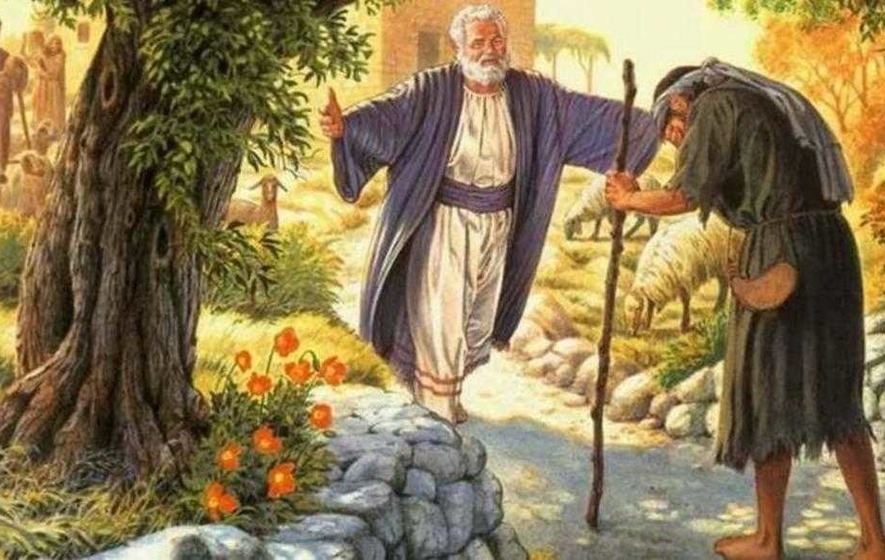
In Luke 15, Jesus tells a series of “lost” parables to an audience consisting of sinners/tax collectors and Pharisees/scribes. First comes the parable of the lost sheep, where a man loses a sheep out in the wilderness and rejoices when it is found. Next comes the parable of the lost coin, where a woman loses a coin in her home and rejoices when it is found.

Then we come to a parable about a man with two sons. The younger son wants his inheritance, so the father divides up his assets, giving one-third to the younger son and two-thirds to the older son. The younger son takes off and squanders his inheritance with riotous living. When an unexpected famine strikes, the younger son becomes destitute and shamefully returns home, offering to become his father’s servant because he is not worthy of his father’s love. However, in a completely unexpected turn of events, the father runs out to meet him, falls on his neck, and kisses him. The father then throws a party for his returned son, for “he was lost and now is found.”

We all know this story. A man with a lost son out in the wilderness, who rejoices when he is found. What we often overlook is the end of the story, which focuses on the other lost son—the lost son who never left home.

The older brother is working in the field when his younger brother returns home. Instead of rejoicing with his father at the return of his brother, he throws a giant fit. He refuses to celebrate. He refuses to even call him his brother. And he thinks the worst of his brother, exclaiming without evidence that his brother had wasted the money on whores.

With all this in mind, let’s consider what a first century Jew would’ve thought when hearing this parable. Consider a few elements from the tale: a father with two sons, brothers squabbling over an inheritance, the younger brother leaving town with his blessing, the older brother working out in the field.

In the mind of a Jewish listener, this story would immediately call to mind the story of Esau and Jacob. The younger Jacob stole his older brother Esau’s inheritance while Esau was out working in the field, and then left town. In fact, there are many parallels throughout these two stories:

Isaac has two sonsFather has two sons
Jacob steals Esau’s inheritanceYounger brother receives his inheritance
Jacob goes to Padan AramYounger brother goes to a far country
There is a famine after Jacob tricks EsauThere is a famine after younger brother leaves
Jacob meets Esau and offers to be his servantYounger brother offers to be his father’s servant
Jacob tells God “I’m not worthy of your mercies”Younger brother tells father “I am no longer worthy to be called your son”
Esau runs, falls on neck, and kisses JacobFather runs, falls on neck, and kisses younger brother
Jacob had stolen inheritance while Esau was in the fieldYounger brother returns home while older brother is in the field

Any person familiar with the biblical text would notice the similarities between the two narratives. But they also would notice a few key differences:

For one, the younger brother in the parable didn’t steal his brother’s inheritance; rather he prematurely requested his own inheritance. Notice that when the younger brother received his one-third inheritance, the older brother also received his two-thirds inheritance (Luke 15:12). The younger brother didn’t actually steal anything from his older brother.

Also, notice that in the Esau-Jacob narrative, it is Esau who lovingly welcomes home his brother. He is no longer bitter; instead he is happy to receive his brother home, and doesn’t require any of the gifts Jacob had sent to appease him. Compare that to the lost older brother, who—despite having twice as much as his sibling—refuses to welcome him home.

The message to Jesus’ first century audience was clear: Those who behave like the older brother are worse than Esau. Those lost coins who have remained in their master’s home but are still nevertheless lost, those Pharisees/scribes who rejected the lost sheep rather than welcomed them—they are like those who despised their birthright, who rejected their inheritance, who turned their backs on their God and Father.

In fact, the behavior of the older brother might call to mind another older brother: Cain, who led his younger sibling out into a field where he murdered him, then disinherited him (“Am I my brother’s keeper?”).

At the time Jesus spoke these words, a man named Herod was reigning as the King of the Jews. And yet, he wasn’t Jewish. He was Idumean—an Edomite, a descendant of Esau—appointed by the oppressive Roman Empire to rule over the Jews. To the Jews, Herod was Esau-Incarnate—an imposter king who had despised the inheritance of the Jews and yet wanted to wield it over the Jews. And according to Jesus, the religious elite were just as bad as he was. And by the end of the gospels, those same religious leaders would be working with this imposter king to rid their nation of the true King of the Jews, the Heir of Jacob and the Finder of Sheep and Coins and Sons.

The resounding message, to those who heard this in the first century and those of us who read it in the twenty-first century, is clear. Those of us in the LORD’s house should partner with our Father to find the lost sheep without and the lost coins within. We should rejoice when the lost sheep are found. We should rejoice when the lost coins are found. And if our hearts want to throw a fit while the angels are throwing a party, we may not be as found as we think.

“It was right that we should make merry and be glad, for your brother was dead and is alive again, and was lost and is found.” (Luke 15:32)

Special thanks to the lectures of Peter J. Williams, whose series “The Genius of Jesus’ Teachings” brought to light many of these parallels. If you appreciated this article, you should definitely watch his teachings on this parable.

The Selfish King who was Accidentally Right

Our family started reading the Book of Esther today. The story begins with the King of Persia ordering his wife to come entertain his drunk buddies and her refusing. The king’s wisest counselors fear that other wives will disobey their husbands’ demands if the queen isn’t dealt with, so she is banished. The chapter ends with the king issuing a royal decree: “Each man shall be head in his own house.” 

Here’s the thing: The king was right… sort of. Every man should be the head of his household. Wives should honor and follow their husbands. The king and his counselors were right. But they wanted to wield this role selfishly, rather than selflessly. 

The man isn’t called to lead so he can have whatever he wants. He’s called to lead so he can serve and protect his household. The man leads by discipling his family, as Moses said (Deut. 6). The man leads by loving and sacrificing, as Paul said (Eph. 5). The man leads by serving, as Jesus said (Matt. 20). 

The king and his counselors wanted the benefits of their position, but they didn’t want the responsibilities. They wanted to be leaders, but they didn’t want to lead. 

It’s noteworthy that in the second chapter of Esther, we are introduced to a man—Mordecai—who spends the entire book serving and protecting others. And by the end of the book, the king’s wise counselors are replaced by this Mordecai, as the book concludes: 

Mordecai the Jew was second to the king… seeking the good of his people and speaking peace to all his countrymen.” 

If you want to be “head of your own house,” follow Mordecai’s example. “Seek the good of your people.” 

Prayers for My Children

We’ve often heard verses like “train up a child in the way he should go, and when he is old he will not depart” or “do not provoke your children to wrath.” But when you read the Bible intentionally with the eyes of a parent, you’ll find that God is constantly talking about kids.

Here are a few verses that you may be unfamiliar with about children. I started praying these verses when my wife was pregnant with our first son, and we pray them over our kids every day. Hopefully there are a few new ones you can add to your list.

  1. My children are taught by the Lord, and they have great peace (Isaiah 54:13)
  2. The Holy Spirit will be upon my children and my children’s children (Isaiah 59:21)
  3. God’s Word will always be in the mouths of my children and my children’s children (Isaiah 59:21)
  4. My descendants will be mighty upon the earth (Psalm 112:1-2)
  5. God will pour out His Spirit and His blessing upon my descendants (Isaiah 44:2-5)
  6. My descendants will be known upon the Gentiles as the people whom the Lord has blessed (Isaiah 61:9)
  7. My children will not be trouble. (Isiah 65:23-24)
  8. God will answer my descendants’ prayers before they ask, and will hear their prayers as they pray (Isaiah 65:23-24)
  9. My children will have a place of refuge (Proverbs 14:26)
  10. God will not turn away from doing good to and for my children (Jeremiah 32:39-41)
  11. God will put the fear of the Lord in their hearts, and they will not depart from Him (Jeremiah 32:39-41)
  12. Things will go well for me, my children, and my children’s children (Deuteronomy 4:40)
  13. Me and my descendants will dwell in prosperity, and they will inherit the earth (Psalm 25:12-13)
  14. My descendants will inherit the nations, and rebuild communities (Isaiah 54:2-3)
  15. God teaches my children and infants to tell of His strength (Psalm 8:2)
  16. The Lord will bless and keep my children, and will shine His face upon them and be gracious to them (Numbers 6:27)
  17. The Lord will lift up His countenance upon them and give them peace (Numbers 6:27)

Who Can Find a Virtuous Woman?

In Proverbs 31, Solomon famously asked, “Who can find a virtuous woman?” When you flip through the pages of the Scriptures, you’ll discover that only one Eshet Chayil—virtuous woman, woman of valor—is to be found: Ruth, the great-great-grandmother of Solomon.

There are many qualities we could try to attach to Ruth to figure out why she is lauded as a woman of valor. She was courageous, faithful, generous, and wise; she feared the LORD and raised her children and grandchildren to fear Him as well; she obeyed God, even when it was inconvenient, and found a way to bring God’s Word to pass in her family, even when the cards were stacked against her.

But Solomon didn’t ask, “What makes a woman virtuous?” He asked, “Who can find a virtuous woman?” And the answer, at least in this case, is Solomon’s great-great-grandfather: Boaz. Boaz found his virtuous woman, redeemed her, married her, and loved her.

And how does the Bible describe Boaz? At the very first mention of Boaz in the Scriptures, he is described as a “Ish Gibor Chayil”: a man of mighty valor, an incredibly virtuous man. Read through the story of Boaz and Ruth and you’ll find that he, too, was courageous, faithful, generous and wise. He, too, feared the LORD and taught His family to do so as well. And He obeyed God, even when it was inconvenient, and found a way to bring God’s Word to pass in his family.

So, who can find a woman of valor? The primary answer the Bible gives us is, “A man of mighty valor.”

The “Older” Shall Serve the “Younger”

While Rebekah was pregnant with twins, God appeared to her and said,

“Two nations are in your womb,
Two peoples shall be separated from your body.
One people shall be stronger than the other,
And the older shall serve the younger.” (Genesis 25:23)

We often interpret this in light of what we know will eventually come to pass between the two brothers: Since we know the younger brother Jacob will end up with his older brother’s birthright and blessing, this heavenly declaration must be prophesying those events. “The older (Esau) will serve the younger (Jacob)” by forfeiting his inheritance. Thus, Esau is the loser of the prophecy because he serves, while Jacob is the winner because he is served.

I think this interpretation is wrong.

For one, this verse doesn’t actually say that “the *older* shall serve the younger.” The word “older” is the Hebrew word “rab,” which actually means “greater.” And of the 458 times it appears in the Hebrew Scriptures, it’s only translated “older” in this passage. In fact, if the author meant to say “older,” there’s another word he could have chosen. The word “gadol” means “older,” as we see in Genesis 27:1, where Isaac refers to Esau as his “beni ha-gadol”: “my older son.”

In my opinion, a better translation of the end of Genesis 25:23 would be, “…and the greater shall serve the lesser.” When read this way, the passage is ambiguous as to who is the “greater” and who is the “lesser.” So… who was the greater one?

At first, we might think that the greater one was Jacob. After all, he outsmarted his brother and ended up with the blessing, right? Well… it’s not actually so clear. It’s true that Jacob deceived his father and brother in order to receive his father’s blessing (Hebrew berakah). But twenty years later, when Jacob returned home to face his brother, he returns the berakah, saying, “Please, take my blessing” (Genesis 33:11).

Okay, so maybe Esau is the greater one. He is stronger than his brother, after all. Additionally, after he meets up with his brother after twenty years apart, he tells Jacob that he doesn’t need his brother’s gifts, for “I am great (rab) enough” (Genesis 33:8). Right there, Esau declares himself to be the great one. Case closed, problem solved.

Except… Esau isn’t the only brother who is called great. After living in exile for twenty years, the Bible calls Jacob “exceedingly great” (rab) (Genesis 30:43).

So, both brothers are called great (rab), both brothers were increased greatly, and the blessing changes hands several times and doesn’t really seem to play into this all that much. Which one is the “greater” one? That original prophecy tells us:

“The greater *shall serve* the lesser.”

The greater one is the one who serves.

And with that in mind, which of the two brothers served? During the twenty years that they were separated, we read eleven times that Jacob served (abad) his uncle Laban. This service to his uncle led directly to Jacob becoming great, both in terms of finances, family, and influence. And then when Jacob and Esau finally reunite, Jacob calls himself Esau’s servant (ebed) five times. Those twins spent years and years seeking greatness by trying to steal the inheritance from one another. But finally, Jacob began to seek greatness *through service*.

You find this dynamic live on through their descendants. Esau’s people became the Edomites, while Jacob’s people became the Israelites. After 400+ years in slavery, the Israelites asked permission to pass through the Edomite’s land. The Edomites chose not to serve, refusing them entry into their land (Numbers 20:21).

Despite this poor treatment, God wrote it into the Israelites’ legal code that the Edomites would always be welcome to join the congregation of Israel and worship the One True God beside them, “for he is your brother” (Deuteronomy 23:7, 8). The Israelites were commanded to serve their brother Edom.

So often we read Genesis 25:23 and assume that the one who “serves” is the one that gets the short end of the stick, but the opposite is true. The one who “serves” is the one who is considered “great.”

And this interpretation of greatness and service fits much better within the whole narrative of scripture. The very first usage of the word “service” in the Bible (abad) is found in the Garden of Eden, where Adam was given the important task of abading the garden—of serving it, of tilling it. Hundreds of years later, Moses demands that Pharaoh “let God’s people go,” that they may abad Him. After their salvation from Egypt, God gives the priests and Levites the important job of abading Him in the tabernacle. And throughout the prophets, the future Messiah is called the ebed of the LORD—the Servant of God. Service is what God’s people are called to, and serving God and others is what makes us great in the eyes of the LORD.

And thousands of years later, we see this play out between two opposing kings. King Herod was an appointed “king of the Jews.” He was rich, ruthless, and wanted to be served. He considered himself to be so great that he gave himself the title, “Herod the Great.” And did I mention that he also was an Idumaean—an Edomite, a descendant of Esau.

But there was another King of the Jews. This One came not to be served but to serve. This One became poor that we might be made rich. This One bore our sicknesses that we might be healed. This One who knew no sin became sin, that we might be made the righteousness of God. This One—an Israelite, a descendant of Jacob—was the True King, the Servant King, the Great King.

And this Great Servant King taught all who would listen how to achieve greatness as well, by echoing the words He had spoken to Rebekah thousands of years earlier:

“He who is greatest among you shall be your servant.” (Matthew 23:11)