
How to Worship Allah and Still Go to Heaven: The Importance of Knowing WHO God Is

You can worship Allah and go to heaven. You can also worship Yahweh and go to hell.

Hold on hold on. Hear me out.

Let’s imagine you’re on a mission trip in Tunisia. At a marketplace one day, you strike up a conversation with a local and hand him a Bible in his native language—Arabic. He heads home and flips the book open to the first page:

فِي الْبَدْءِ خَلَقَ اللهُ السَّمَاوَاتِ وَالارْضَ

“In the beginning, Allah created the heavens and the earth.”

Wait wait wait. Who created the universe?!

So maybe instead you advise the potential convert to start in the New Testament. He gets home and begins reading John’s gospel:

فِي الْبَدْءِ كَانَ الْكَلِمَةُ وَالْكَلِمَةُ كَانَ عِنْدَ اللَّهِ وَكَانَ الْكَلِمَةُ اللَّهَ

“In the beginning was the Word, and the Word was with Allah and the Word was Allah.”

There is something seriously messed up going on here. Why does the Arabic translation of the Christian Bible teach that Jesus had anything to do with the Muslim god?

 Simple answer: it doesn’t.

Most of us associate the word Allah with the false religion of Islam. So we assume that Allah is the name of their false god. But that’s not what Allah means. Allah is simply a title meaning “god.” It’s no different than telling a Spanish speaker that the universe was created by Dios. Heck, even the Hebrew word El—used repeatedly throughout scripture to refer to the one true God—sometimes refers to false gods. That’s because El isn’t His name—it’s a generic title that means “god.” Depending on the context, El can refer to the one true God of scripture or false idols of wood and stone.

We face this same problem in English today. The overwhelming majority of Americans believe in god. The question is, which one? If you worship the Christian God, you’re in good hands. If you think Taylor Swift is god, you’re in trouble. You need more than the correct title—you need to believe that God is who He is.

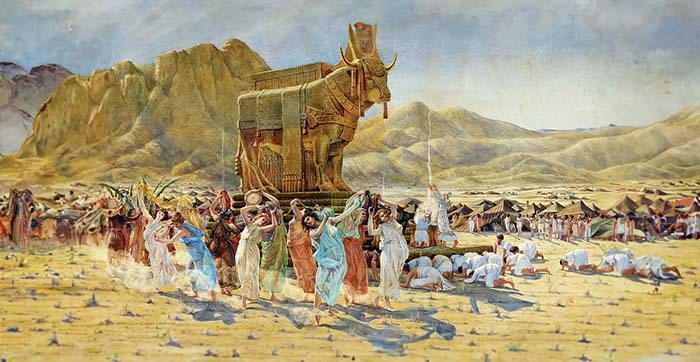
The Israelites got into trouble with this around 3,500 years ago. They stood at the foot of Mount Sinai weeks after Yahweh (the name ascribed to the biblical God in Exodus 3) had delivered them from bondage in Egypt. Then they proceeded to throw a bunch of gold into a furnace and mold a false dios out of it. As the golden idol came out of the fire, the people declared, “This is your Elohim, O Israel, that brought you out of the land of Egypt” (Exodus 32:4). Aaron then proclaimed the idol was Yahweh, and the people began offering sacrifices to it.

Think about that. They had the correct people (Israelites) in the correct place (Mount Sinai) worshipping a correctly-named deity (Yahweh) to whom they attributed the correct works (deliverance from Egypt) in the correct way (burnt offerings and peace offerings)—and yet they obviously were participating in pagan worship. On the surface, so much of their worship seemed correct. But the object of their worship was undeniably the wrong god.

This still happens today. For instance, did you know that Muslims believe that Jesus is the promised Messiah? However, they don’t believe He was crucified and subsequently raised from the dead. So they aren’t worshipping the one true God.

Modern Jews claim to worship a deity named Yahweh, who delivered the Israelites out of Egypt. But they also believe Jesus was a false sorcerer who currently resides in hell—not God Incarnate. So they aren’t worshipping the one true God.

Mormons believe that Jesus died and rose from the dead for the sins of mankind. But they don’t believe that Jesus is God—at least, not the one true God. Rather, God the Father and God the Son of separate gods among many gods, according to Mormon theology. Once again, they have the wrong god.

In all of these cases (and every other religion not mentioned above), these false worshippers have remade God according to their desired image. In effect, they threw a bunch of golden jewelry into an oven, slapped a handful of seemingly accurate labels upon the calf that came out, and called it God, Allah, Dios, El.

So then, who is the one true God?

In short, the God revealed in the Old and New Testaments—the God of Abraham, Isaac, and Jacob—the Truine God: Father, Son, Holy Spirit. And the essential, biblical description of the one true God, used throughout all of Christian history and accepted by every Christian worldwide, is summarized in the Nicene Creed.

If you’ve never read the Nicene Creed before, I encourage you to check it out. Despite appearing somewhat traditional and (dare I say) religious, you’ll find that every line is deeply rooted in scripture. A Christian would struggle to find anything with which they would disagree.[1]

So, will an Arabic Christian who worships Allah go to heaven? If they believe in the one true Allah—the Triune Allah revealed in the Christian Scriptures and confessed by the universal and timeless Church.


[1] Oh, and don’t be scared off by the word catholic. As we’ve discussed extensively, words can often mean something other than you’ve been programmed to think it means. Catholic simply means “universal.” In this context, it means the one Church is representative of all Christians throughout space and time—not that you need to like the pope.
The Second Commandment: Jealousy and Mercy to Thousands

In our last blog, we covered the first twenty words of the 43-word commandment against idolatry. As previously discussed, God spent those twenty words recalling the creation of the heavens and the earth and all that are within them in His command against idolatry, reminding us that God—not man—is the Creator, and we are to live in His image and likeness rather than attempt to redefine Him in ours.

After teaching us not to worship or serve false gods, He spends the remainder of His words describing His own nature:

I, the LORD your God, am a jealous God, visiting the iniquity of the fathers upon the children to the third and fourth generations to those who hate Me, but showing mercy to thousands [of generations], to those who love Me and keep My commandments.” (Exodus 20:5, 6)

The language in this commandment only appear a few times throughout the Bible:

  • The LORD, merciful and gracious, longsuffering…keeping mercy to thousands, forgiving iniquity and transgression and sin, by no means clearing the guilty, visiting the iniquity of the fathers upon the children and the children’s children to the third and fourth generation.” (Exodus 34:7)
  • “…The LORD is longsuffering and abundant in mercy, forgiving iniquity and transgression; but He by no means clears the guilty, visiting the iniquity of the fathers on the children to the third and fourth generation.” (Numbers 14:18)

So, what is going on in these two parallel passages, and how can they shed light upon our understanding of the second commandment?

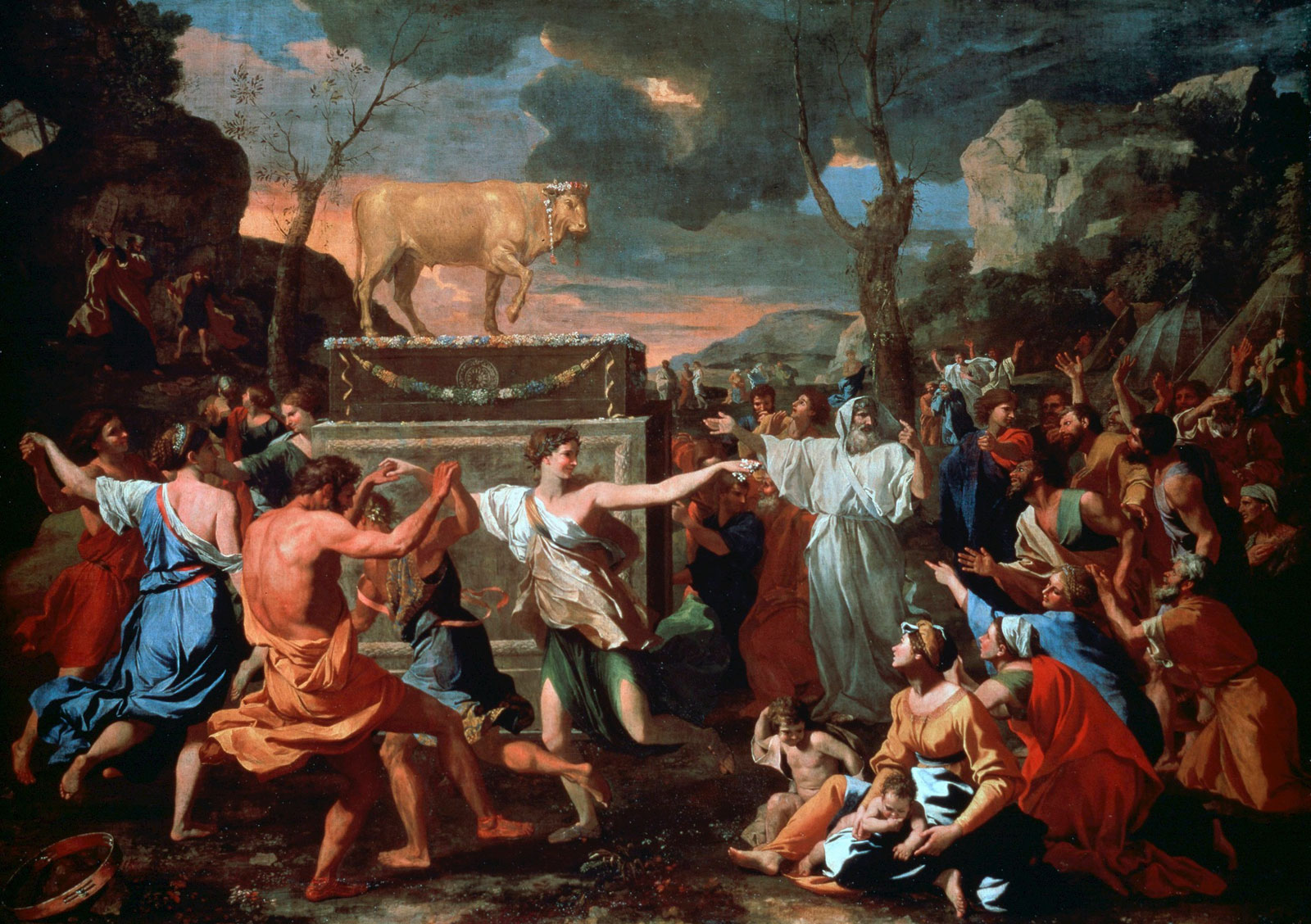
The first passage (Exodus 34) takes place during the giving of the second set of Commandment Tablets. Why was a second pair of tablets necessary? Because Moses broke the first set. And why did he break them? Out of anger over the forging of the golden calf. You know, a golden idol. That the Israelites were worshiping. At the exact time God was writing the commandment that His people must not worship idols.

It’s incredible that the Israelites were violating this commandment at the exact moment that God was giving this commandment. And yet God—who knew full well what His people were doing—reinforced His goodness and forgiveness in that commandment, almost as if to show them His mercy to their shortcomings. And then, as He re-gave this commandment, He repeated this passage about his mercy to those who would repent, return, and love.

(It’s worth noting that the golden calf was mainly a violation of the second commandment—idolatry—but not technically a violation of the first commandment—polygamy. At least, Aaron didn’t see it that way. As Aaron formed the false idol, he declared that it was YHWH, the god who delivered them from Egypt. Of course he was wrong and of course this was blasphemy and idolatry, but at its core, it was Aaron’s attempt to worship YHWH in the opposite way that YHWH had commanded. It’s no different than “tithing” to yourself instead of the local church or forsaking the assembling of the saints to “worship” God in your own way.)

So the first parallel story—the golden calf—makes a lot of sense. That calf was a violation of the second commandment that occurred while the second commandment was being written. But what about that second story? What was happening in Numbers 14?

In Numbers 14, the twelve spies have just returned from Canaan. As you’ll recall, the Israelites are 11 days from taking their Promised Land, and they send in twelve spies (one from every tribe) to search out the area and come back with intel.

They return with tales confirming that this land is all that God promised—a bountiful and luscious land flowing with milk and honey. But ten of the spies tell the people that it’ll be impossible for them to take it. The people are too tall and too strong and too numerous, and the Israelites have no hope of victory. Only two spies—Caleb the Judahite and Joshua the Ephraimite—encourage the people to obey God, reminding them that they “are well able to overcome” because “the LORD is with us.”

And what did the people do?

And all the congregation said to stone them with stones.” (Numbers 14:10)

So… the people sided with the evil report of the ten spies. What does that have to do with idolatry?

It may not seem obvious, but the actions of the children of Israel are no different than the actions of an idol-worshiper. At its core, idolatry is about rejecting what God has said in lieu of doing things your own way. It’s about exchanging the glory of God for the image of a false, man-made god. It’s about choosing the lie rather than the truth of God’s Word.

And that’s exactly what the children of Israel did. They thought they knew better than God. Sure, YHWH had said they would take the Promised Land. But He must not have known how tall and strong the Canaanites were. Or worse, God did know, and this whole “Promised Land” thing was simply a ploy to wipe them all out. Things were way better in the oppressive land of Egypt.

Today, you may not be tempted to whittle a bear out of basswood and worship it. But you’re probably tempted to trust in the work of your hands rather than the God who richly gives all things to enjoy. You may not bow the knee to Ba’al, but if the stock market starts to sway you might rethink how much you give in your tithe or how many hours you work on the Lord’s Day.

At the end of the day, we all have a choice to make: Will we live according to the Word and do things God’s way, or are there some areas of life (from loving our enemies to disciplining our children) where God’s Word is wrong?

Choose this day whom you will serve.