
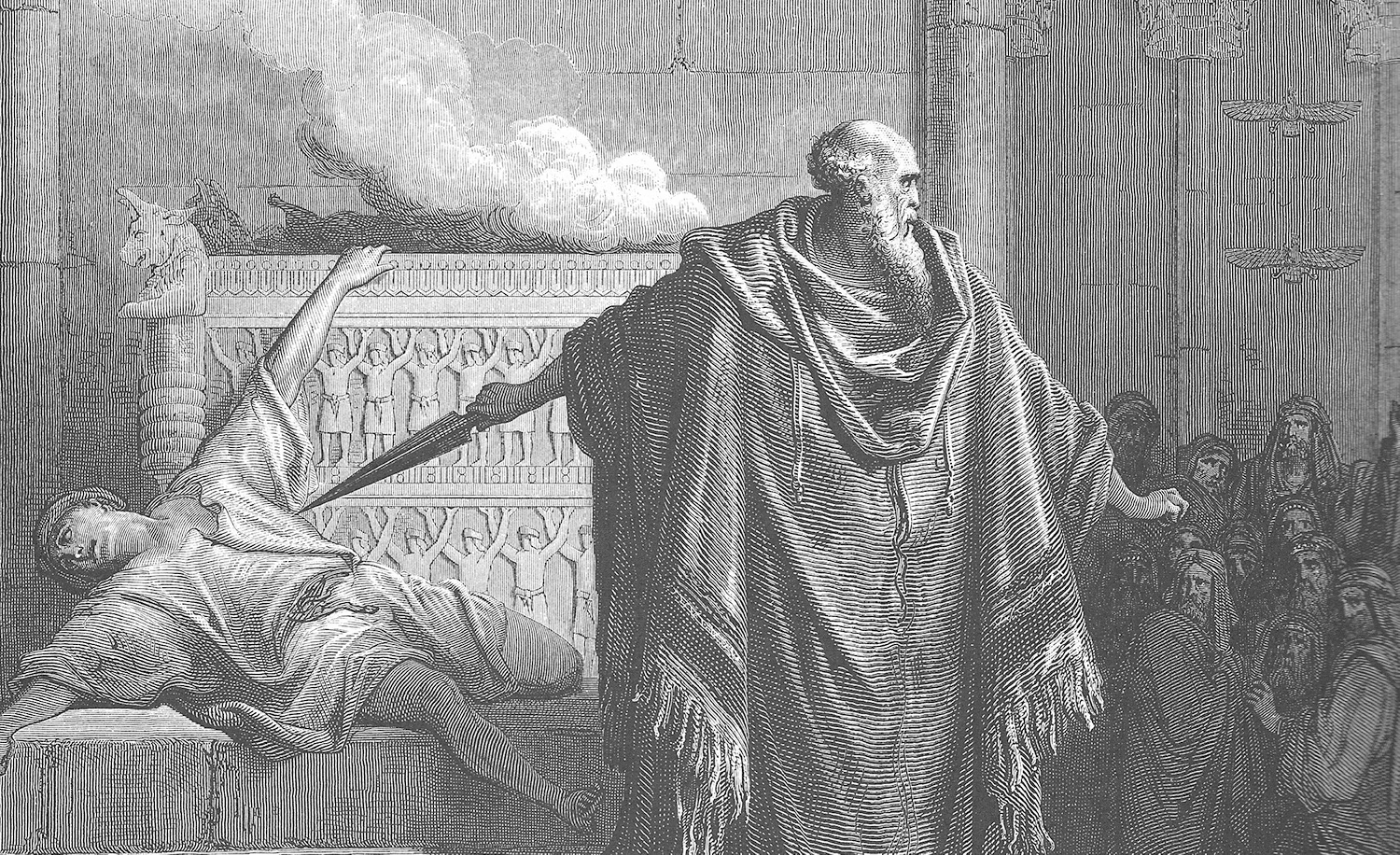
In the middle of the second century BC, things were not looking good for God’s people: They had been under Greco-Syrian occupation for over a hundred years; the priesthood had corrupted itself and was in the pocket of their pagan overlords; King Antiochus had demanded that the Jews stop serving Yahweh; and just about all of Israel decided to go along with it.
Then on the 25th of Kislev in the year 167 BC, Antiochus declared that he was God, and marching into Jerusalem He set up the abomination of desolation—a pagan idol of Zeus—right in the middle of the temple.
One family—led by Mattathias and his five sons Judah, Simon, John, Eleazar, and Jonathan—put a stop to this. They fled to the mountains, regrouped, and then began fighting. Not only did they stand against Antiochus and the Greeks—they stood against their kinsmen who had abandoned Yahweh in hopes of riches and political power.
And after three years of fighting, on the 25th of Kislev in the year 164 BC (the day celebrated as Hanukkah—“Dedication”), they recaptured Jerusalem. They marched back into the temple, tore down every abomination that had been raised, and rededicated the temple and nation to the one true God. As the war continued, almost every member of the Maccabean family was killed in the war or assassinated—with the exception of John, who died of natural causes.
And after seven years of war, the battle was won, the enemy was driven out, and the faithful remnant began rebuilding.
Just under two hundred years later, we read a New Testament story about Hanukkah. On the 25th of Kislev, Jesus declared that He was God and marched into the temple (John 10:22-30). The Jews were outraged and tried to have Him killed (v. 31).
So… what’s going on here?
The Jews in the temple were acting like it was “167 BC” repeating itself. They acted like Jesus was a false king, a false god, an idol being set up in the temple. They acted like they were the Maccabees, fighting against Antiochus and the pagans.
But that wasn’t what was actually happening, and they knew it.
The Jews in the temple had already corrupted themselves years before. Under the occupation of Rome, the priesthood had abandoned God’s ways and partnered with the Romans in exchange for riches and power. They had steered the Jewish community away from God’s Word through their pagan traditions. They had desecrated the temple by exulting a false Yahweh made in their own image. In other words, the Jewish leaders weren’t the Maccabees—they were the paganized Jews who had sold out to Antiochus!
And John 10 wasn’t repeating 167 BC—it was repeating 164 BC.
After three years of ministry, Jesus and His disciples—half of whom were named after the Maccabees—had reached the temple on Hanukkah. They triumphantly marched in and declared Jesus was Yahweh—the one true God—tearing down the false caricature the rabbis had built up for all Israel to see.
The story didn’t end there. The corrupt Jewish leaders doubled down on their alliance with Rome and spent the next forty years persecuting the followers of Jesus. Every disciple of Jesus was eventually murdered—with the exception of John, who died of natural causes.
Eventually Rome turned on the leaders in Judea who had perverted God’s Word and led so many astray. After seven years of tribulation, those false leaders were slaughtered in 70 AD and Jerusalem was destroyed—an event Jesus described as another “abomination of desolation” in the temple.
But just like the Maccabees, the faithful remnant survived. Heeding Jesus’ warning (Matthew 24:15-16), they had fled to the mountains—just like the Maccabees. And after the temple was destroyed and the corrupt leaders were defeated, they began rebuilding.
Today there are 2.3 billion Christians around the world. We are here because two thousand years ago, a faithful remnant of Christ-followers refused to surrender. They refused to lose hope. Instead, in the spirit of the Maccabees they dedicated themselves to the Lord, fought for what was good and right and true, and committed their lives to rebuilding.
And we have the same commission—to fight the good fight, to occupy until Jesus returns, to disciple all nations, and to take dominion over all the earth.
Don’t lose hope. The battle is the Lord’s.
 Garrett Milovich